



There is almost NO guidance given after you give birth on HOW to recover postpartum. If you receive guidance, it’s normally about perineal or incision care–and maybe some tips on when to call if you have an issue postpartum. If you receive any “exercise” guidance, it normally includes not lifting anything more than 10 lbs (or insert random weight here), which is likely more than your baby and their car seat or diaper bag.
This is a huge disservice to us after birth! Because there is so much that can support our healing from the early days postpartum that can impact us for YEARS and DECADES.
For example, if you are having incontinence issues, peeing when you don’t mean to, this can continue for YEARS if not addressed. And NO, peeing yourself when you sneeze is not some badge of honor as a mother–there is a lot you can do to STOP it–and this can start in the early weeks and months postpartum!
In this blog, we are going to break down our top ten tips to support your healing and recovery after birth!
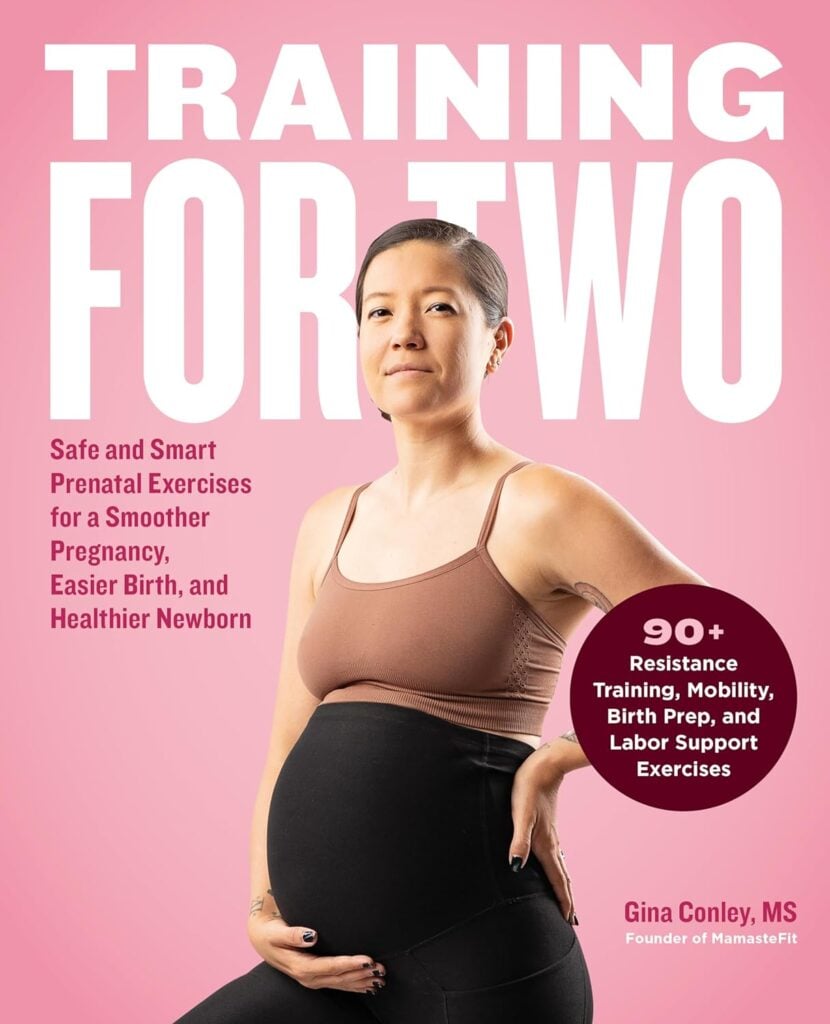
Our new book, Training for Two, teaches you how to use prenatal fitness to support a strong pregnancy, your birth, and also to support your postpartum recovery! There is an entire chapter on early postpartum recovery!
Pre-order our book Training for Two! This book includes 90+ exercises to build your confidence as you navigate fitness throughout your pregnancy and prep for birth, plus a whole chapter on early postpartum recovery!
1) Gentle Reconnection After Birth: Diaphragmatic Breathing
The six-week wait is too short to rush back to the gym, but also too long to do absolutely nothing! If someone had surgery, they would still have a rehab program that they would be working through shortly after their surgery!
Why is there not something offered for postpartum moms, especially those who had a c-section??
In the early days postpartum, we can focus on gentle diaphragmatic breathing to reconnect with our core and pelvic floor. Some of my favorite positions are reclined and side-lying to focus on the expansion of my rib cage and pelvic floor.
As you do your diaphragmatic breathing, you are inhaling to feel your back, belly, and pelvic floor expand outwards–you should feel a stretch in your core. Then exhale to gently contract to lift the pelvic floor up and in. This is really gentle movement!
2) Gentle Mobility to Move for Comfort
In addition to diaphragmatic breathing to reconnect with your core and pelvic floor, you can also include some gentle mobility to move your spine and hips! In the early postpartum, we tend to be “stuck” in one position for long periods of time, so we can feel stiff and this can cause discomfort. We can focus on mobility of the thoracic spine and hips to find relief postpartum!
In our free early postpartum recovery course, we include 2-3 weekly mobility exercises that target the spine, chest, and hips–common areas that feel stiffer after birth!
You can join the free course (and keep lifetime of the course access) by signing up for our newsletter!
Here is an example of some gentle breathing and mobility exercises you can do shortly after birth–it is important to note that all of our postpartum healing will vary, so it’s okay if you don’t feel ready yet!
Subscribe to our YouTube channel to get notified of all the new videos that we release! We release 1-2 new workouts and 1-2 educational videos to support your pregnancy, birth, and postpartum! Your subscription and views help to support our ability to provide all this free content, so we thank you!
3) Splinting: Provide External Support
A helpful tip after birth is to splint when you sneeze, cough, laugh, or anything that causes a lot of sudden pressure in your abdomen! I wish more of us were taught this after we gave birth, because it is so helpful for our comfort!
It can be painful to sneeze!
When you feel a sneeze or cough (or any of the above) coming, press your hand against your perineum (and incision if you had a c-section) to apply external pressure. This will help to counter the increased pressure so it doesn’t feel like all of your organs are going to fall out.
You can use your hand, or a soft object such as a towel or pillow! Usually, you only need to do this for a week or so after birth, but you may feel that you need the extra support a little longer.
4) Belly Bands: Additional External Support
And continuing with external support, belly bands can be a helpful postpartum tool, as well! It is important to note that belly bands are NOT used to close your gap or shrink your waist–physically pulling the muscles together does NOT “heal” them after birth. If you are tightening the band so much that it restricts your breathing, it can also be causing more harm than good.
When wearing a belly band, we want a gentle hug or compression. And even better if you have a band that also provides perineal support! One of our favorites is the Bao Bei Bloomers (you wear them over your diaper/underwear). This provides external support for your belly and perineum! Their belly band is also high waisted so its great for after a c-section, as well.
The belly band should be snug enough that you feel some gentle compression (this can aid in initial healing) and provide some external support, but NOT so tight that you cannot take a full inhalation. If you feel that there is increased pressure DOWN onto your pelvic floor when wearing a belly band, it is too tight!
5) Back Expansion to Release Pelvic Floor Tension
During pregnancy (and it definitely continues postpartum), we tend to favor a more extended or arched back position. This posture tends to create more tension to the back half of our pelvic floor–and pelvic floor tension can be what mimic symptoms of prolapse and causes some pelvic floor issues like incontinence.
One thing we can do to help release tension in the pelvic floor is to do back expansion breathing exercises, such as the all fours back expansion breathing drill.
In this breathing drill, you will start in a table top position, and then think push your belly/chest away from the floor to round in your back.
When you inhale, you’ll feel your back expand and stretch. Then when you exhale, you should gently try to pull your rib cage and pelvis closer together on the front to increase the rounding of your back.
Watch the video for more of a break down on how to do this exercise! This is a sample video from our upcoming book, Training for Two!
6) Hip Shifts to Release Pelvic Floor Tension
After back expansion, we can focus on finding hip shifts, or closed hip positions, to release tension in the posterior pelvic floor! A hip shift is a one-sided pelvic floor release exercise–the elevated hip/the hip you are shifting into is being put into more internal pelvic rotation and the posterior pelvic floor on that side is being stretched. The lower hip/open hip you are shifting away from is in more external pelvic rotation, and the anterior pelvic floor is more stretched on that side.
For many of us, the left posterior pelvic floor and right anterior pelvic floor are “tighter” than the opposite sides!
Hip shifts can be a crucial movement to learn how to do to help release tension in your pelvic floor AND improve your pelvic floor function! If you’re having symptoms of prolapse or heaviness in your pelvic floor, sometimes doing a few hip shifts can relieve these symptoms.
If you are still feeling a little confused on hip shifts, we incorporate them within our postpartum return to fitness programs, and you can join Hayley Kava, pelvic floor physical therapist, pelvic balance virtual series! This series meets twice a week (all sessions are recorded) so you can learn how move and find balance within your pelvis. I took her series during my pregnancy, and found it to be incredibly beneficial, even with my knowledge base!
The best part is that her series is pay as much as you want–so this makes it affordable and accessible to all! Because we all deserve access to quality pelvic floor physical therapy after birth–so this is one way we have been able to figure out how to provide that for you all!
7) Gentle Core Exercises for Rebuilding
Around 2-4 weeks postpartum, you can begin to incorporate some gentle core exercises to help rebuild after birth. These exercises are targeting core stabilization–your ability to maintain your torso position as you move your arms and legs!
We walk you through a few progressions in the early postpartum recovery course, and then this progression continues in our postpartum return to fitness program!
Here is an example of a dead bug variation that incorporates hamstring activation as you extend your arms overhead!
If you want to return to fitness after birth, our postpartum fitness programs can be a great option for you! We have trained hundreds of postpartum athletes to reconnect with their core as they return to functional movement and sport!
Our postpartum fitness programs are offered in two main formats:
- Teambuildr App: list of exercises with short demo videos. This is a great option for those who want to workout in a gym or home gym setting and refer to workout at their own page.
- On-Demand Videos: these workouts are delivered as full length workout videos that you follow as you workout as the same time. We have a fitness and yoga variation!
You can return to fitness and feel stronger than pre-pregnancy with our programs!
7) Short Walks
When you’re around 2-4 weeks postpartum, you may want to venture out of your house to get some fresh air! And short walks are a great way to do so! I love to push a stroller on these walks so I have something to help support me, but you can also babywear or walk solo.
On these walks, they are SLOW and SHORT. At first, maybe its walk to the mailbox and back, and then gradually maybe its walk to the end of your block. Over time you can increase the length of your walks, but ease into it.
If you notice increased bleeding after your walk, you may have walked too fast and too far, so rest for a day then decrease intensity and distance your next walk!
8) Nourishing Meals
In addition to movement and exercises, we also need to consider our nutrition after birth too! Optimizing our nutrition is a huge component of being able to recover. But this can feel like an overwhelming task too, especially if you are limited on postpartum support.
Here are some great options that we have found:
- Host a nesting party, where your guests all make meals to freeze for you postpartum. You can assign a guest to find receipes, or you can find them yourself to make at this party!
- Fed and Fit Postpartum Freezer Meal Plan is a great free resource that has those recipes already compiled for you!
- Find a local meal delivery service! We have Spoon Lickers near us here in Moore County NC that delivers professionally cooked meals directly to your door, but you can find a local meal delivery service by you!
- Check our Mama Meals, a meal delivery service that ships nationwide! If you can’t find a local company, this is a great option as well! Plus, your family/friends that wanna support you can always buy gift cards to them to provide nourishing meals for you. You can use code MAMASTEFIT for a discount!
- Create a meal train for local family and friends to bring meals to your home after birth!
Additionally, you can continue to take your prenatal vitamins, even in the postpartum! We personally love Needed, but whatever brand you took during your pregnancy, you can continue to take after birth to help provide nutrients, as well!
If you want to check out Needed, you can use code MAMASTEFIT for 20% off.
You may also want to consider taking some additional vitamin D to support breastfeeding and iron if you had blood loss–but you can speak with your provider to see if there are any specific supplements they recommend taking!
You deserve support after birth!!
It is disappointing that there is so little guidance offered after we give birth–but thankfully there is a LOT we can do to support our healing in the early postpartum to support us long term in our lives!
Postpartum Support Courses
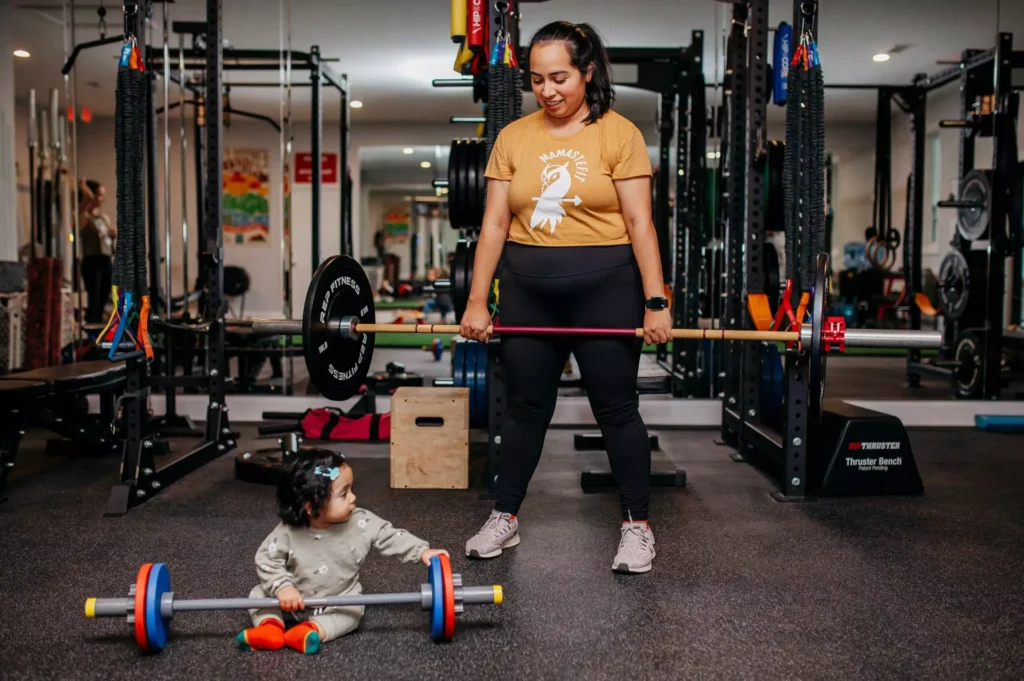

Our postnatal strength and conditioning program helps you navigate your return to fitness after the birth of your baby! Start with a rehabilitation program, then progress towards lifting weights. Feel stronger and lift heavier than ever before!
- Self-Paced
- 48 Workouts
- Teambuildr App
Instructors
GINA & CASEY
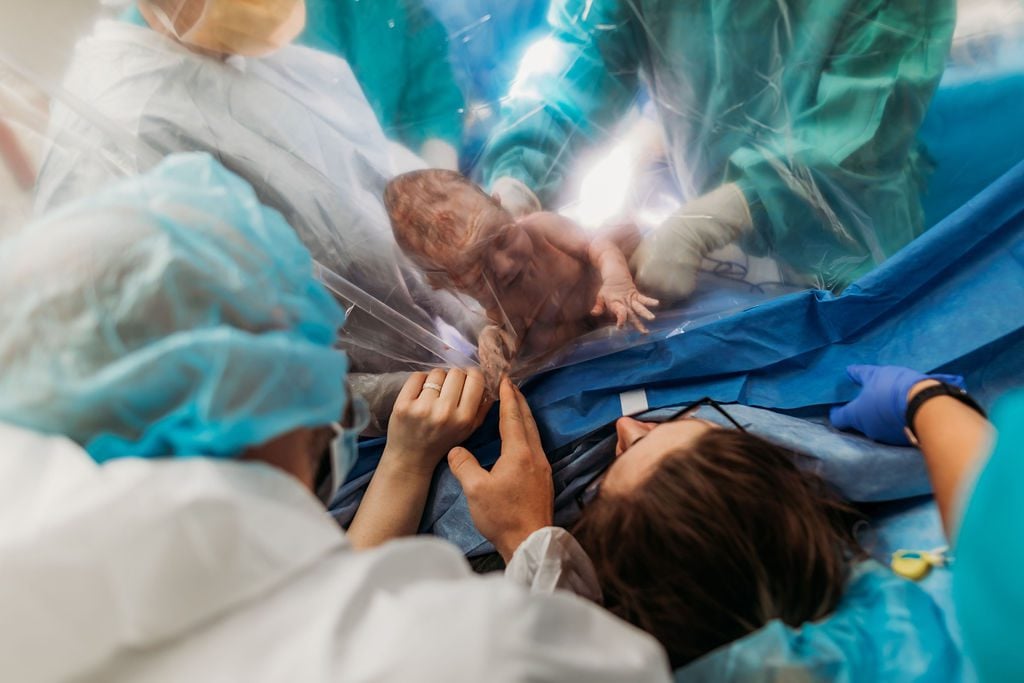
Our c-section recovery fitness program supports your healing after a cesarean birth with strength and conditioning programming. Reconnect with your core and pelvic floor! Includes access to our scar mobilization course.
- 16 Weeks
- Teambuildr App
- Lifetime Access

- 4 Workouts Week
- Teambuildr App
- Gym


Instructor
CASEY
These classes are designed to be safe to complete in the first few months postpartum but can support you throughout your motherhood journey with mobility and myofascial release.
- On-Demand
- Lifetime Access
- Support Group