



Table of Contents
When we first entered the world of birth work, we thought we had it figured out.
Like many birth workers, our early perspectives were shaped by our personal experiences, education, mentors, and the environments we worked in. Over time, though, our understanding of birth evolved in ways we never expected. Supporting hundreds of families through pregnancy, labor, birth, and postpartum has humbled us, challenged us, and ultimately helped us become better providers.
Today, we want to share how our views have changed over the years—and why we believe the most empowering births don’t fit into one specific mold.
Subscribe to our YouTube Channel for more weekly workouts and educational videos! We publish one new workout video and 2-3 educational videos a week on our channel.
The Polarization Within the Birth World
If you spend any time in birth spaces online, you’ll quickly notice that birth has become deeply polarized.
On one side, there’s the “natural birth only” perspective:
- Birth should always be physiologic
- Interventions are harmful
- Hospitals are dangerous
- Everyone should avoid epidurals, inductions, and C-sections whenever possible
On the other side, there’s the highly medicalized perspective:
- Modern medicine is always best
- Interventions are no big deal
- Patients should simply trust providers
- Questioning recommendations is viewed as unsafe or uninformed
Unfortunately, both sides can become dismissive, judgmental, and even hostile toward each other.
And when that happens, the person who suffers most is the birthing individual caught in the middle.
Over the years, we’ve realized that birth does not need to be a battle between holistic care and medical care. There is room for collaboration. There is room for nuance. There is room for individualized care.
Most importantly, there is room for people to make decisions that feel right for them.
Gina’s Early Birth Experience Changed Everything
Before Gina became pregnant, birth was honestly something she didn’t think much about.
Like many people, she assumed:
- Birth would be painful
- Epidurals were standard
- Doctors knew best
- You just “got through it”
There was very little emotional attachment to the experience itself.
But during pregnancy, things shifted.
After taking childbirth education classes and learning more about physiologic birth, she became increasingly interested in the idea of an unmedicated birth. At the same time, though, she also became increasingly fearful and distrustful of the medical system.
The messaging she absorbed often framed providers as:
- Pushy
- Dismissive
- Intervention-focused
- Untrustworthy
Unfortunately, her actual birth experience reinforced many of those fears.
She felt unheard.
She felt dismissed.
She felt rushed.
She felt unsupported.
Even though the outcome was physically healthy, emotionally the experience left a lasting impact.
That birth became the catalyst for entering birth work—but it also heavily shaped her early beliefs about birth.
When Distrust Shapes Birth Work
In the beginning, Gina’s perspective became very centered around avoiding medical intervention.
Like many newer doulas and birth workers, there was a belief that:
- Unmedicated birth was the “best” birth
- Out-of-hospital birth was the most empowering
- Interventions often ruined birth experiences
- Providers were something clients needed protection from
This mindset wasn’t necessarily malicious. It came from personal pain, fear, and the desire to help others avoid similar trauma.
But over time, supporting more births revealed something important:
People can have empowering births in many different ways.
Some people loved their epidurals.
Some people felt empowered by planned inductions.
Some people had deeply healing C-sections.
Some people had difficult home births.
Some people loved hospital births.
Some people hated unmedicated labor.
The longer we worked in birth, the more obvious it became that there is no universal “right” way to give birth.
Roxanne’s Perspective from the Medical Side
Roxanne entered birth work from the opposite direction.
As a labor nurse, interventions initially felt routine:
- Pitocin
- Epidurals
- Cervical exams
- Inductions
- C-sections
These were simply tools used every day in labor and delivery.
But Gina’s birth forced a major shift in perspective.
For the first time, Roxanne truly saw how dismissive language, lack of informed consent, and poor communication could dramatically affect someone’s birth experience.
Even when providers believe they are helping, the emotional experience matters.
A medically “normal” birth can still feel traumatic if someone:
- Feels ignored
- Feels coerced
- Feels unsafe
- Feels powerless
That realization changed everything.
Over time, Roxanne became more focused on:
- Informed consent
- Collaborative care
- Physiologic birth support
- Patient autonomy
- Emotional safety during labor
She also learned that interventions themselves are not inherently good or bad.
They are simply tools.
The real question is:
- Does the birthing person understand their options?
- Do they feel informed?
- Do they feel supported?
- Are they making choices freely?
The Most Important Factor: Trust
One of the biggest lessons we’ve learned over the years is this:
The most important part of a positive birth experience is often trust.
Not necessarily:
- Home birth vs hospital birth
- Epidural vs unmedicated
- Midwife vs OB
But trust.
Trust in:
- Your provider
- Your support team
- Your environment
- Your ability to make decisions
When people trust their team, birth often feels more collaborative and empowering—even when plans change.
When trust is absent, even an uncomplicated birth can feel frightening and traumatic.
That’s why we now encourage clients to spend more time evaluating how their provider makes them feel during pregnancy.
Do you feel:
- Heard?
- Respected?
- Informed?
- Safe asking questions?
- Comfortable saying no?
- Comfortable changing your mind?
Those answers matter deeply.
There Is No “Perfect” Birth
One of the most harmful ideas in birth culture is the belief that there is only one correct way to give birth.
When birth is framed too rigidly, people often leave feeling like failures if their plans change.
We hear this constantly:
- “I failed because I got an epidural.”
- “I failed because I got induced.”
- “I failed because I needed a C-section.”
- “I failed because I changed my mind.”
But birth is not a test.
You do not earn worthiness through suffering.
You do not become more powerful by avoiding interventions.
You do not fail because your birth unfolded differently than expected.
Birth is deeply individual.
And sometimes the most empowering choice is:
- Getting the epidural
- Accepting induction
- Choosing a C-section
- Declining an intervention
- Changing your plan halfway through labor
Empowerment comes from informed choice—not from meeting someone else’s definition of the “ideal” birth.
Why Informed Consent Matters So Much
As our views evolved, one concept became increasingly central to our philosophy: informed consent.
True informed consent means:
- Understanding benefits
- Understanding risks
- Understanding alternatives
- Having the ability to say yes or no freely
- Being allowed to change your mind
This applies to all birth decisions:
- Epidurals
- Pitocin
- Cervical exams
- Antibiotics
- Induction
- Cesarean birth
- Monitoring
- Position changes
Providers should educate without coercion. Support people should support without fearmongering. And clients deserve space to make decisions aligned with their own values and comfort levels.
Birth Workers Should Continue Growing
One of the most important things we’ve learned is that growth is essential in birth work.
We are not the same providers we were 10 years ago.
And honestly?
That’s a good thing.
Experience, reflection, continuing education, and client feedback have all shaped the way we support families today.
We’ve learned:
- To listen more
- To judge less
- To collaborate better
- To communicate differently
- To hold space for many types of birth experiences
We’ll likely continue evolving over the next decade too.
Birth work should never become rigid. It should remain curious, compassionate, and adaptable.
Our Current Philosophy on Birth
Today, our philosophy is simple:
There is room for it all.
There is room for:
- Home birth
- Hospital birth
- Birth centers
- Epidurals
- Unmedicated labor
- Inductions
- C-sections
- Midwives
- OBs
- Doulas
- Physiologic birth
- Medical intervention
What matters most is that people:
- Feel informed
- Feel respected
- Feel supported
- Feel empowered in their decision-making
We don’t want families making decisions out of fear. We want them making decisions from understanding, confidence, and trust.
Because at the end of the day, there is no single “right” birth.
There is only the birth experience that feels right for you.
Additional Resources
Prenatal Support Courses
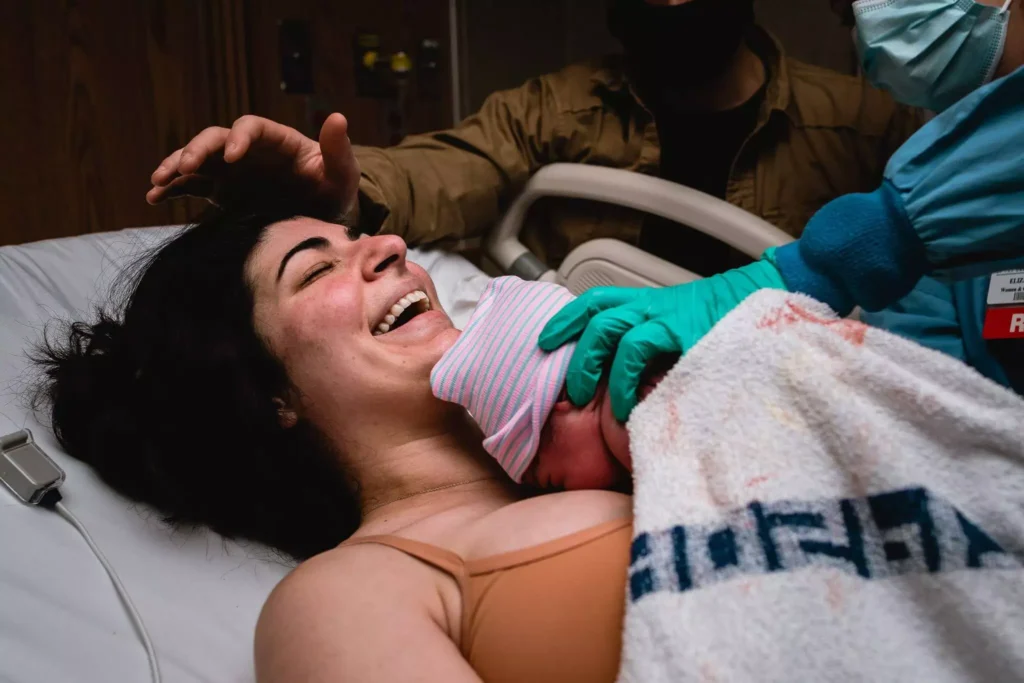

Learn the science of pregnancy and birth to take the mystery of labor away! Understand why you are feeling what you feel, and learn strategies to confidently move through pregnancy and birth!
- 9h+ of Video
- Support Group
- Close Captioning
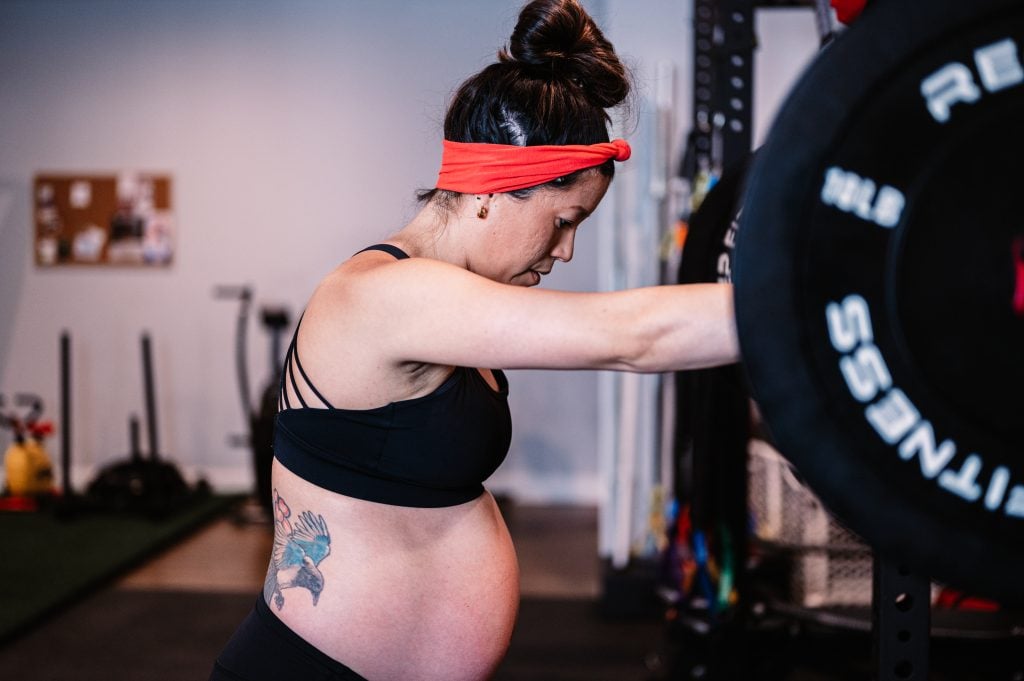

- 5 Workouts/Week
- Gym Workouts
- Self-Paced

Instructor
GINA
Workout on-demand with our prenatal fitness workout videos! Each workout is 30-40 minutes to follow along as you exercise at the same time!
- Birth Prep
- All Trimesters
- Mobility Work

Instructor
GINA
Find comfort and relief from pelvic girdle pain throughout your pregnancy and postpartum period! This program incorporates myofascial sling focused exercises to stabilize across the pelvic girdle joints.
- 3 Weeks
- On Demand Workout Videos to Follow