

Welcome to the MamasteFit Podcast Birth Story Fridays! In this episode, Kayla shares her challenging but ultimately empowering hospital birth story. She discusses how she prepared for birth, and how her intentions and plans changed throughout the course of labor after stalling at 7 centimeters for several hours, and the difficult decision to ask her doula to leave. Despite these hurdles, Kayla managed to have an empowering and beautiful birth experience. Gina and Roxanne delve into the details of Kayla’s labor, including the discovery of a forebag, and provide insights on navigating labor stalls. The episode highlights the importance of adaptability, self-trust, and the supportive role of a birth team.
Read Episode Transcript
[00:00:00] Gina: Welcome to the MamasteFit Podcast Birth Story Friday. In this episode, Kayla is going to be sharing her hospital birth story where she actually stalled at seven centimeters for several hours and ended up having to change a lot within her birth plan, to include asking her doula to leave. And so we’re really excited for you to hear her story and how she navigated a challenging birth to still have a very empowering experience.
[00:01:11] Gina: Welcome to the MamasteFit Podcast Birth Story Friday. In this episode, we have Kayla here, who is going to be sharing her pregnancy journey and her birth story with us. So thank you so much for being here, Kayla.
[00:01:20] Kayla: Thank you so much for having me.
[00:01:22] Gina: So let’s start with how did you prepare for pregnancy? What were you doing throughout your pregnancy to prepare for birth and all that?
[00:01:30] Kayla: Yeah, absolutely. I guess I’ll start with the formal things that I did. So I took the childbirth preparation program that was offered through the hospital, which was a few, like a three day class. I did the Spinning Babies class, which I love and really recommend, that was also offered through the hospital. And then I did pelvic floor PT, actually, after it was recommended on your podcast. So I really, I sought that out, which was great. Some books I read- I read the Lily Nichols Real Food for Pregnancy after hearing her on your podcast. That was really helpful for me. I read Emily Oyster’s Expecting Better. Ina May’s Guide to Childbirth, and then, Amy Taylor’s Mama Rising, which was more like the psychological aspect of preparation for childbirth. I really recommend all of those books.
[00:02:17] Kayla: As far as working out, I didn’t really follow a program, but I did stay moving. I did modified CrossFit workouts at my gym. I ran until it was uncomfortable, which was about six months for me. I did a lot of deep core work, which I’d never done before, I’d never prioritized before, than a lot of them I found on your Instagram. But I really just listened to my body and did what felt good, be that a modified HIIT workout, or yoga, or just going on a walk, I just kept moving. And I even worked out in the morning, the day before I went into labor, I was still doing like decent workouts.
[00:02:54] Gina: That’s awesome!
[00:02:55] Kayla: And I think I really just embraced, like you always say, like pain is not a requirement of pregnancy. And like when I would, approach, if it was back pain, or feeling uncomfortable, I just really researched on how to like adjust what I was doing to accommodate for that. And I am really thankful I was, I mean, I felt really good all pregnancy, which was amazing.
[00:03:17] Gina: So how was the end of your pregnancy? So you were doing all of this preparation, feeling really good in your body, really listening to your intuition with movement. How were, like, the final weeks of your pregnancy?
[00:03:28] Kayla: They were really comfortable. So I went to 41 weeks and five days, so I was almost 42 weeks, which was a little disappointing, cause I felt like in those last couple of weeks of pregnancy, I was expecting to be uncomfortable and like expecting her to come any day, but I felt so good. I was like, “Oh my gosh, this baby is going to be in me forever.”
[00:03:47] Roxanne: She was too comfy!
[00:03:49] Kayla: Yes! Yeah. So I was, I felt great. like I felt like I could be pregnant forever, which I know is not the case for everyone. So I’m really thankful for that, but I really attribute it to the fact that I never accepted if I was uncomfortable sleeping, or if I was having trouble sleeping, like I really tried to find a way. And now, everyone’s different, but find something that was helpful, that would help me through that. And it kept me moving, kept me rested, kept me really well nourished, and I felt great going into labor.
[00:04:18] Gina: That’s awesome. So let’s get into your birth story then. So you’re 41 and 5, which for me, I would be like a mental mess. I went to 41 and 3. I was just like, “This baby’s never gonna come!”
[00:04:31] Kayla: Yeah.
[00:04:32] Gina: So how was your birth?
[00:04:35] Kayla: It was the most intense thing I’ve ever done, in the most beautiful way, of course. I really struggled going past 40 weeks and just, and I know people told me and I heard on all the birth stories on your podcasts I listened to, like it’s normal for a first time mom. I still sobbed during my 40 week appointment with my midwife. I just really expected to have my baby. So I was very eager and excited when contraction started. It was about midnight on Tuesday evening. I got up to go pee and so I was peeing and then all of a sudden there was like more fluid than I… there’s a lot of fluid at that point in pregnancy, so I wasn’t super sure, but I could tell that there was, yeah, potentially my water had broken in the night. I didn’t want to get too excited, again, because I’d been having Braxton Hicks for a few weeks, and I went back to bed. And I just tried not to get too excited, again, I was so eager to have this baby.
[00:05:32] Kayla: I slept, probably for about six hours, just in between really mild contractions. And I didn’t even look at my phone or start timing them, until they were waking me up pretty consistently. And then once they were about, every five, six minutes, I got out of bed. And I didn’t wake my husband up, I just went downstairs and sat on my birthing ball. And they started to get a little bit more intense, but again, totally manageable.
[00:05:58] Kayla: And then I woke my husband up. It was like 9 a. m., and I was like, “I think I might be going into labor. I don’t want to get too excited, but things are definitely changing.” I labored at home until about noon, and at that point, my midwife had told me, “If your water breaks and you labor at home for 12 hours and nothing’s really changing, give us a call, because we might need to… we just want to make sure we keep things progressing.” Called my midwife, she said, go ahead and come in. I went into the hospital, the midwifery, at that mid hospital and they checked me and I was 4 centimeters and 80 percent effaced, which I was really excited about. And I wanted really that to be like, in my mind, I wanted that to be my last cervical check because I knew my water had broken, I wanted to reduce the risk of infection. And so my plan was just to continue laboring until we had the baby.
[00:06:48] Kayla: We labored in the tub, which was awesome, labored in the shower, which were really great pain management methods for me. I had a doula that I called about six hours after I got to the hospital and she came and helped with counterpressure. She helped, with positioning, just cuing my husband and I to go through different, techniques to manage the contractions, which was great. And at about 24 hours past when I was admitted to the hospital- so this was about noon the second day, so it had been about 36 hours of labor- my midwife was a little bit concerned that I wasn’t progressing as much as she would like.
[00:07:30] Kayla: So we did a cervical exam and I was 7 centimeters and 80 percent effaced, which I was like, okay, that’s not a lot of progress to have in that whole amount of time. But, I’d heard that once you, as a first time mom, the one through six can take a really long time, but once you get to seven, it can go a little bit faster, so, I was just trying to manage like the mental part. I didn’t want to get discouraged and I wanted to stay positive and not try to get into a numbers game of “Okay, how many hours do I have left of this?”
[00:08:00] Kayla: After about 12 hours of that, she wanted to check me again. so this was about two days into labor and I was still 7 centimeters and 80 percent effaced. And that was really demoralizing, because I felt like I was making progress, I felt like things were changing, and they weren’t. And so they decided to consult an OB at that point. And that’s when things got a little bit scary because I was really tired and in a lot of pain, and they were starting to talk about C section because I hadn’t been progressing as much as they would like me to and I’d been stalled at 7 centimeters for about 12 hours, as far as we knew, because I didn’t get very many cervical exams, but really, that was my second at that point.
[00:08:43] Kayla: And so I was asking what options I had, because I really didn’t want a C section. And they start talking about Pitocin. And at this point, my midwife, who had been with me for about 12 hours, she, because in labor you can’t always talk, and it’s not that I wasn’t capable of talking or thinking, I just was managing my contractions, and she was almost speaking for me, which really wasn’t what I wanted. And so she was saying, “Oh, we don’t want Pitocin!” At that point, I was 48 hours into labor, I really wanted to hear what my midwives were saying and I wanted to do what was best for my baby. And even though augmenting labor wasn’t what I’d planned, I definitely was open to it and my midwife was making that a little bit more difficult because I had told her I wanted an unmedicated labor.
[00:09:30] Roxanne: So you’re a midwife or you’re a doula?
[00:09:32] Kayla: Oh, sorry, my doula. Yeah, I apologize. my doula was speaking to my midwife for me and I had to like talk over her and it just wasn’t very comfortable for me. Like, I wanted to be open to what my midwife was recommending.
[00:09:48] Kayla: So I like went on a walk around the labor floor and I told my husband, I was like, “John, I like really, I don’t want my doula here right now.” And I don’t, I didn’t know what was making me feel that way. She was wonderful. She was really helpful in positionings. And I think it was just because things were going a little bit haywire, and I just trusted my husband, he knew what to do now, like he knew the positions, he knew how to support me. And I just didn’t want to feel like I was talking over my doula or like having to manage her and my midwife. So I actually, I walked back in the room and I asked her to leave, which is like something very unlike me. I never expected to… One, I always expected to have my doula with me my entire labor, and I never expected to feel more comfortable with just my husband. So I think my takeaway from that was just, trust yourself. It was definitely a better birthing/labor experience with just my husband after that, I felt really comfortable. My husband was really the only person I wanted in the room. I felt really vulnerable. And I am grateful that I actually asked her to leave, but that was… I would have never expected that.
[00:10:53] Kayla: We continued the rest of our, the rest of the labor with just my husband and I. I’d actually started Pitocin, and this was about 48 hours after my water broke. And after four hours on Pitocin, the constructions were really strong. They were coming about every 90, like 90 second breaks, so every three minutes. They checked, she checked me after four hours on Pitocin and I had made no progress again, which was Like, I can’t express… I’ve never felt so low in my life. To have not made any progress after that was really hard. So they consulted the OB again, which made me very nervous again, because of the C section discussion. And she actually found what’s called a forebag, which I’m sure more about it than I do, but, basically, it’s where the amniotic fluid gets trapped between the baby and the birthing canal, and it was present, it was stopping her from progressing. So they popped the forebag and after about 45 minutes, I was fully dilated and she was born about 30 minutes later, which was incredible.
[00:11:59] Kayla: And I think that I went into it with, “I do not want cervical exams,” like I was, I really only allowed two, and even when the midwives would switch out, I would ask them not to do cervical exams. But I think going back, I should have listened to my midwives a little bit more and let them do more exams because maybe they would have found the forebag earlier because it took about 48 hours before they that what they were feeling wasn’t the head, it was part of my amniotic sac.
[00:12:30] Gina: It’s hard to know beforehand, when you’re going into your birth, like what exactly what different tools you need. And I think it’s okay to be patient with exploring like what your preferences are before jumping to what maybe the recommendations are like. Obviously, we chose a team that we trust and we want to guide us, but it doesn’t mean that we have to do everything exactly the way that they recommend right away. And so I don’t think there was anything wrong with being patient, but I can sympathize with maybe not wanting to be in labor for two days and wondering if maybe they found it earlier it would have made things go a little bit quicker. But that was probably a little stressful at the end there where it was like the second consult with the OB and now all of a sudden baby’s being born, was probably like pretty… So did you get an epidural, or were you still unmedicated at this point?
[00:13:26] Kayla: After that second check, once I was on Pitocin and I hadn’t made any progress in four hours, they were really concerned about me not making progress because they’d upped the Pitocin levels and my nurses were saying that I was, like, giving all the pain signaling that I was in transition, and yet, I wasn’t progressing at all. And I asked what I could do next, again, just fearful of a C section, and they said the epidural could help relax things. And so I ended up getting the epidural, again, it was about 7, 7-8 centimeters, depending on who checked me. And, this was about 30, this was about 36 hours in. And the epidural was incredible. It was.
[00:14:11] Kayla: I definitely went into the mindset of, “I want to go unmedicated. I want to stay moving.” I really believed it was what was best for me, personally, and best for my baby. And I was very scared to get the epidural. I like felt like I was a failure. I remember when like we did make that decision, I just broke down sobbing, told my husband that I was sorry. I was very, it was very hard for me to I felt like I was failing by getting the epidural. It was incredible. It was, it really did take the pain away without taking much movement. I was still able to like, they wouldn’t obviously let me walk, but I could bridge my body up and I can move on the bed. And when they would shift my position, I did it myself. I could still feel. The way I describe it as like, “muted.”
[00:14:56] Roxanne: Yeah.
[00:14:56] Kayla: The sensations, like I could still feel the pressure. I could feel the contractions. I could feel when I was crowning, I could feel all of that stuff, but it muted it into where it was just like, very manageable, very peaceful, but I could still feel what was going on in my body, which was wonderful.
[00:15:10] Kayla: And so after I got the epidural, they actually increased the Pitocin almost double. And so after another four hours of being on the epidural with Pitocin, and I still hadn’t made any progress, that was the second OB consult. And that made them really, that was another reason they consulted the OB a second time, because after increasing Pitocin, I was relaxed with the Epidural…
[00:15:32] Roxanne: Still no change.
[00:15:33] Kayla: I still hadn’t made any progress, which is why. And then they found the forebag.
[00:15:39] Gina: How was postpartum for you? Baby’s here, we’re all really excited. How were like the first hours and days after baby was born?
[00:15:48] Kayla: They were amazing. They were. I think another great thing about the epidural was that her birth, like actual birth, was so peaceful. And we were just chatting with the midwife and my husband was really relaxed, after he hadn’t obviously slept or eaten much, and and he was able to relax more because I wasn’t in pain. Her birth was like, it was so beautiful. And I was concerned about breastfeeding with the epidural, but she latched right away. We had a great three hours skin to skin.
[00:16:22] Kayla: One thing that I recommend that I advocated for- all of her shots, you know when she got the hep B and the vitamin K shot and the ointment, and they actually did it on my chest. So, my baby never left the room my entire time in the hospital, and she didn’t leave my arms until it was actually time to go to the recovery room, which was really special for me that those first three hours, like she was on my chest the entire time.
[00:16:48] Kayla: Recovery was really easy. I had two first degree tears, which she was in 97th percentile head and 95th percentile weight. She was nine pounds, eight ounces and to only have two first degree tears as a first time mom, I really think it’s a testament to, I did perineal massage, which I know you talked about in your podcast, and then my pelvic floor PT really recommended and that, I think, helped the recovery a lot. I stopped bleeding and really had no pain, starting about two weeks postpartum, which was amazing.
[00:17:23] Gina: Do you have any advice for somebody who may be navigating a similar birth situation as you, where they’re stalled and things are not progressing? What would you recommend to them to help them mentally move through that?
[00:17:36] Kayla: I think just trusting yourself, I think that even first time moms have intuition, and I think being totally okay with your birth plan not going to plan. And I really prepared. I did a lot of birth preparation courses, I read a lot of books, I had a very well thought out birth plan that I spent a lot of time kind of curating and thinking about. It felt very scary when things started to go differently, and it was easy to get overcome when they’re talking about C section, they’re talking about multiple cervical exams, we’re talking about epidurals. But I think just being okay with that changing and trusting yourself in the process, and I think the decision to ask my doula to leave and give my husband privacy, that was a really hard decision, but like it was perfect for us because I really just needed my husband, and once we got to that point, I really didn’t need her anymore. And just advocating for yourself, something that I’d never expected that I would have done.
[00:18:34] Kayla: And I think just advice, if you’re stalled, just trusting, your body was made to do this. And the women around you, the birth team that you have, they’ve done this hundreds of thousands of times, and this feels chaotic for you, but it’s not for them. And they know if something’s going wrong and they need to do something to intervene, like they’re going to know that. So just trusting, if, when things feel scary, probably not if, but when, just trusting the birth team that you have around you. Because, at the end of the day, her birth was beautiful and perfect, and it’s really because of the labor nurses I had. My doula for that first 24 hours, and then my midwife, who was amazing.
[00:19:15] Gina: Thank you so much for sharing your birth story with us, and how things are going post partum for you and all your preparation. I know folks that listen to this are going to have a whole reading list to go and listen to. And thank you so much for sharing your birth story. I know I already said that, but it sounds like listening to birth stories on the podcast was super beneficial for you, and so I’m excited for folks to also hear your story as well!
[00:19:38] Roxanne: And get some benefit from it.
[00:19:40] Kayla: No, thank you so much for the opportunity. I just hope that anything that I experienced can maybe help someone else. I definitely benefited from others’ birth stories on your podcast.
[00:21:05] Roxanne: In Kayla’s birth story, she talks about her water breaking prior to contractions starting, and this is what we refer to as PROM, or pre labor rupture of membranes. This happens in 9% of births where contractions do not start prior to the water breaking. In most cases of PROM, labor will start within 24 hours and this will lead to a vaginal delivery, but sometimes there are cases where the contractions will not start and augmentation with like Pitocin or mechanical dilators can be beneficial to get labor started.
[00:21:37] Roxanne: In Kayla’s case, her contractions did start on their own, but they did notice after a couple hours of a labor stall, that she had what was called a forebag. And in the amniotic sac, there are two layers within the amniotic sac, the chorion and the amnion. And sometimes with PROM, one of those layers will break and there will be amniotic fluid between the two layers, so you do have a gush of fluid, but, there is a second layer that’s still intact. So your baby is not putting as much pressure down on that cervix, like when your bag breaks normally during labor. Baby’s head is applying a lot more pressure than that amniotic sac, and then this could cause labor to speed up where baby is born shortly after. Because Kayla didn’t get many vaginal exams this forebag wasn’t caught till later on in the labor, and then once they broke that bag, then baby was able to apply more pressure on that cervix and then be born vaginally.
[00:22:33] Gina: So Kayla tried a bunch of different things to see if she can get her labor to progress, such as starting Pitocin to hopefully make her contractions stronger and a little bit closer together. She also tried getting an epidural to see if maybe the problem was she wasn’t able to relax enough with her contractions, and then ultimately her midwives finding that there was this forebag still there that was maybe preventing baby from being able to apply pressure to the cervix was what did the trick for her.
[00:22:58] Gina: And so if your labor is stalling, it’s important to be willing to explore a lot of different avenues to figure out what might be the thing that helps you begin to progress. Maybe it’s baby’s position, maybe it’s changing your laboring position, maybe it’s looking into different options that you have at your birth location, and then obviously consulting with your provider and with your birth team on what their professional opinions are can be really beneficial.
[00:23:21] Gina: Kayla also shared about how she asked her doula to leave at some point during her labor, which can be a really hard thing to do. Like you invest in this professional to help support you during your birth, and then there could always be this kind of, “What if she gets mad at me?” so there could be potentially some conflict with asking someone to leave. And this could apply to asking for a new provider, for a new nurse, asking somebody that you asked to be at your birth and then you realize that maybe this wasn’t what I wanted.
[00:23:51] Gina: And so when I reflect on my own first birth, I had hired a doula because I wasn’t sure if Roxanne was going to be back in time because we didn’t know when I was going to go into labor and she was in the middle of moving from one place to another. And when I look back on my own birth, I wish that I had asked the doula to, “Hey, you know what? Never mind. Keep my money. I don’t need you. I have my sister here.” But I felt obligated to have her come to my birth because I had invested in her and I didn’t want to upset her and be like, “Actually, I don’t need you,” and so I ended up having just like too many people like in my birth trying to help me make different decisions. Nobody knew what was going on because everyone thought somebody else was handling things. And so it can be a really hard thing to ask for somebody to leave your space, but know that it’s okay to ask for what you need. And if it’s maybe asking your mom to leave or your doula to leave or asking for a new nurse, it’s okay. And it can be a little scary in the moment so you can always just ask your partner to do it instead if you’re like, “I don’t want to ask this person to leave.” If you have a doula that you don’t want to leave, you could ask the doula to ask for a different nurse or for a different provider as well. And so just being really mindful, like who is in your space and how that’s making you feel is incredibly important to navigating our birth experience as well.
[00:25:10] Gina: If you want more support throughout your pregnancy, be sure to check on our online prenatal fitness programs. Our online prenatal fitness programs are offered in two main formats. We have our app based program, which is gonna be a list of exercises with short videos offered both in a full length and a mini version. So the full length workouts are about 45 to 75 minutes long, they do get shorter as we get closer to your due date. And then the mini programs is 15 to 20 minutes. And so both are self paced, and so if you prefer to work out at your own pace, it’s a really great option. And it syncs to your current week of pregnancy, so you can start it at any time.
[00:25:41] Gina: We also have a prenatal on demand program, which are full length workout videos that you follow and work out with at the same time. This is going to sync to your current trimester. So we have a first, second, and third trimester, in addition to just a birth prep standalone program. Both the prenatal on demand and the prenatal app based program come with birth prep workouts, but if you already have a workout program that you’re enjoying doing, you can just grab the birth prep standalone program to do as well.
[00:26:05] Roxanne: And if you’re looking for more support with childbirth ed, we have an online childbirth education course with over nine hours of education content that breaks down the science of labor and birth to take away some of the mystery that surrounds labor and birth so you can approach it more confidently.
[00:26:20] Roxanne: Within the course, we discuss how to create a birth plan, not just of what your ideal birth is, but also exploring different avenues of what options you would be open to if that case was presented. Within the course, we’re also discussing labor stalls- so what are the reasons for different labor stalls and what are different solutions for those stalls to help create that birth plan, to be able to decide which avenues you would like to explore if a labor star does occur.
[00:26:46] Gina: You can check out all of our online courses and fitness programs on our website at mamastefit.com and use code STORY10 to get 10 percent off any of our online offerings, and you can also bundle them together to save an additional 15 percent off, so it’s like a 25 percent savings!
[00:27:01] Gina: So definitely check out our online offerings. We’re here to support you during your pregnancy with our podcast, our YouTube channel, our Instagram, and with our paid online courses.
Additional Resources
Get Your Copy of Training for Two on Amazon: https://amzn.to/3VOTdwH
📧 Download our free birth prep circuit guide with six exercises to prepare your body for birth: https://mamastefit.com/freebies/prepare-for-birth-circuit/
Prepare for your birth with MamasteFit:
💻 Online Childbirth Education Courses
🏋🏻♀️ Online Prenatal Fitness Programming
🧘♀️ Prepare Your Pelvic Floor for Birth Course Explore our prep for birth courses: https://mamastefit.com/prenatal-support
3rd Trimester Specific Prep Courses: https://mamastefit.com/fitness-programs/third-trimester/
—– Freebies to Support Your Postpartum:
📩 Join our free early postpartum recovery course: https://mamastefit.com/freebies/early-postpartum-recovery/
—- Recover after birth and return to fitness with MamasteFit: https://mamastefit.com/postpartum-support/
💻 Postpartum Education Courses 🏋🏻♀️ Postpartum Fitness Programs
—— Follow Us on IG at https://instagram.com/mamastefit
Prenatal Support Courses
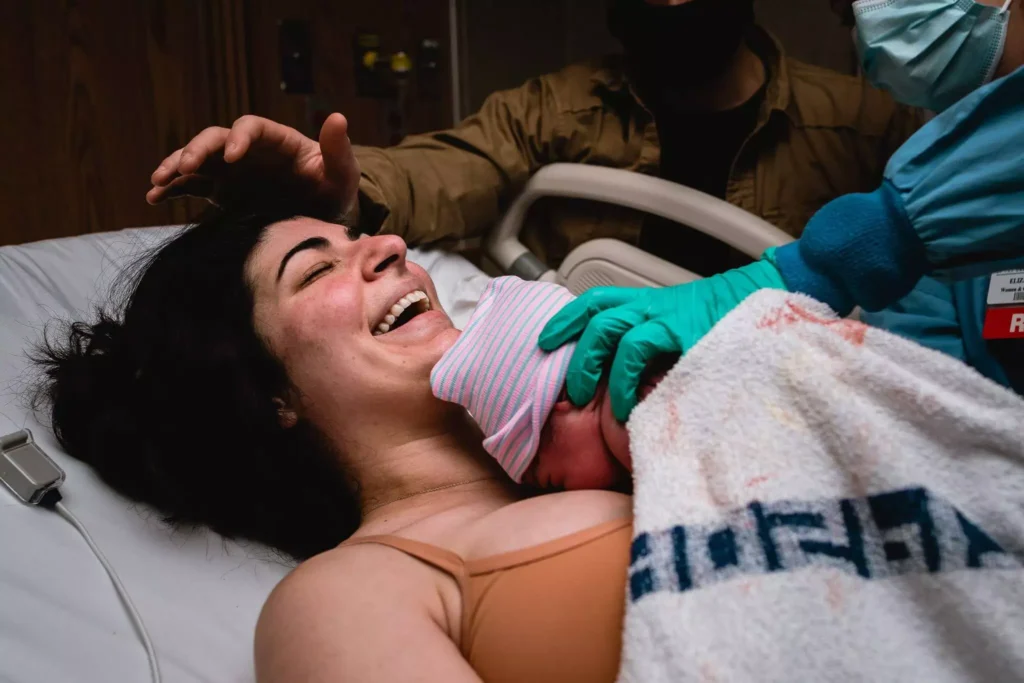

Learn the science of pregnancy and birth to take the mystery of labor away! Understand why you are feeling what you feel, and learn strategies to confidently move through pregnancy and birth!
- 9h+ of Video
- Support Group
- Close Captioning
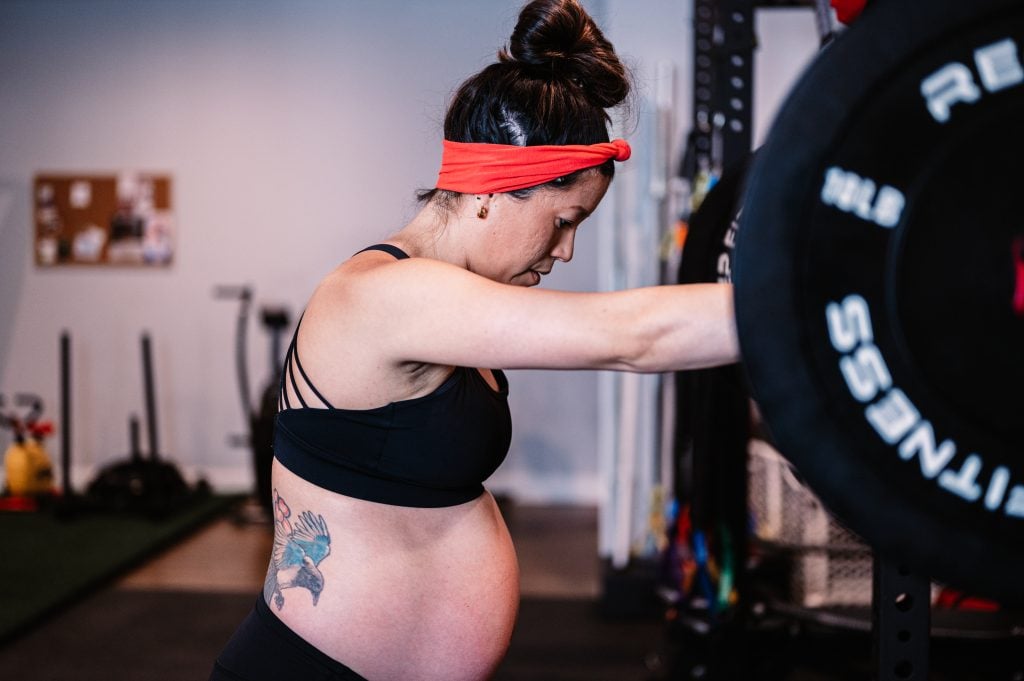

- 5 Workouts/Week
- Gym Workouts
- Self-Paced

Instructor
GINA
Workout on-demand with our prenatal fitness workout videos! Each workout is 30-40 minutes to follow along as you exercise at the same time!
- Birth Prep
- All Trimesters
- Mobility Work

Instructor
GINA
Find comfort and relief from pelvic girdle pain throughout your pregnancy and postpartum period! This program incorporates myofascial sling focused exercises to stabilize across the pelvic girdle joints.
- 3 Weeks
- On Demand Workout Videos to Follow