



Welcome to the MamasteFit Podcast Birth Story Fridays. In this episode, Kilpy shares her compelling journey of overcoming medical doubts about her ability to conceive due to a septate uterus. She delves into her hospital induction and 30-hour labor, followed by an in-depth discussion on navigating postpartum anxiety and tough nursing journey due to DMER.
Read Episode Transcript
[00:01:16] Roxanne: Welcome to the MamasteFit Podcast, Birth Story Fridays. On this episode, we have Kilpy who’s going to be sharing her hospital vaginal birth that was an induction for over 30 hours. Thank you so much for being here.
[00:01:27] Kilpy: Thanks for having me. I’m excited to be able to share a little about my story.
[00:01:32] Roxanne: I’m so excited to hear it. So tell us, how did you prepare for pregnancy and childbirth?
[00:01:38] Kilpy: So at age 18, I was told I wouldn’t be able to probably have kids or carry them to full term because I had a misshapen uterus. And then 10 years later, when I was 28, I saw a surgeon and they said, “No, actually,” they thought I had one type of anomaly and then they found it was another. And so two months later, I had a surgery that fixed the shape of my uterus. I had a septate uterus. And they did a surgery on that and then said I had to wait a certain period to start trying to have kids, to let it heal.
[00:02:18] Kilpy: And so then, when I was 29, is when my husband and I started trying to conceive. And I had been focused so long on just like, whether I would even be able to have kids, and every OB, or every OBGYN appointment I’d have annually, they’d always be like, “Just remember, we don’t know if you can have kids, so be prepared.”
[00:02:47] Roxanne: Gosh.
[00:02:47] Kilpy: Which was always really traumatic.
[00:02:52] Roxanne: So encouraging!
[00:02:54] Kilpy: So encouraging. So I did not ever really focus on what trying to conceive or being pregnant would be like. Cause I think I was just so distracted and, worried. So then it was such a gift to actually just be able to try to conceive, but I just still had this kind of internal feeling like, “It’s not going to happen. It’s not going to happen. It’s never going to happen for me.” So, unfortunately, I think that that kept me from like being fully… like wanting to learn about it, because I was afraid I would get invested and it would never happen for me.
[00:03:39] Roxanne: Yeah.
[00:03:39] Kilpy: So honestly like it took four months of trying and then when we had the positive test I was suddenly like, “Wait what? I’m pregnant!” So then it was full just like, you know, I still carried a lot of worry and doubt, unfortunately at the beginning. But I, once I got, it was probably around the 20th, you know, that 20th week and the scan and everything, I think my heart
and my brain finally were like, “This is happening, your baby is well on its way and it looks great.”
[00:04:21] Kilpy: So I then had to play catch up, I feel like. And I honestly did that through y’all, like through your, I did the child birth, the accelerated course, and then just following all your content.
[00:04:37] Roxanne: Okay, the condensed course?
[00:04:38] Kilpy: Yeah, yeah. Following all your content gave me a way into like, you know, I’m 20 weeks away now and this is how I do this in the best way that I can. It was not perfect. I would have loved to have been more educated along the way, but it’s like, that’s where I was and y’all’s, yeah, the condensed content was so great for me to kind of like, play catch up.
[00:05:10] Roxanne: That’s awesome. I’m so glad that we could have been a small portion of your prep, even though like you felt like you were catching up.
[00:05:16] Roxanne: A lot of people don’t even take childbirth ed until their third trimester, so you were honestly ahead of the game. A lot of people wait till they’re like 28, 29 weeks to start. So you were more ahead than you think you were. But let’s go into your birth. So you prepped with our childbirth ed and then comes along your due date and you are pregnant.
[00:05:39] Kilpy: I was 39 weeks and 4 days. I had gone in on the Friday before to have my appointment and for them to take blood work because we had been watching my low platelets. I always have had low platelets, and so that is something that we knew we were watching for and they were dipping at the end of the third trimester.
[00:06:05] Kilpy: So I got a call Monday that they were getting too low for an epidural to be an option. And I knew I wanted it in the toolbox, and so they asked me to come in for an induction before they got way too low. So they called me Monday morning after getting the blood test and I went in that afternoon at three and started the induction. And it was a slow, slow process of the balloon to try to naturally get my body to go, and then adding on Pitocin, they realized that she was so high she wasn’t even really like in the pelvic bowl yet. She was above, plus five, they said.
[00:06:57] Roxanne: Oh, she was floated.
[00:06:59] Kilpy: She, yeah, they did an ultrasound to be like, “is she even head down?” to make sure. And she was, she was just so high.
[00:07:11] Kilpy: So we all tried as much as we could to get her down, get her down. And, you know, the Pitocin started contractions. I labored, and labored, and she inched down and I held off the epidural so that I could be able to walk around and use the ball.
[00:07:35] Kilpy: And then got to a point where it was incredibly unbearable. And she was still, she had only gone down, at this point probably, zero, minus one, and it had been…
[00:07:49] Roxanne: Okay.
[00:07:51] Kilpy: It had been going on maybe 20 hours at that point and, it was, I ended up she was at minus two, I remember it was seven to eight centimeters. And that is where things stalled for me, probably 25 hours in.
[00:08:17] Kilpy: I got the epidural, still continued to use the peanut ball and do movements, and we were just trying to get her down more. And just, she wouldn’t, and her heart rate was dropping every contraction I had.
[00:08:36] Roxanne: Oh, gosh.
[00:08:38] Kilpy: And, so they started to talk emergency C section, around probably hour 27. And they got a second opinion. I used the midwives at our hospital. They got a second opinion from an OB that came in, and he said, “Let me go in and feel where she is.” And he said, “I want you to push as hard as you can.” So I pushed as hard as I can, and he said, “You’re gonna have to push her from minus two if you feel like you want to try that.” so I did.
[00:09:19] Roxanne: So were you completely dilated?
[00:09:21] Kilpy: I was nine centimeters dilated.
[00:09:26] Roxanne: Okay. So it was probably just like really stretchy.
[00:09:29] Kilpy: Yeah. And I think when I actually had a contraction, they were like, “You’re getting to 10 during the contraction.”
[00:09:41] Roxanne: Yeah, that makes sense.
[00:09:43] Kilpy: So then it was an hour and a half of pushing, pushing, pushing, pushing, and she came out with a cord wrapped around her neck three times. And so there was speculation of if that was a contributing factor. And she was also a little mal positioned. And so, yeah. I don’t understand enough of it,
and it all happened so quickly at the end. But, you know, we were all, my husband and I were like, “We wonder if the cord and all of that affected this, like, long labor, somehow.” but yeah, she came out and they went into hyper mode trying to make sure she was cleared out and everything and she was completely fine and wonderful, and healthy and perfect ever since.
[00:10:45] Roxanne: Awesome. So you were on Pitocin for like over 24 hours, you feel like?
[00:10:51] Kilpy: I think it was probably 24 hours that I was, cause they didn’t immediately start me on it. And they tested the- somehow you can test if you’re getting the right amount of Pitocin- they did that like halfway through.
[00:11:12] Roxanne: Yeah.
[00:11:14] Kilpy: And, yeah, and I still was, even with the epidural too, I was having a lot of back labor and still just a lot of pain.
[00:11:25] Kilpy: I had back pain probably since weeks, like 35. At week 36, I thought I was going into labor.
[00:11:37] Roxanne: Because it was so uncomfortable.
[00:11:39] Kilpy: Yeah.
[00:11:41] Roxanne: So with your low platelets, did you have any issues in the postpartum, especially that immediate postpartum with bleeding?
[00:11:48] Kilpy: Not that I’m aware of. I, as far as I can tell, it was normal bleeding.
[00:11:55] Kilpy: I have always had incredibly bad periods, very strong with clots that come out. And, so I think my amount of bleeding that I’m used to is above average. But it all, I mean, it all felt normal. I had, one day where there was a huge, it was probably a week in, I had a very large clot come out, and called the doctor and they said, if it happens again, come in.
[00:12:30] Kilpy: But no issues. Like every time they came in, pushed on my stomach, they were like, “It looks fine!” So, it seemed to be under control.
[00:12:40] Roxanne: And if they were concerned, probably immediately after birth, if you were having lots of heavy bleeding- because that is one of the risks that we look for, for somebody who has low platelets, is that after baby is born
and the placenta comes out that the platelets won’t be able to kind of adhere and create that clot….
[00:12:56] Kilpy: Yeah.
[00:12:56] Roxanne: …where the placenta was located, and you could have a postpartum hemorrhage and that’s amazing that you did not. The body is amazing. Even after 24 hours of Pitocin. So that’s awesome.
[00:13:09] Kilpy: Yeah.
[00:13:09] Roxanne: It doesn’t happen to everybody.
[00:13:12] Kilpy: Yeah. Yeah.
[00:13:13] Roxanne: Did you have anything like with your postpartum period that during your postpartum period and recovery, did that go pretty well?
[00:13:22] Kilpy: Yes and no. Physically, it was pretty fine. I had three tears. I had the, I guess, the normal one that you expect, but then I had two bilateral labial tears.
[00:13:39] Roxanne: Okay.
[00:13:41] Kilpy: I think just, I had a lot of stitching and a lot of swelling and a lot of pain. But that, I mean, that all still went pretty well.
[00:13:52] Kilpy: I did have the recovery of the stitching, I had, tissue, I forget what it’s called, some kind of like granulation tissue come up.
[00:14:03] Roxanne: Granulation tissue.
[00:14:05] Kilpy: Yeah.
[00:14:06] Roxanne: Not fun.
[00:14:06] Kilpy: So they did silver nitrate and cauterized it off.
[00:14:15] Roxanne: Oh, which does not feel great either.
[00:14:18] Kilpy: It doesn’t feel great, no. But all things considered, I was like, that’s not a big deal. I can handle it.
[00:14:25] Roxanne: After having a baby, right?
[00:14:28] Kilpy: Yes. Yeah. Going back, yeah, I had to advocate for myself and go back in and, be like, “I think I see like bright red tissue and it’s still bleeding.” I had stopped bleeding and it was still…
[00:14:40] Roxanne: The tissue was still, yeah. So granulation tissue, it’s an over healing of the tears that we have.
[00:14:48] Roxanne: So that granulation tissue, it’s just like scar tissue that is like vascular. So like it irritates very easily and can cause it to bleed, as well as it’s very uncomfortable to the touch. And this is usually where you tear, and the healing, it just doesn’t fully heal. And it’s almost like it looks like little scar tissue when you look at it. And especially it’s very sensitive to the touch.
[00:15:12] Roxanne: So if you have a laceration or a tear and it doesn’t heal, like usually it should heal within one to two weeks for most of us, unless you have those more severe tears, 3rd and 4th degree. But if you’re still uncomfortable after a few days, especially up to two weeks, going in and like advocating for yourself, like you did to be like, “Hey, this doesn’t feel right. Like I shouldn’t still be like bleeding from the sites as well as like lots of pain and discomfort when I like touch the area.” Because yeah, it really puts a damper on the healing process when it’s like uncomfortable to still sit down.
[00:15:50] Kilpy: Yeah. When I knew that it wasn’t normal was cause I got better, stopped bleeding, and then started having like bright red spots when I would wipe and I was like, this feels like it’s going backwards and not forward. So that was like my signal.
[00:16:07] Roxanne: Yeah.
[00:16:08] Kilpy: But yeah, it was a new, it was new for me. So other than that.
[00:16:13] Roxanne: It’s, yeah, it’s not super common, but like it’s definitely real.
[00:16:17] Kilpy: And it was not, you know, it wasn’t bad to take care of.
[00:16:21] Kilpy: Yeah, so, other than that, I did have postpartum anxiety. So I was, you know, I was in the hospital. I went in Monday, I had her Wednesday morning and then we stayed two nights. And so I was there Monday to Friday, which felt very long to be in the hospital. And by day four, by on Thursday of
being there, I had a panic attack and did not know what was happening. And it was all like a flurry. I suddenly was like, “I don’t feel good.”
[00:17:06] Kilpy: And so they started, they drew blood and they kind of, there was like four nurses around, like my blood pressure was super high. And so they were thinking like, you know, that something was going on with the bleeding. But I have had panic attacks or anxiety attacks before, and, you know, on medicine and my mental health journey is a whole nother thing, but a place where I found a lot of healing and yeah, I have anxiety, but I did not expect it to crop up like this.
[00:17:46] Kilpy: So my dear husband, who knows me so well, looked at me and was like, “So I think you might be having a panic attack.” And I was like, “Oh, you’re absolutely right. I am.”
[00:17:58] Roxanne: You just needed someone else to say it.
[00:18:02] Kilpy: Yeah. And I think I was missing the connection because normally I can relate the panic attack with here’s what I’m anxious about and I can feel it building. But this was out of nowhere and it was not related to anxious thoughts that I was having. It just, I felt like I was fine. I was eating a meal, staring at my adorable baby, and then I just suddenly felt like I’m about to pass out.
[00:18:36] Kilpy: So, I ended up having panic attacks for the first like week and a half, probably, after going home. And I already had a psychiatrist and, you know, talk to her, but it’s hard. The medication options are really limited when you’re breastfeeding.
[00:18:57] Roxanne: Yeah.
[00:18:58] Kilpy: Ended up working with my psychiatrist and kept my therapy meetings. They had so, both of them, had so wisely scheduled them already at week 41. They were like, “Either you’re going to need us because you haven’t had your kid yet and you’re frustrated. Or you’ve had your kid, and we want to check in with you.” So I had pre existing appointments that then fell in perfectly.
[00:19:23] Roxanne: That’s awesome.
[00:19:24] Kilpy: To help me manage, yeah, that postpartum anxiety. I’d been looking out for postpartum depression. But postpartum anxiety, I mean, I could have seen it coming, but it was a new, it was shocking to me.
[00:19:39] Roxanne: It’s not as talked about as much, like postpartum anxiety. It’s not on people’s radars. Because like postpartum depression is talked about so, so much, which it’s a needed thing to talk about, but it’s almost because anxiety could be a symptom along with postpartum depression, they just don’t even talk about just postpartum anxiety alone, which is just as prominent for a lot of people. And especially like even myself had postpartum anxiety and it’s, it’s so hard to navigate that like when you first experience it, even though like you had like risk factors for it developing in that postpartum period.
[00:20:17] Roxanne: But like that first month postpartum, you’re not sleeping so you don’t have all of those normal coping mechanisms that you previously had in place, as well as when we’re sleep deprived we can’t go through the normal steps as well, because our brain is like exhausted for being awake for so long that all of these things can creep back up without all of your normal triggers or even like thought processes, that like you were saying, like you were fine, and then it went into a panic attack like that. That could happen often for people who have previously experienced it. They’re like, “It just came out of nowhere and I was not ready for it.” But that’s awesome that your psychiatrist prepared you for that postpartum by making all of those appointments because she was probably like, “You are probably going to have, like, it’s gonna feel different for you and we want to make sure that you don’t like relapse and like it worsens more than it was pre pregnancy.” So that’s awesome that she set you up for success. But it’s hard.
[00:21:21] Kilpy: If I had gotten to the anxiety and then been like, “Oh no, I need an appointment now,” I mean, that can take three weeks to get.
[00:21:28] Roxanne: Yeah! Yeah.
[00:21:29] Kilpy: And so, yeah, my care, my mental health care team was so helpful in being like, just, you know, trust us. You can always cancel an appointment if, best case scenario, if you’re fine.
[00:21:41] Roxanne: Exactly.
[00:21:43] Kilpy: So, yeah, that was, really great to have them a part of the team. And we, also, as you were saying, all the sleep deprivation played such a huge part, the hormonal shift around day four or five, I think played a huge part. And then, we also, I worked with a lactation consultant and realized that I have a condition called DMER.
[00:22:13] Roxanne: Oh.
[00:22:14] Kilpy: So when I was
[00:22:15] Roxanne: Awful
[00:22:15] Kilpy: trying to breastfeed, every time I’d have the letdown, I would have a dopamine drop. I think it’s DMER, I forget exactly what it stands for. But something with the, yeah, every time that I would try to breastfeed and have a letdown, I would, 20 seconds after I would start, I would immediately start feeling panic come on. And I thought it’s just because I was anxious about it.
[00:22:47] Roxanne: Like impending doom.
[00:22:48] Kilpy: Yeah, I was like, “I’m just anxious about breastfeeding her because, she’s hungry, and it’s a challenge. It’s a process.” But it got to a point where we were like, no, this is actually contributing to the anxiety attacks as like this intense dopamine drop.
[00:23:06] Roxanne: Yeah.
[00:23:07] Kilpy: Which I also didn’t know about before, and now I’ve learned.
[00:23:10] Roxanne: Yeah. It’s also not talked about. So it stands for dysmorphic milk ejection reflex and some people only have it when they pump, and some people have it when they’re both pumping and breastfeeding. So I’d only get it when I was pumping, or when I tandem nursed my toddler while I had a newborn, I would get it when when she would have her let down. And it’s awful. It’s awful.
[00:23:36] Roxanne: So did you, did it eventually go away or did you just choose to maybe, like, stop?
[00:23:41] Kilpy: We started adding in formula and doing a combo and just trying to see, you know, do I want to just feed her from the breast less and see if that helps?
[00:24:01] Kilpy: And I ended up switching to pumping because pumping for me was not as bad. I think because I knew that it would be, I knew the schedule, and I knew when it would be over. And we, I was exclusively pumping. So I just stopped doing the breast entirely and did a combo of exclusive pumping and formula to still get her at least 50 percent breast milk. And that ended up working for me.
[00:24:33] Kilpy: You know, I still experienced some drops, but mentally it helped me that I wouldn’t have to worry that she was hungry and not getting enough, and that I would have to do it like back to back if she was like clustering. So the scheduled pumping and then adding in the formula worked really beautifully for us.
[00:25:00] Roxanne: Yeah, that’s awesome that you could find like a solution though that worked for you, because, and I love that pumping is an option for people who do experience it because… it’s not great. It’s not great. And our mental health also is important.
[00:25:14] Kilpy: I did the 16 Week Return to Fitness Class. I did the breathing exercises the first four weeks.
[00:25:25] Roxanne: Oh, you did the Early Postpartum Recovery?
[00:25:28] Kilpy: Yes. Yeah. I did that in the first four weeks. And then at week five, six, I started doing the Return to Fitness one that was the gym based model and followed that through, and that was extraordinarily helpful. Once again, also for mental health.
[00:25:55] Roxanne: Yeah! Getting out of the house.
[00:26:00] Kilpy: It was like the one thing that I knew I could prioritize for myself and was important. I, you know, I wanted to be able to go on a walk and know that it was the right time, it wasn’t too much, but I also wasn’t waiting too long. Like the guidance through both the free course and the actual 16 week course really helped me feel like I was giving myself such a gift just to have that guidance and not guess.
[00:26:37] Roxanne: Yeah.
[00:26:37] Kilpy: Oh, is it too early to do this? Or, am I waiting like too long? Could I be doing more?
[00:26:43] Roxanne: Yeah.
[00:26:44] Kilpy: Yeah, like having that guidance and knowing when to step back and wait and when it was going well was extremely helpful. And I’m six months postpartum now and incredibly thankful for just being able to return to exercises, even if, you know, it looks different. I have a kid now, I can’t just go to the gym when I want. But that 16 week class was the biggest gift I gave myself. You know, people do, some people’s spouses do a push present. “You
pushed out a baby, here’s a gift!” And my husband was like, “Oh, you’re not the kind of person that wants jewelry or something, so, do you just want to pay for this class? And, that is kind of symbolically, like, how you’re gonna take care of yourself.”
[00:27:46] Roxanne: Yeah, that was like his gift to you to like, for your mental health, and just Something that you could do and control. And that’s awesome. I mean, I love that idea for a push present, obviously. I mean, my husband bought me a TV, which really was for him. So I think that a fitness program is also really good. That you were wanting, also! I think that if you’re, if someone’s husband just was like, “Hey, I bought you this fitness class for having a baby,” some people could be like, “Oh, great. Thanks. That’s rude.” But that’s something like you, if you were like, “Yeah, I was looking into this…” and then he bought it, that’s so thoughtful because he knows you and he knows what you want.
[00:28:26] Kilpy: And he was like, and you know, “I watch the kid, you go to the gym and get a cup of coffee on the way home.” Cause reentering the world can be really, it was difficult after that, having the kid. We both had three months off.
[00:28:43] Roxanne: Yeah.
[00:28:44] Kilpy: It was just really nice. It was a great way for us to be like, this is a designated time that I get to go take care of myself. And then I get to figure out what it means to be my own person for a little bit. So that was a really great thing that we did.
[00:29:08] Roxanne: So it sounds like you had some pretty good support during pregnancy, but also through the postpartum period as well. So that’s so great. Not many people kind of have all of that. So that’s awesome that you did- with not just your healthcare team, but like your spouse as well as your mental health team.
[00:29:27] Roxanne: So if someone, if was kind of in your situation, whether it was having an induction, or like maybe navigating anxiety in the postpartum, or breastfeeding issues, what is some advice that you would give to someone who might be in the same situation as you or yourself in the past?
[00:29:46] Kilpy: I think advocating for yourself and trusting, like, when it feels like it’s harder than it should be. From, I mean, even during the birth process, if it’s like, “This hurts too much, I feel like this isn’t right.” Or that postpartum, if you’re like, “I’m, yeah, I don’t feel great.” And if with
breastfeeding, if you’re like, “This feels infinitely harder than it should.” You know, I think there’s this area of like, this is all, all harder than we imagined. It is a superhuman feat that all women go through. But being able to trust yourself when you’re like, “But this, this feels infinitely more challenging than I expected, or than I know that my peers have gone through.”
[00:30:47] Kilpy: So it’s, I mean, It’s hard, I think, to trust yourself in that time and, and just like, “Okay, I just got to suck it up and get through and take care of my baby.” But yeah, your, your baby needs you to be well.
[00:31:05] Roxanne: Yeah.
[00:31:06] Kilpy: And so if you feel like you’re not well…
[00:31:09] Roxanne: Speak up.
[00:31:11] Kilpy: Either advocate for yourself or make sure that your partner, your spouse is in tune enough to be able to advocate for you, if you can’t.
[00:31:19] Roxanne: Yeah, that’s awesome. Well, thank you, Kilpy, for coming on the podcast and sharing not just your birth story, but also your postpartum experience and how you navigated that as well. I know our listeners would really enjoy it and hopefully gain a lot of tools for their experience as well.
[00:31:36] Kilpy: Well, I’m happy to share. I learned so much from this podcast and y’all’s content. So it’s a gift to be able to take all I learned and kind of share my journey and my story too.
[00:32:41] Roxanne: Thank you for listening to this episode where Kilpy shares not just her preconception and birth story, but also her postpartum journey as well.
[00:32:48] Roxanne: If you enjoyed this episode, please like and subscribe to our podcast so that you can be notified whenever we release new episodes. We release new educational episodes on Wednesdays and birth stories every other Friday.
[00:32:59] Roxanne: If you’re pregnant and looking for more support, we have a childbirth education course, both a condensed course and a full course, as well as prenatal fitness, so that you can support your body throughout pregnancy with both education and fitness. And you can bundle those two together to save an additional 15%.
[00:33:15] Roxanne: If you’re in the postpartum and navigating that postpartum journey, we have postpartum education courses that tell you what to expect in that postpartum period to prepare, but also what is normal and when you should seek help for both you and baby. It also is paired with infant massage to help with bonding between you and baby and infant and toddler CPR and choking.
[00:33:34] Roxanne: We also offer postpartum fitness programs to help support your body in its return back to fitness after having a baby. And if you’re a professional, we offer both a birth workers and prenatal and postpartum fitness trainer course so that you can learn more from us while earning continuing education credits.
[00:33:48] Roxanne: And you can check out all of our offerings at mamastefit.com and use code STORY10 for 10 percent off any of our offerings.
Additional Resources
Pre-Order Training for Two on Amazon: https://amzn.to/3VOTdwH
📧 Download our free birth prep circuit guide with six exercises to prepare your body for birth: https://mamastefit.com/freebies/prepa…
Explore our prep for birth courses: https://mamastefit.com/prenatal-support
📩 Join our free early postpartum recovery course: https://mamastefit.com/freebies/early…
Recover after birth and return to fitness with MamasteFit: https://mamastefit.com/postpartum-sup…
Prenatal Support Courses
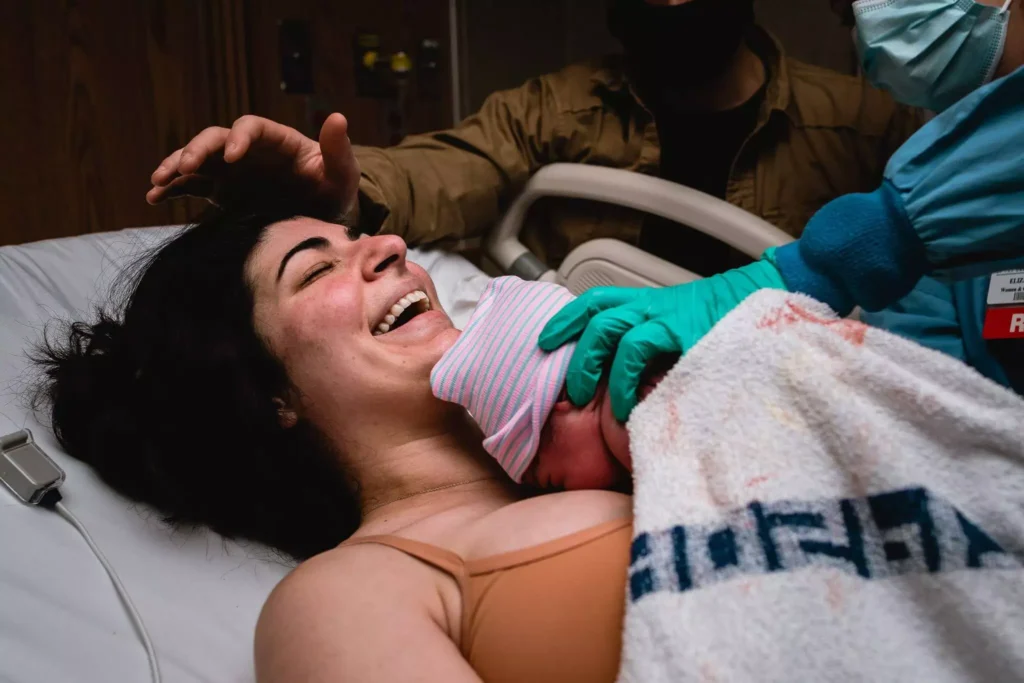

Learn the science of pregnancy and birth to take the mystery of labor away! Understand why you are feeling what you feel, and learn strategies to confidently move through pregnancy and birth!
- 9h+ of Video
- Support Group
- Close Captioning
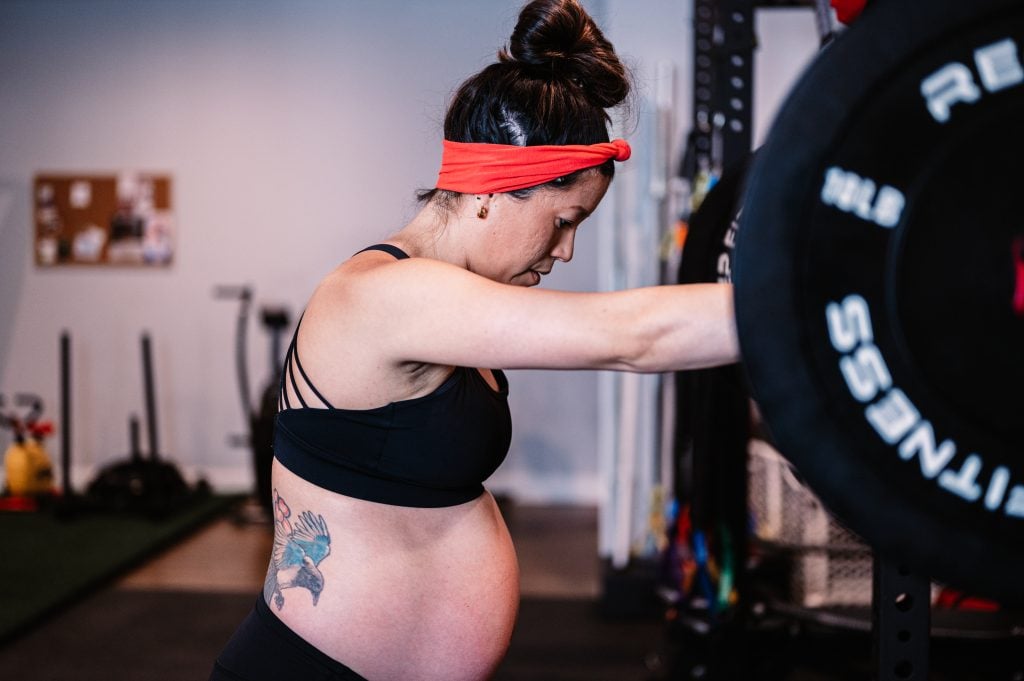

- 5 Workouts/Week
- Gym Workouts
- Self-Paced

Instructor
GINA
Workout on-demand with our prenatal fitness workout videos! Each workout is 30-40 minutes to follow along as you exercise at the same time!
- Birth Prep
- All Trimesters
- Mobility Work

Instructor
GINA
Find comfort and relief from pelvic girdle pain throughout your pregnancy and postpartum period! This program incorporates myofascial sling focused exercises to stabilize across the pelvic girdle joints.
- 3 Weeks
- On Demand Workout Videos to Follow