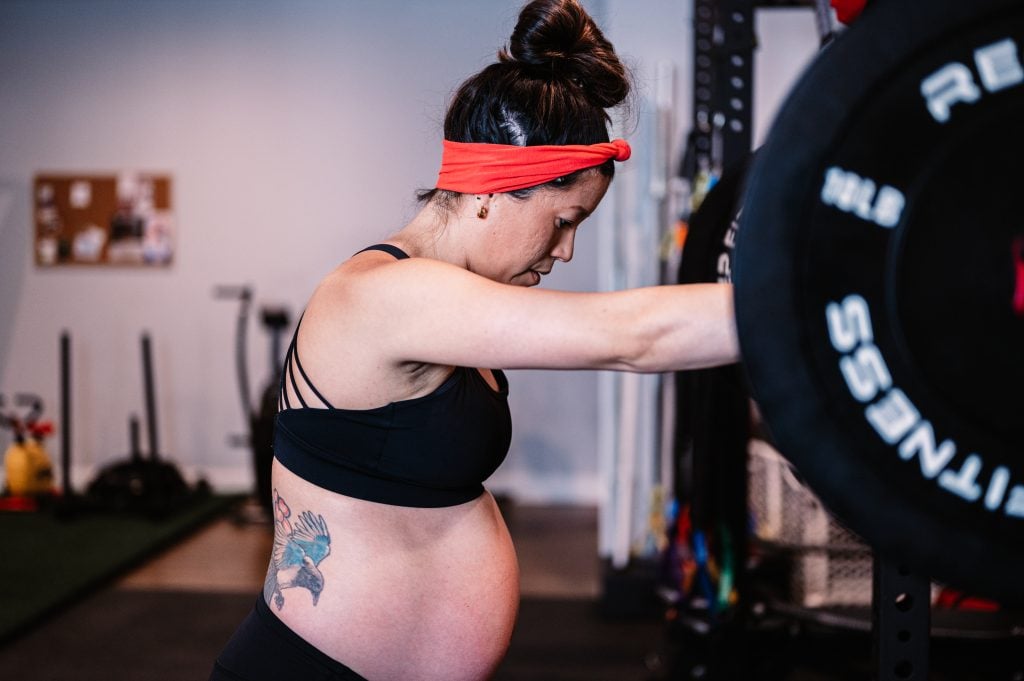
Welcome to Moments with MamasteFit! In this new podcast series, we will be discussing one case study every week from our professional experience as a labor nurse and birth doula. In this episode, the focus is on pelvic pain, specifically pubic symphysis pain, commonly experienced during pregnancy. Gina sits down with Hayley Kava, a pelvic floor physical therapist, who shares her expertise on understanding and managing this type of pain. The discussion covers the anatomy and function of the pelvic muscles, using various exercises and techniques to alleviate pain and improve mobility. Recommendations for both pregnant individuals and professionals are provided, emphasizing the importance of targeting strengthening exercises over stretching. The episode also highlights the mental aspect of pain management and the role of professional support.
What Is Pubic Symphysis Pain?
The pubic symphysis is the joint at the front of your pelvis that connects the left and right sides of your pelvic bones. During pregnancy, hormonal and mechanical changes can cause excess movement and instability in this area, leading to pain.
Symptoms can include:
✔️ Pain in the front of the pelvis
✔️ Discomfort when walking, climbing stairs, or standing on one leg
✔️ Pain when rolling over in bed
✔️ A sensation of pelvic instability
Why Does SPD Happen?
Many assume that relaxin, the hormone that increases flexibility in pregnancy, is to blame. However, research suggests that SPD is more about how the pelvis moves and how muscles engage (or fail to engage) to provide stability.
As the pelvis changes during pregnancy, some muscles become overactive while others shut down—especially the inner thighs (adductors), glutes, and core muscles. The body may compensate by over-recruiting the pelvic floor muscles, which aren’t meant to handle all that extra load.
This can lead to increased tension, poor movement patterns, and pain—especially during movements that require weight shifting (like stepping up stairs or standing on one leg).
Breaking the Cycle of Pain: What Can You Do?
Instead of avoiding movements that trigger pain, strategic strengthening and retraining movements can help. Here are some top tips and exercises to reduce SPD pain:
1. Change How You Move
- If stepping forward hurts, try stepping backward first.
- If single-leg activities feel painful, modify them by using support or adjusting foot placement.
- Practice side-to-side or backward stepping before progressing to forward movements.
🔹 Example: Instead of stepping up forwards onto a stair, try stepping up backward or sideways first to teach your body new pain-free movement patterns.
2. Strengthen Key Muscle Groups
Instead of focusing on stretching, strengthen the muscles that stabilize the pelvis:
- Inner Thighs (Adductors): Use a foam roller or resistance band to activate your adductors during exercises.
- Glute Medius: Focus on side-lying leg lifts, banded side steps, or hip-shifting exercises.
- Core & Breath Work: Engage your deep core muscles by fully exhaling your breath during movements.
🔹 Try This: Reverse lunges with a resistance band around the front leg’s thigh to activate the adductors and improve pelvic control.
3. Use Supportive Tools (Temporarily)
A pelvic belt (e.g., Serola belt) can provide temporary relief, especially for long days on your feet. However, it should be combined with strengthening exercises for long-term improvement.
4. Work with a Specialist
A pelvic floor physical therapist (PT) can assess muscle imbalances and guide you through individualized exercises to retrain movement patterns and release tension in overactive muscles.
Beyond Pregnancy: Does SPD Pain Go Away After Birth?
Many assume that pelvic pain will automatically resolve after giving birth, but that’s not always the case. If muscle imbalances and poor movement patterns remain, SPD pain can persist postpartum.
This is why strengthening and movement retraining during pregnancy is so important—not just for comfort now, but for better recovery later!
Takeaway: You Don’t Have to Suffer Through SPD Pain
- Pain is NOT a requirement of pregnancy.
- Avoiding movement won’t fix the problem—strategic strengthening will.
- You CAN regain control and move pain-free with the right approach!
For more resources, exercises, and expert guidance, check out MamasteFit’s prenatal fitness programs or connect with a pelvic floor PT for personalized care.
For more insights into birth preparation, prenatal fitness, and recovery, explore our courses at MamasteFit and use code MOMENT10 for 10% off our offerings.
Additional Resources
Prenatal Support Courses
Learn the science of pregnancy and birth to take the mystery of labor away! Understand why you are feeling what you feel, and learn strategies to confidently move through pregnancy and birth!
- 9h+ of Video
- Support Group
- Close Captioning
- 5 Workouts/Week
- Gym Workouts
- Self-Paced
Instructor
GINA
Workout on-demand with our prenatal fitness workout videos! Each workout is 30-40 minutes to follow along as you exercise at the same time!
- Birth Prep
- All Trimesters
- Mobility Work
Instructor
GINA
Find comfort and relief from pelvic girdle pain throughout your pregnancy and postpartum period! This program incorporates myofascial sling focused exercises to stabilize across the pelvic girdle joints.
- 3 Weeks
- On Demand Workout Videos to Follow