



Table of Contents
Preparing your body for labor can make all the difference in your birth experience. By focusing on pregnancy pelvic floor exercises, you can improve comfort, support your baby’s position, and set yourself up for a smoother delivery. In this blog post, I’ll share my personal pelvic floor birth prep routine, the exercises I incorporated, and how they contributed to a fast labor, minimal pushing, and no tearing.
Subscribe to our YouTube Channel for more weekly workouts and educational videos! We publish one new workout video and 2-3 educational videos a week on our channel.
Why Focus on Pregnancy Pelvic Floor Exercises?
The pelvic floor plays a crucial role in supporting your pregnancy and facilitating labor. It acts as the base of your core, stabilizing your pelvis, supporting your baby, and helping guide the baby into the optimal position for birth. Imbalances, tightness, or overactivity in certain areas can lead to discomfort during pregnancy and may impact the baby’s positioning for labor.
For me, the right half of my pelvic floor was overactive, and the back half was tight. These imbalances contributed to discomfort, including sacroiliac (SI) joint pain, bladder urgency, and a feeling of pelvic heaviness. By addressing these issues through targeted exercises, I created space for my baby to move into an optimal position for birth, leading to a smoother labor.
My Pelvic Floor Birth Prep Routine
My routine focused on releasing uneven tension in my pelvic floor and strengthening it through a full range of motion. Here’s a breakdown of the workout:
Warm-Up: Releasing Uneven Tension
Half Lunge Stretch
- Target: Right pelvic floor release.
- Position: Right leg forward, focus on keeping weight on the big toe and rotating your belly away from the thigh.
- Benefit: Helps to offload the right side of the pelvic floor and create balance.
90/90 Hip Mobility Switches
- Target: Pelvic mobility and hip rotation.
- Position: Sit with one leg externally rotated and the other internally rotated. Alternate between stretching side body and hip flexors.
- Benefit: Improves overall pelvic mobility and prepares the pelvic floor for labor.
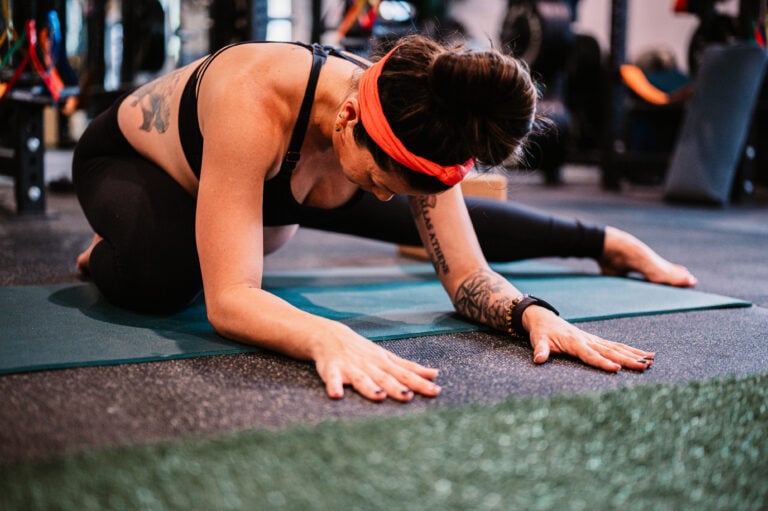
Tabletop Hip Shifts
- Target: Posterior pelvic floor release.
- Position: Place a yoga block under one knee, shift weight over to that side, and move your pelvis forward and back.
- Benefit: Relieves tension in the SI joint, tailbone, and back of the pelvis.
Strengthening Exercises: Building Dynamic Pelvic Floor Movement
Standing Hip Shifts
- Target: Glutes and hip flexibility.
- Position: One foot on a yoga block, shift weight diagonally over the elevated leg.
- Benefit: Encourages dynamic movement of the pelvic floor.
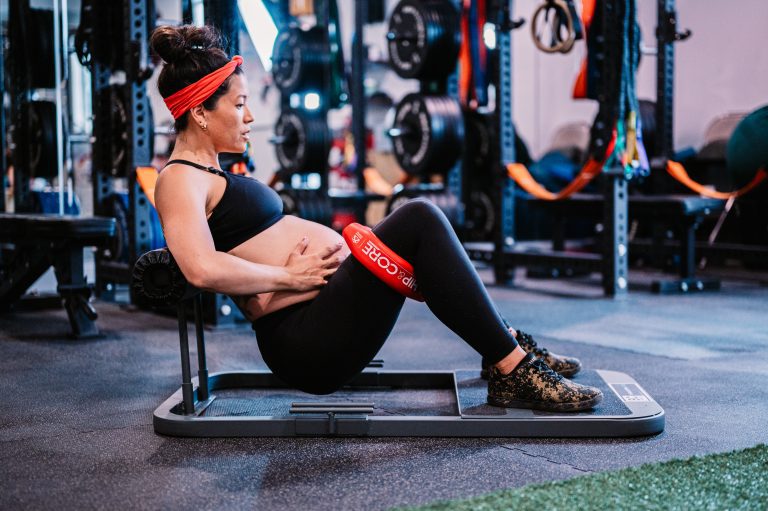
Lateral Hip Shifts with Weight
- Target: Adductors and glutes.
- Position: Feet wider than hips, shift weight side to side while rotating your upper body.
- Benefit: Strengthens and stretches the pelvic floor and improves hip mobility.
Archer Row and Press with Resistance Band
- Target: Upper body rotation and pelvic alignment.
- Position: Use a resistance band to row and press while shifting into your hips.
- Benefit: Integrates upper body movement with pelvic floor activation.
 Video course · 7 modules
Prepare Your Pelvic Floor For Birth
Seven modules on releasing the pelvic floor rather than only strengthening it — breathing drills, thoracic and pelvic mobility, and how to relax it during labor.
Learn more
Video course · 7 modules
Prepare Your Pelvic Floor For Birth
Seven modules on releasing the pelvic floor rather than only strengthening it — breathing drills, thoracic and pelvic mobility, and how to relax it during labor.
Learn more
 On-demand video · 24 workouts
Birth Prep Workout Program
Twenty-four workouts that open the pelvis for each stage of labor — strength, mobility, and positioning you can start at any fitness level, 15 to 30 minutes each.
Learn more
On-demand video · 24 workouts
Birth Prep Workout Program
Twenty-four workouts that open the pelvis for each stage of labor — strength, mobility, and positioning you can start at any fitness level, 15 to 30 minutes each.
Learn more
 Video course · 9+ hours
Childbirth Education
Over nine hours of video on contractions, comfort measures, pushing, and recovery — so you walk into labor knowing what's happening and what your options are at each stage.
Learn more
Video course · 9+ hours
Childbirth Education
Over nine hours of video on contractions, comfort measures, pushing, and recovery — so you walk into labor knowing what's happening and what your options are at each stage.
Learn more
Benefits of My Routine
Incorporating this workout into my pregnancy routine provided several benefits:
- Reduced Discomfort: Addressing pelvic imbalances relieved my SI joint pain and bladder urgency.
- Optimal Baby Positioning: Improved pelvic floor flexibility allowed my baby to engage in a great position for labor.
- Smoother Labor: Active labor lasted just 90 minutes, with only five pushes and no tearing.
Tips for Success
- Focus on Balance: Your body is naturally asymmetrical, so you may need different exercises for each side.
- Incorporate Mobility: Stretching and dynamic movements prepare your pelvic floor for the range of motion required during labor.
- Strengthen Smartly: Build strength across the pelvic floor, not just tightness, to allow for flexibility during delivery.
Conclusion
If you want to incorporate these exercises into your pregnancy routine, check out our prenatal fitness programs at MamasteFit.com. Use code YOUTUBE10 for 10% off our offerings, including bundled programs that cover prenatal fitness, childbirth education, and pelvic floor prep.
 Bundle · lifetime access
MamasteFit Bundles
Combine courses and programs for lifetime access and save up to 15% — grouped for birth preparation, the third trimester, or the whole pre and postnatal journey.
Learn more
On-demand video · 30 workouts
Core, Pelvic Floor & Pelvic Stability
Thirty follow-along workouts across beginner, novice, and advanced levels, ten per level — core and pelvic floor strength for pain relief in pregnancy or postpartum.
Learn more
Bundle · lifetime access
MamasteFit Bundles
Combine courses and programs for lifetime access and save up to 15% — grouped for birth preparation, the third trimester, or the whole pre and postnatal journey.
Learn more
On-demand video · 30 workouts
Core, Pelvic Floor & Pelvic Stability
Thirty follow-along workouts across beginner, novice, and advanced levels, ten per level — core and pelvic floor strength for pain relief in pregnancy or postpartum.
Learn more
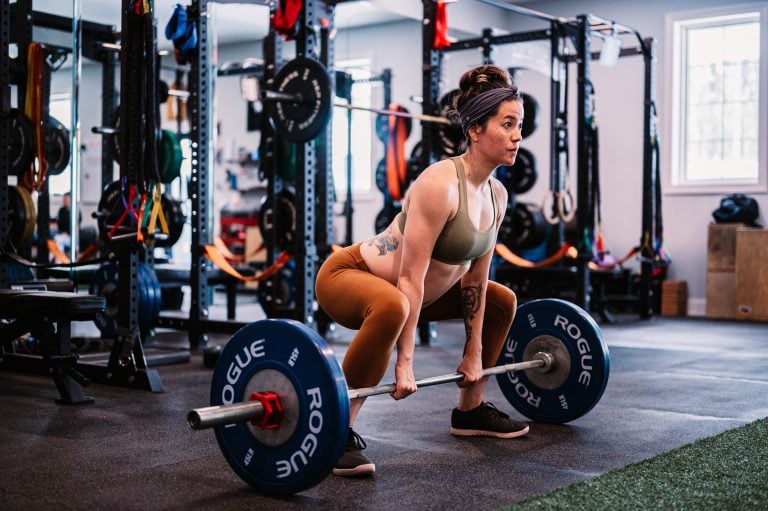 App program · 40 weeks
Prenatal Strength Training
A gym-based program that syncs to your current week of pregnancy — four strength sessions plus one pelvic stability workout a week, with demo videos for every exercise.
Learn more
App program · 40 weeks
Prenatal Strength Training
A gym-based program that syncs to your current week of pregnancy — four strength sessions plus one pelvic stability workout a week, with demo videos for every exercise.
Learn more