



Welcome to the MamasteFit Podcast! In this episode transcript, we will be discussing how to support your early postpartum healing, how to return to fitness after birth, and our personal journeys after birth.
Are you Ready to empower yourself to recover after birth?
Join our postpartum return to fitness programs! Our postpartum recovery programs guide you step by step to return to feeling strong again after birth! Just gave birth? Join our FREE early postpartum recovery program to guide your initial recovery from birth to about a month or two postpartum!
Listen to the MamasteFit Podcast and empower yourself as a mother! With two new episodes every week, we bring you educational insights on Wednesdays and captivating birth stories on Fridays.
Subscribe now to never miss an episode and stay up-to-date with the latest insights, stories, and advice from our expert hosts and guests.
The "All Clear"
Approaching your return of fitness after birth can feel pretty daunting. Likely at your all clear postpartum appointment. There isn’t much guidance in how to return to your pre pregnancy workouts. Maybe the advice was just to ease back into it, lift a little bit lighter of weight, like maybe run a mile instead of ten. And it’s a little unfair to expect our providers to be the expert in every aspect of our lives to include how we return to fitness. And so there are other professionals out there who could potentially be more helpful for you when it comes to returning to fitness, such as a perinatal fitness instructor or like a pelvic floor physical therapist.
Immediate Postpartum Tips
- Rest as much as possible
- Vaginal Birth: Ice Packs & Perineal Sprays
- C-Section: Incision Support
- Pain Relief: OTC
- Perineal and Belly Support
- Hydration and Nourishment
Gina: Let’s start with day one postpartum. You just gave birth. Roxanne, what can we do to immediately support our healing after birth?
Roxanne: For the first 24 hours we want to rest as much as possible. So laying in the bed, if you’re in the hospital, you can get up out of the bed and kind of like walk around the room, but ideally try to stay as much in the bed as possible using ice packs and comfort measures for the discomfort.
If you had a vaginal birth, ice packs on the vagina and the perineum for 24 to 48 hours using perineal sprays.
And then if you had a C-section, use items to support the incision. So, you can use belly bands or even perineal support devices.
External perineal support devices, like the Mama Strut or the Bao Bei Bloomers, are really nice for both C sections and vaginal births.
This course breaks down what to expect postpartum from the moment your baby is born to the first few weeks postpartum! Learn what options you have available to you in your care!
- 2-hr webinar
- PDF of PowerPoint
- Upcoming Live Webinar & Q&A
- Watch on Mobile Device
Taking the overcounter medications for pain relief because we will have some cramping postpartum because the uterus was really large and needs to cramp down and cramp down to return to its usual size, which is about the size of our fist and that can take a couple of days and then rest.
Hydrate and eat.
Also, like nourishing foods is ideal. So not going to like McDonald’s for every
single meal during your postpartum, especially that 1st 24 hours is better. But
also try to eat something. So if that’s all that’s available to you, then
that’s better than nothing.
What not to do early postpartum
Roxanne: But I can also tell you what not to do in your postpartum, which is go shopping for a TV at two days postpartum after your newborn baby’s visit. Not ideal, especially if you’re choosing to baby wear that entire time and your baby is like eight pounds.
Maybe don’t go to a wedding at one week postpartum when you’re still bleeding from your body and figuring out breastfeeding.
And then maybe as much as I preach that a CPR class is really beneficial as a parent, maybe not doing it one week postpartum is a good idea. So those are just some ideas. Not saying that that’s what I did, but that is what I did, so don’t do what I did.
Supporting Your Early Postpartum Healing and Recovery
Gina: In addition to the medical aspect of caring for our body in that early postpartum period, we can also begin to reconnect with our pelvic floor and our core even before the all clear.
We’re not necessarily like running to the gym and working out before we get clearance from our provider or before our bleeding has stopped, but we can do some gentle movement to begin that rehabilitation process because four to six weeks is too long to do nothing. But less than that is also too little to jump right back into a fitness program.
This mini-course guides you through the first month postpartum as you begin your recovery after birth! This program includes weekly guidance on how to reconnect with your core and pelvic to support your healing.
- Breathing and Core Connection Exercises
- Mobility Exercises to Relieve Common Discomforts
- Gentle Core Exercises
- Watch on Mobile Device
And so what we can do to help reconnect with our pelvic floor and our core in these early days is we can begin with gentle diaphragmatic breathing, even on day one postpartum.
Reconnecting with Your Core: Diaphragmatic Breathing
And then you're going to feel the back half of that pelvic floor kind of load and lengthen gently. And then I'm going to exhale to lift up and in. It's just a gentle contraction. So I'm going to inhale to feel everything kind of expand and then exhale to lift up and in. And you can do this every time you feed your baby as your first way to reconnect with your core after birth.
Gina Conley, MS Exercise Science, Birth Doula
What diaphragmatic breathing is, is our diaphragm is at the bottom of our ribcage. So it’s the bottom of the thoracic cavity where our lungs reside. And then our pelvic floor is at the bottom of our pelvic cavity.
These two muscles are moving together to regulate the pressure within our thoracic cavity and within our abdominal cavity. And so, when we do diaphragmatic breathing, we’re working with the entire core system to stabilize the spine as we regulate pressure within our torso.
And so, when I take a big inhale, my diaphragm is going to flatten as it moves down. And that downward pressure is increasing pressure within the abdominal cavity. So it’s decreasing the volume, which is going to increase that pressure.
That’s going to be decreasing the pressure within the lungs so that we can pull air into our lungs. And so, we’re not necessarily like sucking air in, but the lower pressure gradient within our thoracic cavity is what kind of pulls the air into our lungs. Then when I have that inhale, that moves the diaphragm down so it’s flattening and spreading out. It’s increasing pressure within the abdominal cavity and so our abdominal wall, our back are going to expand outwards.
And then our pelvic floor is going to load and lengthen and move downwards as well. And so, as the diaphragm moves down, everything else is also kind of moving down and out as well.
Then when we exhale in the early postpartum period, we kind of have two options. With the exhalation, we can either just exhale and completely relax and allow everything to kind of recoil back in.
So, if you think about like a rubber band, so I’m pulling the rubber band and I’m stretching it. When I let go of the rubber band, if it doesn’t fling into my finger and hurt me, it is going to come back together.
And so, that’s kind of what we’re doing with our exhalation. We’re lengthening and stretching and kind of gathering energy with our inhalation. And then we exhale to release or to relax. And it’s just going to recoil kind of back into the resting positions. And so, one thing that we can do with the exhale is just to relax and to release.
And then the other thing that we can do is we can add some activation. And so we can exhale to lift the pelvic floor up and in. So, kind of like that Kegel or pelvic floor activation type movement. So, if you think about like a blueberry, you’re picking up a blueberry with your vagina and lifting it up and in without crushing it, the abdominal wall and the back are going to come inwards. And all of that muscular force is going to kind of push the diaphragm back up as well.
Inhales diaphragm moves down, it increases pressure in the abdominal cavity, which is going to respond with the abdominal wall in the back and the pelvic floor, which are all going to load and lengthen.
This gathering of energy is a state of tension. So, inhales are not relaxed. It’s a state of tension. Similar if I was stretching like my hamstring or any other muscle in my body, the stretching position would not necessarily be a relaxed position unless you were like super flexible, I guess, which it would not be a state of tension.
The exhale is where we relax. So inhales increase pressure. Exhales are either going to release and recoil back in or we’re going to exhale to add muscular force, which is going to help stabilize the spine.
In the early postpartum period, we can inhale to gently expand and kind of move the pelvic floor and the diaphragm. And this is also going to move our abdominal wall and our back. And then we can exhale to gently kind of lift up and in. And so, this is a very, very gentle movement. Initially, I’m not trying to find my deepest inhalation and my strongest exhalation. I would say it’s like 40% to 50%. So we’re just expanding and then we’re inhaling to expand and we’re exhaling to lift up and in. And this is our first core work that we can do postpartum.
And we can do it in different positions such as laying on your back, or laying on your side, finding a position that’s really comfortable for you in these early days is going to be a great way to incorporate some initial rehab work.
And you can do it like every time you feed your baby, whether you’re breastfeeding or formula feeding or bottle feeding, as you’re feeding your baby, we can think about, okay, I’m going to inhale move my diaphragm down as I expand in my backside. So think more like the ribs are expanding out, the back is expanding out as opposed to the belly.
And then you’re going to feel the back half of that pelvic floor kind of load and lengthen gently. And then I’m going to exhale to lift up and in. It’s just a gentle contraction.
So I’m going to inhale to feel everything kind of expand and then exhale to lift up and in. And you can do this every time you feed your baby as your first way to reconnect with your core after birth.
Physical Healing Approach Early Postpartum
- Day 0-5: Rest In the Bed
- Day 5-10: Rest On the Bed
- Day 10-15: Rest Near the Bed
Beyond breathing and using these diaphragmatic breathing techniques, how can someone approach their healing before they receive that all-clear from their provider?
Generally, we want to focus on five days in the bed, five days on the bed, and then five days near the bed.
And so this may or may not be realistic for you, depending on the type of support that you have, like whether or not you have paid maternity leave, whether or not your partner has paid maternity leave.
But in the perfect world, we can really focus on just resting the first two weeks postpartum. And so the first five days we’re generally laying in bed, allowing for that initial tissue healing to happen.
If your bleeding increases after increased activity, this could be related to doing too much too soon. And so we can really use our bleeding as a tool to help us better understand whether or not we're doing too much or where we can potentially, quote, unquote, push ourselves a little bit more in these early days.
Gina Conley, MS Exercise Science, Birth Doula
And so birth is the trauma that happens to our tissues, to our pelvic floor, to our body, regardless if you had a vaginal birth unmedicated at home, with no interventions, or if you had a Caesarean birth where you pushed for 6 hours. And so birth is still a traumatic event that happens to our bodies and it requires a lot of healing in those early days.
So if we can spend the first five days mostly just in bed, focusing and bonding with baby, that would be great. And again, that’s in an ideal world where you have other people to help support you in the early days that allow you to really just focus on laying in bed.
The next five days are going to be like on the bed. So, you’re starting to get up out of bed and move a little bit more around your house. Maybe you’re doing a little bit more, but still generally on or right next to the bed.
The first five days you’re not just laying in bed and doing nothing. You can obviously get up and shower and use the bathroom and things like that and go eat at the table. But we’re kind of mostly focusing on staying off our feet these first like ten days and then we move into the final five days of this initial rest period where we’re just staying near the bed.
And so at this point, you can get up and probably move around your house a whole lot more. We’re increasing our activity, maybe we’re going for short walks.
As we begin to increase our activity over these 1st 15 days, we’re really monitoring our bleeding. So around day seven through ten, the placental scab detaches and you might have increased bleeding for like a few hours, but it shouldn’t be like the whole day. Like you might just notice that your bleeding has picked up and then after a few hours it goes back to where it was before.
If your bleeding increases after increased activity, this could be related to doing too much too soon. And so we can really use our bleeding as a tool to help us better understand whether or not we’re doing too much or where we can potentially, quote, unquote, push ourselves a little bit more in these early days.
And so the first two weeks we’re mostly focusing on staying in the bed or near the bed, doing a lot of those diaphragmatic breathing drills and mobility. So thinking like being on your back side, lying all fours.
If you had a vaginal tear, you may find that wide leg positions or sitting on your bottom doesn’t feel great. If you had a C section, you may find twisting movements, bending over or arching or laying on your belly doesn’t feel great.
And so in these early days, exploring movement very gently and exploring how it feels for you and your body is really important. So what felt really good for me and my body is different from what felt really good for Roxanne and what may feel different for you and it’s okay.
And so these early days it’s just kind of like how does this position feel for you? Do you feel like it’s restorative for you or do you feel like you’re straining or stretching within it? During the first two weeks we are just really focusing on allowing our body to heal.
And again, there was a lot of tissue trauma that occurred during our birth and so staying off our feet as much as possible is helpful.
Preparing for the Postpartum: Tasking and Asking for Help
Then focus on the only me tasks. So you are the only one that can accomplish this task. And I don't mean like you're the only one that can do dishes or do bedtime. I mean you're the only one that can shower for you. No one else can take a shower for you, no one else can eat for you, and no one else sadly, can sleep for you.
Gina Conley, MS Exercise Science, Birth Doula
And then focus on the only me tasks. So you are the only one that can accomplish this task. And I don’t mean like you’re the only one that can do dishes or do bedtime. I mean you’re the only one that can shower for you. No one else can take a shower for you, no one else can eat for you, and no one else sadly, can sleep for you. It would be so much so helpful if someone else could just take a nap for me. Or eat. For me, that would be wonderful.
Focusing on the only me tasks in the first two weeks can really help you focus on your own healing. So, the dishes and the chores can wait. Which was really hard for me the early postpartum because I really like my house to be in a certain state of organization because it stresses me out when things are all over the place.
Roxanne: Gina is always stressed out.
Gina: I know, seriously, because I love slime and sand for my children. So, for me, letting go that it’s okay if the toys are not put back in the correct bin every night. And allowing other family members to kind of manage that was really important so that I could just let go and focus on my own healing those first few days.
And so maybe even you’re pausing like your kids activities, like, hey, we’re not going to go to swimming this week, or coordinating with other family members and friends to support household tasks, going to your kids appointments and activities, managing your pets.
So planning during your pregnancy, who’s going to manage those different activities such as the kids, the pets, different appointments, household chores, is really, really helpful and something that I would recommend doing before you even give birth.
Nourishment for Postpartum Recovery
- Meal Prep: Fed and Fit Freezer Meal Plan
- Meal Train: Have others prepare meals for you postpartum
- Delivery: Order delivery and ask for gift cards from distant friends and family
- Local meal delivery service
So we talked a lot about physically what you can do in your body to support your recovery. But nourishment is something we haven’t talked about yet that is also super important for our postpartum recoveries.
So how can we support our nourishment requirement for postpartum recovery?
Meal train, meal prepping before birth, either of those things are great ways to support our nourishment.
Fed and Fit has a really awesome postpartum meal plan that you can literally just Google and we’ll include them in our show notes. DoorDash is what kind of my go to or Uber eats that I use during my postpartum.
So a really great thing you can ask for at baby showers or after baby has arrived is if family members or friends want to support you in the postpartum, they can just buy you a gift card for DoorDash or Uber Eats so that you can buy still nourishing food but you don’t have to cook it.
And then another great option is if you have a meal delivery service local to your area, you can Google it. Usually, everywhere that I’ve lived there is some sort of meal delivery service that will deliver to your front door homemade meals for you. And they’re usually pretty delicious.
We have a local business, Spoon Lickers, if you’re local to the Sand Hills area, Aberdeen, and Southern Pines areas, they are amazing. We’ve used them for all of our postpartum that we’ve been in North Carolina.
They also just started a subscription, so you don’t even have to remember to place your order weekly. It’ll just arrive on your doorstep every Tuesday night. They do gift cards, which was pretty solid because just like you can ask for DoorDash gift cards, if you’re local to us, you can ask for Spoon Lickers gift cards.
Cultural Expectations Postpartum
Another consideration for the early postpartum period will be kind of cultural expectations, depending on where you come from or where your family comes from.
So our mom is very passionate about our early postpartum healing. She is from South Korea and she immigrated to the United States in the early 80s. And when she was growing up, postpartum healing was really emphasized. And I think it still is like a really big deal in Korea, but it might be a little bit less now that we’re all a little bit more Westernized.
And so in South Korea, when she was growing up, it was eating lots of seaweed soup, which has a lot of iron within it. It’s like a very nutrient-dense broth only eating hot foods, so nothing cold. She wouldn’t let us drink ice water or there was ice cream. I wasn’t allowed to have a bowl of ice cream.
There’s this belief that cold foods can inhibit your healing, which I see to be pretty common in various Eastern cultures. Lots of rest, so don’t do anything other than feed the baby, and then lots of family support. And so we’re really fortunate because we live right next to our mom and our dad. We live next to each other, and so we have a lot of family support between the three families.
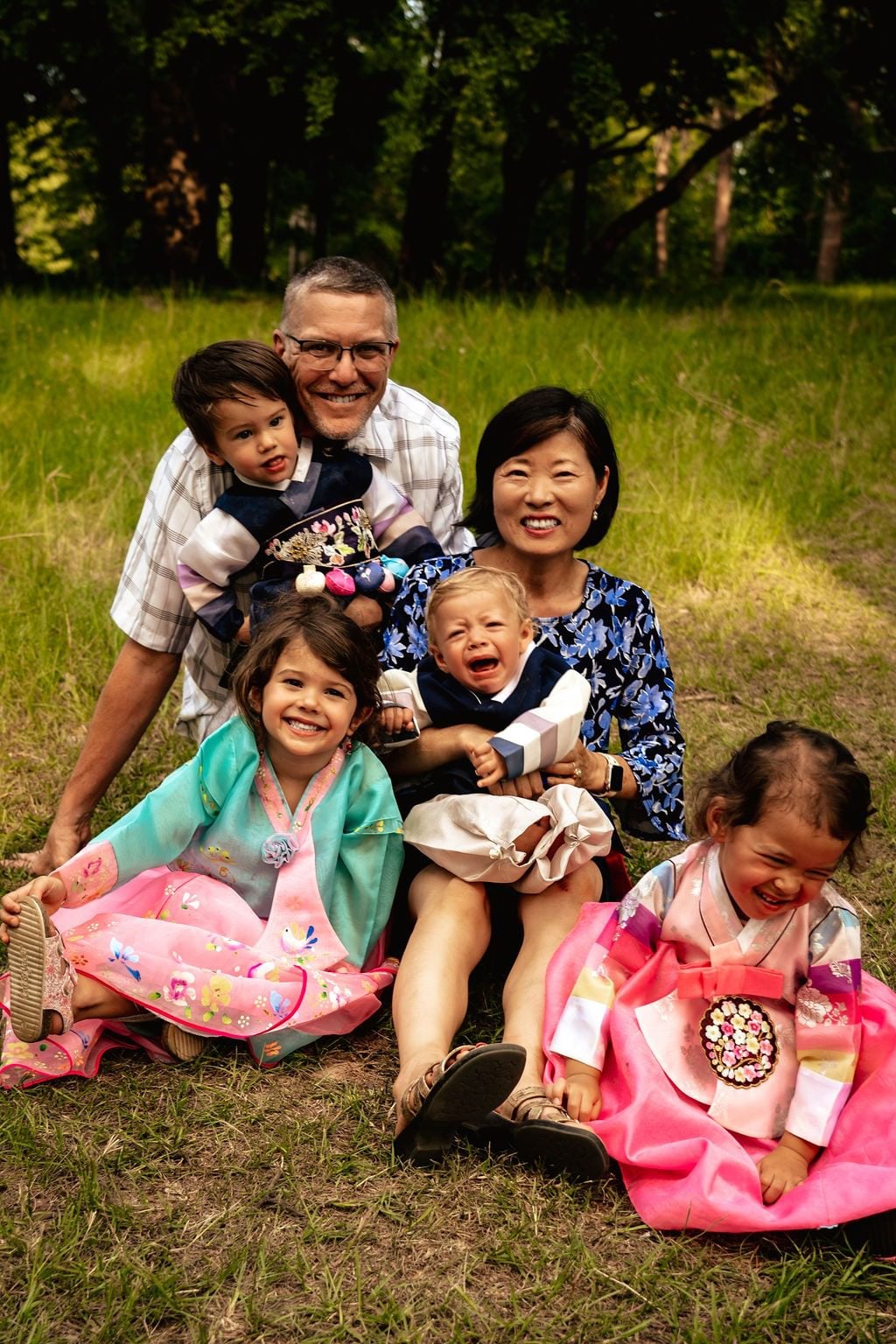
And so, in Korean culture, this postpartum healing phase where you’re really cared for lasts from one to three months. And it’s essentially the fourth trimester.
And so, our mom just makes tons of seaweed soup for us to eat. Every time she’d leave the house, she would call my husband and be like, did you feed Gina seaweed soup? She needs to eat seaweed soup to heal. And then she would text him in the morning and be like, make sure you heat up seaweed soup for Gina before you leave for work.
And when we say like she is feeding seaweed soup, I mean you’re eating seaweed soup for breakfast, lunch, and dinner if she was there to feed it to you. I ate seaweed soup for like a month straight. I literally cannot physically eat any more of this. I know it is delicious and I’m supposed to, but I need to eat something else. Mom, please.
So, in addition to our mom providing a lot of support in the early postpartum, she was also helping us give our baby a bath so that we can rest and hold the baby while we took a shower. And she is just phenomenal in every way. And I hope she listens to this podcast to know that we could not survive without her.
Partner Support: How Your Partner Can Help Postpartum
But our partners also play a really big role in supporting us in the early postpartum period because we’re the ones that are healing from birth. And so our partners can play a big role in kind of managing the household and managing other children that we have and supporting our ability to heal.

Gina: So for me, my husband is really big on cooking and he takes managing our older kids and feeding me very seriously as a part of his role after our birth.
And we’re also very fortunate that our husbands get paternity leave from the army. And so with our first, he only got about three days of the ten days that he was supposed to have and then by the time our son was born, it had increased to three weeks of paternity leave.
And so for both Eoghan and Sophie, my husband got three weeks of paternity leave and now the army has it for three months for the partner, which is really awesome, like super pumped. Yeah, for maternity leave, it used to be six weeks and then it increased to twelve before I gave birth to Adeline about five or six years ago. And the paternity leave is now kind of increasing as well. And so I think maternity leave is even more than twelve at this point.
Roxanne: So my husband, with our first daughter, he had just got back from deployment, so they were still kind of doing all of that process of getting settled back in.
So he got the full three weeks and he really took on the role of keeping our house clean and tidy, organizing meals, if not organizing what we were going to eat for that night, so, like, ordering it if we needed to, and then taking care of our dog.
So at the time when our first and second kid so Lily and Colin, when they were born, we had two dogs at the time, and so he kind of took on ensuring they got walked every day.
And it was also really good for him to get out of the house and get some fresh air because he was running a lot more things than he was used to. But it was nice for me not to have to worry about, like, oh, I hope that the dogs are also not getting neglected now that we have this new baby or new babies in our lives. And then when we had our second child, he took on the task of ensuring that our daughter was entertained throughout the day.
So not just like household tasks, but also entertaining, but the only issue, he did not get the full three weeks with my son. So our second birth, because he had just started his master’s degree, so he got about five days of paternity leave before he started back at school, so thankfully my mom was able to help in the meantime since he was not able to help when he was in class.
Our Struggles Early Postpartum

Gina: I will say though, in the early postpartum I did find myself getting really frustrated that everyone else could just leave and go do things without having to think about the baby or like their body parts falling out.
So that was something that I kind of was struggling with in the beginning, was my husband could just get up and go run this errand or take care of this random task while I was kind of stuck at home because I couldn’t leave the baby without coordinating with anybody else. So that was something that I kind of struggled with in the early days.

Was there anything that you struggled with the early days?
Roxanne: So both my kids had breastfeeding issues, so it was really just like dealing with that in such an early period postpartum of worrying if I was feeding my baby enough.
And also it was hurting a ton and then because of their tongue ties, I was not sleeping as much. So, it was just like so frustrating because it was probably the hardest part was like, what I envisioned my postpartum period being like was not what had actually occurred.
But it’s also important to note we keep talking about how you should rest and stay in bed for these first two weeks postpartum.
But you will probably have to leave your house at some point for appointments for the baby or if you want to take baby to see a chiropractor or get cranial sacral, therapy, or massage.
Those are reasons that you’re probably going to have to leave your house because that involves the baby and you can’t really separate yourself from the baby. So, like, your partner can’t take the baby to the newborn visit because that could potentially be three to 4 hours that you’re separated from your baby and they’re probably going to get hungry in that time period.
So there are times that you will probably have to leave your house to go to that two-day baby appointment. Go to the two-week baby appointment, and if you make like, chiropractic appointments or cranial sacral therapy appointments in between that time period, you would have to go to those appointments.
So we both took our kids to the chiropractor within the first week after birth. And then my daughter, I took to cranial sacral therapy very often within that first month postpartum. So it’s okay to leave your house if you have an appointment that you need to go to. But I wouldn’t schedule a facial at three days postpartum to like, hey, I’m just going to go get a facial at three days postpartum for fun. Or hey, I need to go to this appointment to grab something from Best Buy just for fun. I would never schedule an appointment that did not have a purpose.

So don’t go buy a TV two days postpartum. If you do have to leave your house, wearing, like, a belly band or like, perineal support can be really helpful as well to give you that little bit of extra support if you do have higher demands.
And so that’s something else to consider as well if you don’t have the support to help you rest in those first two weeks postpartum, having external support devices can be super helpful.
So let’s say your partner doesn’t get paternity leave and you live really far from family and no one can come and help you. Wearing a belly band and a perineal support garment can help provide some support as you kind of tend to the things around your house, especially if you have a toddler in addition to a newborn baby.
Differences in Postpartum: Gina's Hospital versus Home Birth Experiences
Gina: And so one of the really nice things about not giving birth in a hospital was one, I felt like I got more rest because when I was in the hospital, like, day one postpartum, I felt like someone was like busting into the room like every 30 minutes to rub my fundus.
And I actually didn’t totally understand what my fundus was. And so some nurse told my husband, “make sure that she does some fundal massage because her uterus can flip over.” And so he tells me this and I’m like, what is a fundal massage? And so we’re like, YouTubing like, trying to figure out what a fundal massage is because we don’t want my uterus to flip and be upside down. So, giving birth at home was nice because I didn’t have a crazy nurse telling me all sorts of stuff.
Roxanne: But also, Gina has a baby. Her sister is a labor and delivery nurse who also was postpartum for three years. You think that she would think, hey, I should ask Roxanne what the heck a fundal massage is instead of YouTubing it.
Gina: Yeah, I was like rubbing my belly and massaging it, trying to figure it out.
Roxanne: there were a lot of things Gina probably should have asked me for some advice on.
Gina: So the really nice part about giving birth at home was one, someone wasn’t busting into my room every 15 minutes to scare me.
But my midwife and her birth assistant actually came to my house for the first two weeks to do our visits. So they came at 24 hours, like three days, seven days, and then two weeks.
And so I didn’t need to go to my pediatrician at two days or two weeks with my baby because midwives can provide newborn care for up to the first month postpartum.
And then we also had a really great friend that actually came to our house to do cranial sacral therapy on our baby. And so, the benefit of doing chiropractic care or CST on your baby is that birth is also physically traumatic for them. And so doing these minor adjustments can help kind of release tension and sometimes it makes breastfeeding easier, which was the case for us.
And so I definitely found that after an adjustment, my baby was able to relax a lot more. Not everybody’s into it, but that was our personal experience and is the experience of a lot of our friends as well.
So if you’re like, what is this woo stuff that they’re talking about? We do find that getting chiropractic adjustments for your baby shortly after birth and then if you have cranial sacral therapy available in your area, that’s for babies can really support your breastfeeding and your feeding journey.
Recap on the Early Postpartum: Birth to Week 2
- Emphasize Rest Frist Two Weeks
- Diaphragmatic Breathing as First Core Exercise
- Gentle Mobility and Core Work
- Ask for Help
- External Support
So to recap, for the first two weeks postpartum, we’re mostly just laying in bed, or we’re laying near our bed, really emphasizing resting diaphragmatic, breathing, some gentle mobility to just move our spine, because you can start to feel like, super stiff from being in one position for long periods of time and then really asking for lots of help, if possible.
And then if you don’t have a lot of support near you, like wearing a belly band or perineal support can be helpful to provide that external support as your body is healing.
Early Postpartum: Week 3+
So after the first two weeks postpartum, we’re probably starting to get a little stir-crazy and want to leave our house. And so continuing to just lay in bed and do nothing is really not going to be incredibly beneficial for you anymore. We want to get up and start moving our bodies.
And so starting around week three or ten to 14 days postpartum, we can start increasing movement, such as going for short walks as you do these walks, monitoring bleeding, and ensuring that it’s not increasing significantly. Maybe a little bit is okay, but it shouldn’t be like clots or bright red by any means. So as we increase activity, one way that we can tell if we are doing too much is to monitor our bleeding.
Postpartum Bleeding: When to Be Concerned
So what should we be watching for Roxanne to monitor our bleeding? How do we know when it’s an issue, like when we’re doing too much? When should we call our provider when it comes to postpartum bleeding?
- Passing clots bigger than an egg
- Soaking a pad in less than 1-2 hours
Roxanne: So with postpartum bleeding, reasons to call your provider for it during any time postpartum is if you are saturating a pad in less than one to 2 hours. So I’m not talking about panty liners, I’m talking about a real full-on menstrual pad. If you are filling that in less than one to 2 hours, that is concerning. You should definitely go and be seen.
If you are passing any clots that are bigger than like I would say an egg for the first couple of days, that is concerning and you should either reach out to your provider or go in and be seen, especially if you are also having that increased bleeding with the saturating of the pads.
So, our bleeding is going to gradually become less and less as the days goes on and it’s going to change color and consistency throughout the first four to six weeks. Everyone has a different timeline of how long they’re going to be bleeding for, but on average it’s about four to six weeks.
For most of us, the first like five days is more of that bright red bleeding and it’s like the first day of your period, the first or second day of your period that it’s a little bit heavier and becomes less and less gradually.
Then it’s going to slowly start to change into more of like a dark brown or dark red consistency. This is like an old blood color.
This means the blood has just been there for a while and then it’s going to slowly go into more of like a pink tinge to clear almost yellow kind of color. And then the last and the longest phase is this white color.
And this is because that wound that’s in our uterus where our placenta was attached, that is the wound that is healing and that is what’s causing all of this discharge. So just like if you scraped your knee, that knee goes through a different process. It’s not bleeding the entire time that it’s healing. It goes through different cycles.
So that same healing process is happening within our uterus where it’s just a little different of an environment. So it’s in that moist environment. So we see all of the different stages versus if you scrape your knee, it’s a dry environment and it’s just that scab.
And all of this is happening just underneath that scab. So you just don’t see it. So a sign that you are doing too much activity too soon is if your bleeding slowed down like you had that gradual decrease in bleeding or it has stopped being bright red. So now you’re in that phase where it’s either like pink tinge or almost like yellow too clear.
And then you increase your activity and you start to have bright red bleeding again. This could be a sign that you’re doing too much too soon. And that uterine wound is not ready for the amount of activity that you’re doing. So you’ll either have increased bleeding or start to have some clots because it’s almost like you broke open that scab within your uterus and that’s what’s causing that bleeding.
Reintegrating Core Exercises
- Inhale to Eccentrically Load: Move WITH Gravity
- Exhale AGAINST Gravity to Counter Pressure Increase
So in addition to incorporating walks to begin to move our bodies postpartum, we can also begin to incorporate gentle core exercises which is going to help us integrate more of this breath to movement coordination.
What does breath to movement mean?
And so breath to movement means that the way that I am breathing is coordinating with how my body is also moving. And so this is like the foundation to returning to fitness after birth. The way that we breathe and how we coordinate it to the movement that we were doing is going to enhance our stabilization, it’s going to increase our strength and it’s going to improve our performance.
And so when I am eccentrically loading or lengthening my body, so I’m stretching my muscles, I want to inhale to increase pressure. This increase in pressure is going to better stabilize my spine. So pressure is the best way that we can stabilize our spine.
And so if you watch somebody who’s like lifting really heavy weight, they inhale to take a really big breath into their thoracic cavity and then they hold their breath as they maintain this increased intra-abdominal pressure or increased pressure within their abdominal cavity as they lower the weight. And then they stand back up and then they take an exhale because inhalations and that increase in pressure is going to be the best way to stabilize our spine. Inhalations are also the eccentric loading portion of our breath. And so we want to match that to when we are lengthening.
The other half of this is going to be the concentric loading or the shortening portion of our movement, matching that with the muscular activation portion of our breath, which is the exhalation.
And so when it comes to incorporating this breath to movement, with our core exercises, we’re focusing on can we maintain our torso position as our arms and legs move. And so we started with that diaphragmatic breathing where we’re inhaling down to feel the core expand and the pelvic floor load and lengthen. And then we’re exhaling to kind of lift everything up and in or we’re exhaling to relax.
Now we can begin to do some gentle core exercises that are going to involve one arm moving, one leg moving, just the hips lifting as we exhale. And so we want to coordinate our breath to the movement that we’re having with our arms or our legs.
And so typically, we want to exhale as we move into the harder part of the movement or the portion of the movement where we want to maintain our rib to pelvic position. And so usually it’s when you’re extending your arm overhead when we’re extending in the hip, so it tends to involve a lot of extension, which is muscular activation or more of that concentric or shortening movement. And then we want to inhale we’re coming back to our starting positions, and so we’re exhaling as we extend our arm overhead, and then we’re inhaling as we bring the arm back to the starting position.
And so we can begin to incorporate that in our early postpartum rehab as kind of the precursor to our return to fitness. Because, again, the foundation to all our movement is how can we breathe and stabilize our spine and maintain our torso’s position as our arms and legs do different types of functional movement.
And so in this early postpartum period, all of the movements that you’re doing, the breathing drills, the mobility, the core exercises, it’s really unstructured. So we’re not doing any rounds or reps. We’re just exploring the movement in our body. Maybe you do three reps one time, maybe do like, five breaths another time.
And so if you want more of like, a plan to loosely follow, to just give you more ideas of what type of breathing drills to do or mobility drills to do or core exercises to do, you can join our free early postpartum recovery course. It’s broken down by week to week, so it’s a four-week program that is like, try these three movements this week, try these three movements next week. And so it’s a very general guide. It’s not a do this on this day for eight times, and it can just give you some ideas on how to reintroduce movement to your body as you begin this early healing process.
Reflecting on our early postpartum periods
Gina: And so, when I reflect on my early postpartum period, especially with my first, where I didn’t have MamasteFit yet, I didn’t know all this stuff yet, I actually did rest early postpartum, which was, like, super strange for my personality. And if anyone knew me before I was pregnant, I was known for doing some really silly fitness things, such as getting lost on a run and accidentally running 16 miles for fun. I came home from a ten month deployment where my longest run was like, 3 miles, and I did a 40 miles ultra marathon because my friend was like, do you want to do this with me? And I was like, yeah, that sounds super fun. So it was pretty wild that after my birth, I was suddenly like, you know, let me just rest my body and let my body heal. Like, who am I?
Roxanne: Honestly though, it’s probably because Gina was sleep deprived. She told me. I remember that one of the nurses, this is probably a trend, told her to set an alarm for every 2 hours and wake her baby up to feed her for forever, I guess did not give her a timeline. And so Gina continued to do that for her entire first month of postpartum.
Gina: I remember asking Roxanne like, hey, I was told that I need to wake her up and feed her throughout the night. I’m setting alarms. When am I allowed to stop that? When do people normally stop doing that? And Roxanne looked at me and was like, you’re doing what? Gina, please stop.
Roxanne: So normally the recommendation is to wake your baby up every like two to 3 hours until they regain back to their birth weight, just like, to ensure that they’re adequately gaining weight. But most babies will return to their birth weight within the first week postpartum. And Adeline, I remember, returned to her birth weight like at two or three days after birth. So Gina continued to wake her up every two to 3 hours even though she was fine.
Gina: So I was waking my baby up in the middle of the night to feed her every 2 hours for almost a month. And it would take me like an hour and a half to feed her, to get her to lay back down, and then the alarm would go off again. So I was pretty exhausted and like borderline delusional.
So, yeah, once I got some sleep, I regained who I was again, because at a month postpartum, I was like, you know, I ran ultramarathons. I was a collegiate runner. I’m just going to go for this casual two mile run, which was my warm up distance when I was in college, which was, I don’t know, ten years ago. So I don’t know who I thought I was. So yeah, at one month postpartum, I tried to go for a two mile run and about three minutes into that run, my pelvic floor was like, nah bro, you need to go home. And I walked my happy ass home.
Roxanne: Gina was pretty optimistic. I remember she texted me and was like, yeah, I think I’m going to go for a run. And I was like, okay, that didn’t sound like a really great idea, but I supported her in whatever she wanted to do. And then she came back and was like, I think I ran for maybe five minutes total. And I was like, probably could have told you that 2 miles was pretty overzealous. You also haven’t ran for nine months.
Gina: Yeah, it was not a good look for me, so don’t do that. That’s not what we recommend.
Return to the Gym: Postpartum Fitness Approach
So now that we have made it out of the early postpartum period, so once you’re like four to ten weeks postpartum, I would say that you’re out of like, early postpartum initial tissue healing has happened and we are ready to move our bodies in a more structured way. And so once your postpartum bleeding has stopped, you can maybe look at returning to the gym and starting to return to your preferred sport. And so maybe this is four weeks postpartum. Maybe this is like ten weeks postpartum.
Gina: With my first, I was about four weeks when my bleeding stopped. And so I began to slowly integrate back into my workouts for my second. My bleeding didn’t stop closer to like six weeks, and I didn’t really see a big difference between my two postpartum healing timelines. If anything, my second postpartum was easier, healing wise.
And so when you stop bleeding doesn’t always mean like you did something “wrong”. And so my workouts were a little delayed for my second postpartum at like six weeks. And then with this most recent postpartum period, I started working out again around four weeks because my bleeding had stopped at that point.
Roxanne: So for me, I was not smart in my first postpartum recovery, that initial postpartum recovery. So my bleeding did go on for, I think, like four to seven weeks, but it stopped and then would increase again and stopped and increased again.
Knowing what I know now is because I was trying to do too much too soon, like go TV shopping with my husband, who takes like, months to make a decision. I thought that he would make a quick decision in the store. That was silly of me.
And then also go to a wedding at one week postpartum because that was a great idea. And if you go to weddings, you know you’re not laying down at them. No one lays down at weddings. And then also attend a class.
So my bleeding would decrease and then I would go do one of these activities and surprisingly, it would increase again. So I was just bleeding for, I feel like, forever with my first, and then returning back to activity took me probably like, I think I went back to the gym at two or three months postpartum and it just did not feel right.
And then I don’t think that I returned again until probably like six months postpartum to actually do the postpartum Return to Fitness, because my recovery was just like derailed from all of the activities that I had to do immediately postpartum.
With my second, though, I was way smarter because I learned after my first, I stayed in bed except for one day. We went and took photos. That was the only thing that I did when I had to leave my house. But I stayed in bed pretty much for the first month postpartum.
My bleeding stopped around four to five weeks postpartum, and I was able to immediately move into the postpartum Return to fitness program. And I didn’t have any complications at all with that recovery process as I did with my first.
Returning to Fitness Approach
- Relearn movement patterns
- Strength Endurance and Stabilization
- Return to Impact
And so let’s explore how we can return to workouts postpartum. And so there are a few ways that we can approach returning to workouts.
One, we do this all for you in our postpartum fitness programs, depending on how you like to work out, but you can also kind of integrate these concepts into your own programming as well.
And so the first thing that we want to do is we want to relearn movement patterns. And so this is a really great opportunity to kind of train out like poor movement habits that you’ve had from previous lifetimes, previous pre pregnancy. And so when relearning a movement pattern, we’re going to start first with limited range of motion and we can also think about decreasing the number of joints that are moving.
And so this is going to allow us to really focus on coordinating that breath to movement. If I just have less things moving, there’s less things to think about stabilizing.
And so for example, we can do like a kneeling squat where you’re on your knees and you’re extending in your hip and your knees instead of your hip, knees and ankle. And then we’re going to progress to a box squat, so this will be decreased range of motion, we’re not going down quite as far and then eventually progressing to a full squat.
So you’re starting with that kneeling squat where only two main joints are moving, to a box squat where all three joints are moving. So ankle, knee and hip, but we’re not going down quite as far and then progressing towards the squat. And then you can add on different loading variations as well.
From there, the second thing that we can do is we can focus on stabilization and strength endurance.
So, our postpartum programs include one strength exercise such as a squat deadlift hip thrust, anything that’s like bilateral, so two limbs are moving at the same time. And then we pair it with a stabilization exercise or a single leg or core focused exercise such as squats with step ups.
And so we would do ten squats followed by ten step ups per leg as our main lift movement that’s followed with that stabilization exercise. And so, this usually means a higher volume at lower weight at first. So, we’re doing like ten squats with eight step ups per leg, eight squats with six step ups per leg.
And so, I find that this rep scheme of anywhere from like eight to twelve for the main lift and then six to ten for the stabilization exercise to be really successful at helping my clients regain their strength postpartum while keeping it at an intensity level that allows them to maintain really good form.
Because returning to postpartum fitness is very mental, because you have to think about all these things. Again, I have to think about how I am breathing, how my pelvic floor and core is moving as I do this movement. And so, we’re at the very, very basic and the beginning portion of relearning movement patterns and how to coordinate our breath to movement that eventually will become more second nature in a few months. And so, it’s really important that we approach it in this way and we found it to be really successful for our clients.
The last thing that we want to be focusing on with the return to fitness aspect is we want to reintroduce impact slowly. So with impact which is essentially anything like jumping or running, we need to focus on glute and hip musculature strengthening.
So can the hips and legs support the movement without your pelvic floor freaking out? If we’re experiencing leakage where you’re like peeing when you jump or when you run, it could be because the pelvic floor is too tight and clenched, which could occur if our glutes or hip musculature are not strong enough to support the pelvis.
And so if the hip musculature is not strong enough, the pelvic floor is going to clench to help stabilize. And if there’s too much tension within the pelvic floor, it doesn’t have that elasticity to respond to the demand and changes in pressure which is going to result in leakage. And so there are a lot of factors that could contribute towards like leaking or incontinence. But the pelvic floor being too tight is just one of the many reasons.
Summary of Returning to Exercise Approach
So if you think about what is the end movement that I’m trying to work towards, we can develop progression to reach that movement by focusing on the basics. So with the squat, if we think about what components are involved in that movement, we have hip and knee flexion as we lower, plus tons of spinal stability and ankle mobility. And so we need our ankle, knee and hip to all stabilize in our legs as we support this movement. And then we add in some upper body activation. So you can see this is a pretty complex compound movement.
And so if we focus on each of these components starting with the closest to the spine breathing, so first we’re going to focus on can I properly move my diaphragm in coordination with my pelvic floor and core which is something that we can do early postpartum. And then can I move my arms and legs as I breathe and coordinate this movement? Can we start with just the hip and knee moving and then add in the ankles movement and then we’re going to increase the range of motion and then we add some weights. And so you can see there’s already like four to five steps to this single progression just to get back to the squat. And we can do this with every movement we want to achieve.
And so when we start looking at more complex movements like Olympic lifts or dynamic movements like running, the progressions start to get a little bit longer because there’s so many more little components to it that we want to become experts at before we really progress. And so running is a bounding from leg to leg movement.
This requires tons of single leg stability and strength torso rotation that’s going to counter to hip rotation. And so starting at the basics again, we want to start with the spine. So can we breathe to stabilize the spine?
Now, can our arms and legs move as our torso remains in its position in coordination with our breath? And then can we focus on a stability progression, such as two legs to a staggered stance to one leg?
Because if we feel stable, our pelvic floor and our glute won’t clench in response to feeling unsafe, we can then add some impact. So, like two legs to one leg to different directions, adjusting the height of the jump, the speed of the jump, and so on.
And so you can see that there’s a lot that can go into returning to fitness postpartum. And so just returning to the gym at six weeks and doing everything like you did pre pregnancy, just with lighter weight, is not a great approach.
We want to really break it down to what are the basics of this movement that I’m trying to work back towards and how can I rebuild myself over a period of like two to four months.
And so postpartum return to fitness is very slow. It’s a very patient process, but it can be worth it in the long run. So you’re going to feel stronger in the long run, you’re going to run faster in the long run, because you’re going to be able to kind of work out all those poor movement habits that you had from pre pregnancy.
It's Worth Being Patient
And so for me personally, being patient with my postpartum return to fitness has made me a better athlete in the long run. So, I’m lifting heavier than I did pre pregnancy. I’m running faster ish like, I’m not running as fast as I did when I was a collegiate runner, obviously, but I don’t have the same aches and pains that I had pre pregnancy because I have trained my body out of those poor movement habits.
And I obviously still have some compensation patterns that exist that will probably exist for a really long time. It would be unrealistic to say, oh, if I just do these ten exercises, I’ll be like, perfect. And so as you can see, this return to fitness process can be pretty complex.
The MamasteFit Postpartum Fitness Program Options
There’s a lot of progressions that are involved depending on how many movements you’re trying to get back to. And so if you want some more support with this where you’re like, I already feel very overwhelmed. We do have our postpartum fitness programs that can help you make it back to the movements that you want to do again.
Postpartum Fitness: App Based Programs
And so our programs are going to be primarily focused on strength training and we have different delivery variations, whether you like to work out with an app that’s like self-paced and it’s just a list of exercises with demo videos, we have a short and a long version of that, or if you like to watch, full-length workout videos that you work out with.
The full program is 16 weeks and workouts are 30-75 minutes in length depending on the week. Each week progresses on itself, so the movements get more advanced as the weeks progress.
The mini-program workouts are 15-20 minutes in length, so if you are busier, this could be a great option! This program is the first six weeks of our 16-week program spread out over 12 weeks.
The full 16-week program is what we have personally used for our postpartum recovery! At 7-months postpartum now, I find that I can do about anything with my body confidently! I can run, lift heavier weights, and I know its all thanks to being patient postpartum and doing our programming.
These programs are offered in the Teambuildr app as a list of exercises with demo videos. You work out at your own pace with this program. Equip for each program is generally:
- All Programs:
- Weights of some kind
- Long resistance bands and attachment points
- Mini/glute band
- Step up surface
- Cardio option (stationary machine or walking route)
Postpartum On-Demand: Watch a Video as Your Workout
We also offer our programming in an on-demand version, where its a full length workout video that you follow as you workout at the same time!
This can be a great option if you want to see the exercises done in real-time, and are not as familiar with our workouts OR you are feeling disconnected with your body and need more of a visual to watch as you workout.
Recover in the postpartum period with workout videos that you follow along with! Reconnect with your core and pelvic floor as you navigate the fourth trimester.
- 6 Week Program
- 24 Workout Videos
- Lifetime Access of E-Course
- Watch on Mobile Device
Sport Specific Postpartum Programs
If you are looking for sport-specific programs, such as returning to Olympic weightlifting, running, or if you are a first responder or military and needing to return to duty, we have sport-specific programs, as well.
These programs are offered in the Teambuildr app as a list of exercises with demo videos. You work out at your own pace with this program. Equip for each program is generally:
- All Programs:
- Weights of some kind
- Long resistance bands and attachment points
- Mini/glute band
- Step up surface
- Cardio option (stationary machine or walking route)
- Pull Up Bar
- Olympic Weightlifting & Return to Duty:
- Barbell and Plates
Feeling Normal Again
Gina: But most importantly, it’s worth being patient with this process. I would say for me, usually around like four to five months postpartum is when I start to feel ready to do any sort of significant impact type work such as running or jumping. Before then, I usually feel like my pelvic floor is just going to fall out of my body. And so being very patient with these progressions was very, very important to me.
How long do you think it took you to feel normal again?
Roxanne: I know for me, I started to feel kind of like normal and myself again when I got my period back. And so for my first, that was around like 13 months, and then my second, it was around 14 months postpartum.
Gina: But what was it like for you? I would say closer to 18 months was when I started to feel like myself again. After both my first and my second.
Around 18 months was when I felt really good and felt like I could physically do anything, but maybe I was just being overly cautious and didn’t really want to push myself until kind of that point.
With my first, I got my period back at like 13 months, and then with my second, I was around like five months when I got it back. So I’m kind of like anticipating my period to return any day now with this postpartum.
This postpartum, I do feel like my healing has been better than the previous two. Not that I’ve done anything, like, super significant other than I really feel like I’ve done better at letting go of my ego this time frame where I was really focused on healing those early days.
And then I’ve been very patient with the progression so far. I do think I’m going to start pushing weights closer to like a year postpartum, as opposed to waiting for that 18 months.
Roxanne: I think I started incorporating running again this past postpartum, which I wasn’t even I was never able to do with my first postpartum, around like eight or nine months. And then I did that half marathon when I was like 19 months postpartum. And that felt like that whole. Training felt really good and I do attribute a lot of it to the fact that I was really slow and intentional with my recovery the second time around.
And then obviously Gina’s just amazing programming that she does for the postpartum fitness and then the return to running.
But I do think, knowing what I did, my first postpartum, where it literally took me probably over a year just to actually start working out again, because of my recovery, we could probably do an entire episode on just like my prolapse journey and all of that with my first and then comparing it to my second, where I was kind of back to working out like three or four months really pretty consistently. That I attribute a lot of it to being very intentional and actually resting and moving slowly through the progressions.
So there’s a lot that we can do to support our return to fitness after birth and it can start on day one postpartum, so you don’t have to wait for the all-clear to begin rehab-type work. Four to six weeks is too long to wait to start any sort of rehabilitation work and it’s also too early to begin to running to the gym.
Don’t go to the gym at like two days postpartum, please.
So in the early postpartum period, I would say before you get the all clear, we want to focus on resting nourishment and gentle movement for our body and so incorporating that diaphragmatic breathing in different positions, that mobility work in different positions, and then integrating that core movement. So those core exercises just begin to coordinate that breath to movement.
We can do some short walks starting at like week three and monitor bleeding to assess are we doing too much? Maybe, can we do a little bit more?
But in that early first month postpartum, really emphasizing the rest is so important to support our long-term healing, our long-term health, and ultimately our return to fitness.
As we begin to return to the gym, whenever we get cleared and when our bleeding has stopped, it’s really important that we start from the basics with the movements that we want to do. So when you are figuring out like, how am I going to get back to this pre-pregnancy exercise that I did, think about all the components of that exercise, and then how can you break it down to smaller pieces? So that way you can rebuild. Get rid of old movements, like poor movement habits, so that you can feel stronger and you can move better this postpartum so that you can be a better athlete.
And so it’s a super patient process, it’s worth it. It can be frustrating at times, especially if your healing gets derailed by something that’s going on like someone got sick, or maybe you did too much one day. So we completely understand if you’re feeling frustrated in your healing process. It’s so patient. It feels like it’s going to take forever, but it is 100% worth it.
New podcast episodes every Wednesday and Friday!
The MamasteFit Podcast is sponsored by Needed and Crossover Symmetry.
Use code MAMASTEPOD for 20% off your Needed order, and code MAMASTEFIT for 20% off your Crossover Symmetry order.