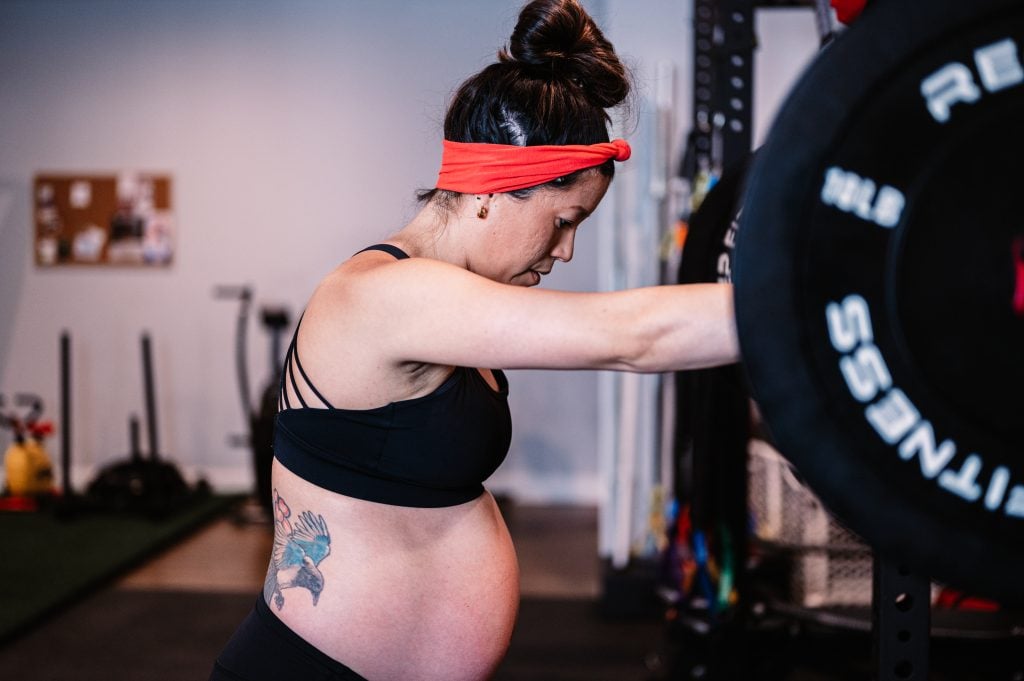
Hey, I’m Gina—mom of four, perinatal fitness trainer, and someone who personally lives with pelvic organ prolapse. And yes, I still lift heavy weights.
If you’ve been told after a prolapse diagnosis that you should never lift heavy again, avoid deep squats, or give up certain exercises altogether, I want you to know that it doesn’t have to be that way. Prolapse doesn’t mean your body is broken or less functional—it just means it’s different. Much like looser skin after pregnancy, it’s simply a change, not a limitation. You can still squat, deadlift, run, and live a strong and active life.
In this blog, I’ll share how you can continue lifting weights with pelvic organ prolapse, with practical breathing strategies and modifications that protect your pelvic floor while helping you feel strong.
Subscribe to our YouTube Channelfor more weekly workouts and educational videos! We publish one new workout video and 2-3 educational videos a week on our channel.
Why Breath and Pressure Management Matter
When we lift weights, our breath plays a huge role in stabilizing the spine and pelvis. As we inhale, the diaphragm flattens and moves downward, which increases pressure within the abdominal cavity (intra-abdominal pressure). This pressure is helpful for spinal stability, but if your tissues aren’t quite ready to handle it—like during late pregnancy or the first few postpartum months—it can add stress to the pelvic floor.
That’s why learning to coordinate breath with movement is the first key step.
Inhale with gravity: As you lower into a squat or deadlift, think of breathing into your back and sides.
Exhale against gravity: As you rise from the bottom of a squat or pull a weight from the floor, exhale while lifting up through your pelvic floor.
This not only improves stability but also helps manage symptoms like heaviness or downward pressure.
Deadlifts, which are hip-hinge movements, often feel more comfortable for those with prolapse because the hips stay higher than in a squat. Deadlifts strengthen the hamstrings and inner thighs—muscles that play a big role in pelvic support.
Here’s how to adjust if needed:
Block squeeze: Just like squats, add a block between your thighs to activate the adductors.
Staggered stance: Step one foot slightly back (usually the left), which can balance pelvic asymmetry and ease pressure.
Lower the weight: Sometimes you may need to start by simply lowering the weight and focusing on form.
Again, pair the movement with breath: inhale as you hinge down, exhale as you stand tall.
Managing prolapse while lifting weights doesn’t mean avoiding movements—it means modifying them when needed.
Focus on coordinating breath with movement.
Use props like a block or box for extra support.
Lower the weight if heaviness increases.
Remember, postpartum tissue healing and integrity improve over time. In the third trimester and first few months postpartum, you may lift lighter. But this is temporary. With consistency and support, you can return to lifting heavier loads.
Final Thoughts on Lifting Weights with Pelvic Organ Prolapse
A prolapse diagnosis doesn’t have to take squats, deadlifts, or heavy lifting off the table. You can absolutely still live an active, strong, and empowered life. I know this because I’m living proof—I have pelvic organ prolapse, I lift heavy, I run marathons, and I’m raising four kids while doing it all.
If you’re looking for more guidance in pregnancy or postpartum fitness, I’d love to support you. You can use code YOUTUBE10 for 10% off any of our online programs or education courses. Bundle them together and save even more!
Learn the science of pregnancy and birth to take the mystery of labor away! Understand why you are feeling what you feel, and learn strategies to confidently move through pregnancy and birth!
Find comfort and relief from pelvic girdle pain throughout your pregnancy and postpartum period! This program incorporates myofascial sling focused exercises to stabilize across the pelvic girdle joints.