



How do you even push a baby out?! This is a common part of birth that many of us have some anxiety about! It’s the final part of our labor–we are finally going to meet our baby, so how do we even go about pushing??
In this blog, we are going to break down what the traditional pushing cues are AND some ways that we can improve our pushing technique to make our pushes way stronger than the traditional cues. You may find that the traditional cues feel better for you, and that’s okay! We are all about sharing different options with you so you can feel empowered to make the best choices for YOU in your birth.
What are common pushing cues?? And can we make them better?
If you are being coached during your pushing, which is fairly common especially if you have an epidural or are feeling overwhelmed by pushing and need guidance from your birth team–here are the common cues you will be walked through:
- Spread your knees wide to make space for the baby
- Curl around your baby and tuck your chin to your chest
- Hold your breath like you’re going underwater and push like you’re having the biggest bowel movement of your life.
And these cues make sense initially–if you spread your knees wide, it’s much easier for everyone else to see what’s going on, so it must be making more space for the baby… right? Not necessarily. External hip rotation with abduction (wide knees) creates more space side to side in the TOP of the pelvis, but it actually decreases space in the bottom of the pelvis (where your baby is trying to vacate).
Next, curling around your baby must be pushing your baby out more because it’s pressing down on the belly. Thing is a sort of. Pushing is a pressure management activity, which means we are increasing pressure in our belly to push our baby out. But, the pressure i coming from the TOP with the diaphragm and fundus (top of the uterus), not from the sides. Think about squeezing a tube of toothpaste from the sides versus from the top–which is more effective?
And the final common cue of push like you’re pooping makes sense–the two holes are right next to each other so it’s probably the same thing. This can put you in the general direction BUT it’s a subtle difference and that slight shift of effort can make a HUGE difference in your pushes.
Let’s break down how we could approach pushing BETTER with pelvic biomechanics, pressure management, and direction of effort! Plus, check out our YouTube video, where we break it down for your visually, as well!
Subscribe to our YouTube channel for weekly on-demand workouts and educational videos to support your pregnancy, birth prep, and beyond! We would love your support as a subscriber and your views help us provide all this free content!
How to Strengthen Your Pushes with 3 Unique Tips!
There is another way to push! You have options, and the more you learn about your options, the better you can navigate your birth to figure out what works best for you. These cues may not work the best for you, but it’s helpful to know what your choices are!
Learn more pushing strategies and pushing positions in our online childbirth education course! Our goal is for you to confidently navigate your pregnancy, birth, and beyond by knowing your options so you can make informed decisions to support your birth without judgment!
1) Knees In, Ankles Out to Create Space in the Pelvic Outlet for Pushing
The first common cue is to spread your knees WIDE to make space for the baby. We already discussed how this really just makes it easier for others to see what is going on but actually DECREASES space in the pelvic outlet!
Rather, we want to find internal hip rotation with adduction (knees in, ankles out) to create more space side to side in the pelvic outlet.
You can find knees in, ankles out in a number of positions! You can be supine, side-lying, all fours, standing, etc. All you need to do is bring your knees closer than your ankles!
Plus, when your knees are closer together, it tends to decrease your risk of tearing because there is less tension in the perineum!
While you are pregnant, you can incorporate different exercises to help you prep for pushing! The hamstrings and adductors (inner thigh) play a big role in pulling the pelvis into internal hip rotation and adduction (which opens the pelvic outlet), so including exercises that strengthen these muscles can be helpful. Think deadlifts or hinges and Copenhagen planks or adduction exercises.
Want to learn more on how to use prenatal fitness to support a strong and pain-free pregnancy, plus exercises to release tension in the pelvic floor and open the pelvis for birth? We also break down how to use prenatal exercise and labor positions to support your baby’s position!
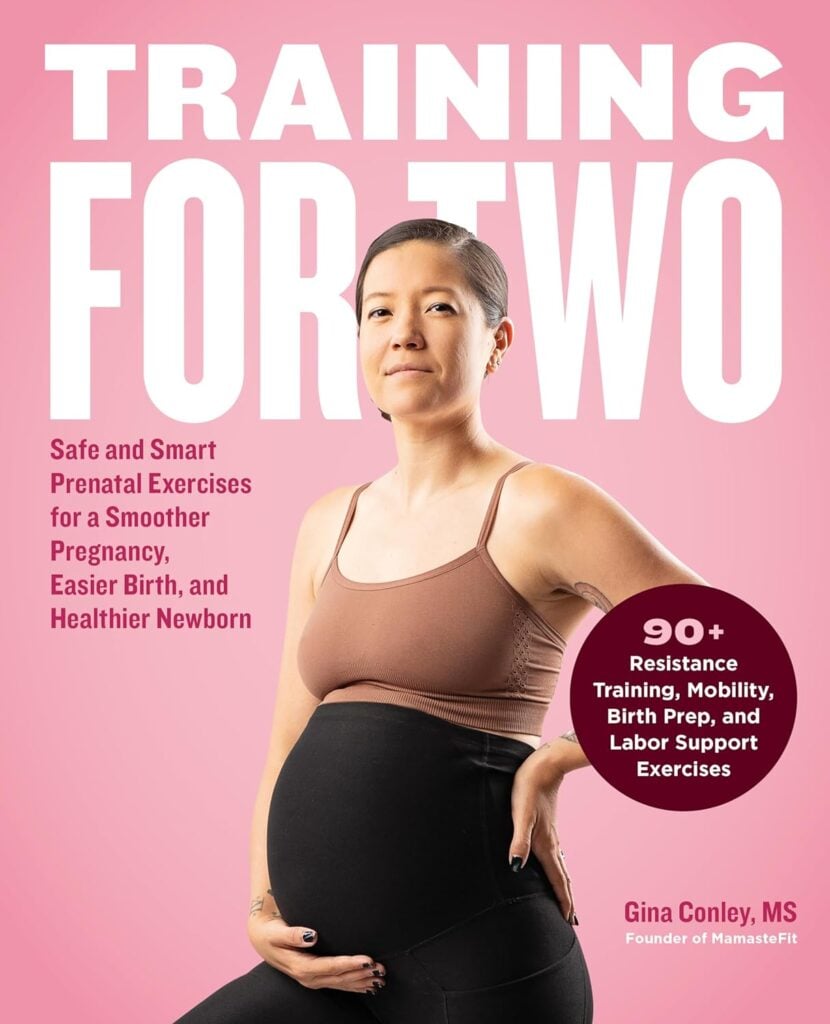
Pre-order our book Training for Two! This book includes 90+ exercises to build your confidence as you navigate fitness throughout your pregnancy and prep for birth, plus a whole chapter on early postpartum recovery!
2) Position the Diaphragm to Strengthen Your Pushes: Push with a Neutral Spine!
The next common cue is to curl around your baby with the thought that abdominal compression will aid in pushing your baby out. This makes sense, but there is a better way!
The fundus, the top of the uterus, is pushing down on your baby while you are pushing. So, your pushes are coming from the TOP down.
The diaphragm sits on top of the fundus and the downward movement of the diaphragm when you inhale can strengthen the downward pressure of your pushes. But the diaphragm works best in a neutral spine position, plus its better aligned to the birth canal!
When we are in a more curled position, more pressure goes to our rectum which can increase the prevalence of hemorrhoids while pushing and postpartum.
So, how can you push in a neutral spine? Similar to knees in, ankles out, you can do this in any position. Think rolling the shoulders back and down and squeezing your elbows into your side body. Another push is to pull your legs (or whatever you are holding onto) to YOU and as opposed to yourself to your legs (which causes curling). This will increase lat tension which also helps to pull the tailbone out of the way as a bonus!
3) Push a baby out of your vagina... not your butt.
This one is always a tough one–but we want to push a baby out of our VAGINA, not our butts. The cue to push like your pooping is helpful because all of us should be pooping daily (if you’re not, you may want to see a pelvic floor physical therapist). Since we ideally poop daily, it’s a familiar sensation that we can use to direct our efforts during a new experience of pushing a baby out!
However, it is a subtle difference! If you have ever pushed a tampon or menstrual cup out of your vagina, you will probably note that it’s a slightly different sensation and direction of effort than pooping. If you have not had the pleasure, clean your hands and insert one or two fingers into your vagina and try to push your fingers out. You’ll notice that it is different than pooping; similar but your direction of effort is altered.
Similar to curling with the direction of effort, pushing out of your vagina will also help to decrease hemorrhoids during pushing and postpartum because your direction of effort and pressure is where your baby is.
This slight shift of effort forward to the vagina will make your pushes much stronger too!
Know Your Options for Pushing!!
There is more to pushing than just following the traditional cues–and there is an even better way to make our pushes much stronger too!! You can try the traditional cues to see if they feel “right” for you–because the best pushing technique is the one YOU choose. But, if you’re finding those traditional cues are just not it, try these unique cues to make your pushes much stronger!
Learn more about your options for birth, to include your options with pushing in our online childbirth education course! Our online course is completely online and self-paced, so you can take your time throughout the course! Plus you keep lifetime access of the course to use for this pregnancy and any future ones.

Learn the science of pregnancy and birth to take the mystery of labor away! Understand why you are feeling what you feel, and learn strategies to confidently move through pregnancy and birth!
- 9h+ of Video
- Support Group
- Close Captioning

- 5 Workouts/Week
- Gym Workouts
- Self-Paced

Instructor
GINA
Workout on-demand with our prenatal fitness workout videos! Each workout is 30-40 minutes to follow along as you exercise at the same time!
- Birth Prep
- All Trimesters
- Mobility Work

Instructor
GINA
Find comfort and relief from pelvic girdle pain throughout your pregnancy and postpartum period! This program incorporates myofascial sling focused exercises to stabilize across the pelvic girdle joints.
- 3 Weeks
- On Demand Workout Videos to Follow