

Birth looks very different today than it did a few hundred years ago.
Depending on where and when you were born, your experience of pregnancy and birth could have ranged from giving birth at home surrounded by other women in your community to being alone in a hospital bed, heavily sedated, unable to move, and separated from your baby immediately after birth.
And yet, when we look at the history of birth, there is no simple story of “birth used to be better” or “modern medicine saved everything.”
The truth is much more complicated.
Some of the changes in maternity care have saved countless lives. We now have antibiotics, blood transfusions, medications to treat postpartum hemorrhage, safer cesarean births, prenatal screening, neonatal intensive care, and better recognition and treatment of pregnancy complications.
At the same time, the medicalization of birth also introduced practices that were not always supported by strong evidence and sometimes caused unnecessary physical or emotional harm.
Today, we are slowly finding a middle ground.
We can use the medical tools that make birth safer while also supporting the physiologic process of labor, respecting bodily autonomy, encouraging movement, supporting the mother-baby relationship, and involving partners and families.
To understand how we got here, let’s take a look at the history of birth.
Subscribe to our YouTube Channel for more weekly workouts and educational videos! We publish one new workout video and 2-3 educational videos a week on our channel.
Birth Before Modern Medicine
Before the 1700s, the vast majority of births occurred at home.
According to the history discussed in our podcast, approximately 95% of births occurred outside of hospitals. Many were attended by midwives or other birth attendants, although it is important not to romanticize this period and assume everyone had access to a skilled midwife or a supportive “village.”
Birth experiences varied tremendously depending on location, culture, socioeconomic status, and access to care.
For some people, birth was surrounded by family and community. For others, it may have happened with very little assistance at all.
What is interesting, though, is that some practices we now consider modern were actually common in many traditional birth settings.
Skin-to-skin contact was common.
Breastfeeding was encouraged.
The mother and baby were generally kept together.
The umbilical cord was not necessarily clamped immediately.
Birth was often treated as a normal physiologic event and an important family experience rather than strictly as a medical procedure.
But there was one enormous problem:
People died.
A lot of people.
Why Was Childbirth So Dangerous?
Before modern medicine, childbirth was one of the leading causes of death among people of childbearing age.
Maternal mortality estimates in the range of approximately 500–1,000 deaths per 100,000 births during the pre-modern era.
There were several major reasons.
1. Infection
People did not understand germs or how infections spread.
Handwashing was not standardized. Sterile technique did not exist in the way we understand it today. There were no antibiotics to treat serious infections once they developed.
Something as simple as introducing bacteria into the reproductive tract after birth could become life-threatening.
Today, washing our hands before caring for a laboring or postpartum patient seems incredibly basic.
Historically, it was revolutionary.
2. Postpartum Hemorrhage
Another major cause of maternal death was severe bleeding after birth.
We now understand that the uterus needs to contract after the placenta is delivered to compress the blood vessels where the placenta was attached.
We also have medications and protocols to help manage postpartum hemorrhage.
But these tools did not always exist.
There was no Pitocin sitting on a shelf waiting to be administered. There were no modern hemorrhage protocols. There were no blood banks and readily available blood transfusions.
A person could simply bleed to death.
3. Obstructed Labor
Sometimes labor does not progress because the baby cannot move through the pelvis.
Today, we have multiple ways to respond depending on the circumstances, including changes in maternal position, operative vaginal birth, and cesarean birth.
Historically, the options were extremely limited.
This meant that obstructed labor could become fatal for both the mother and baby.
4. Hypertensive Disorders
Pregnancy-related hypertension, preeclampsia, and eclampsia were also major problems.
Today, we monitor blood pressure during pregnancy and have a much better understanding of the signs and symptoms associated with hypertensive disorders.
Historically, someone could develop severe hypertension, have a seizure, and die without anyone fully understanding what was happening.
So while we may look back at historical birth and admire how physiologic it was, we cannot ignore the very real danger that accompanied it.
The First Birth Interventions: Forceps and Early Medicalization
One of the earliest major tools developed to intervene in birth was the forceps.
Forceps were developed in the 1600s and were intended to help with obstructed or difficult births.
They did save some lives.
But they also came with significant risks.
Forceps did not dramatically solve maternal mortality, and their use could increase maternal and neonatal trauma as well as infection risk, particularly in an era without modern surgical techniques, antibiotics, or pelvic floor rehabilitation.
This is an important theme throughout the history of birth:
A medical intervention can be both incredibly valuable and potentially harmful.
The existence of a tool does not mean that everyone needs the tool.
It means that the tool is available when the situation calls for it.
That distinction is still incredibly relevant today.

Photo Credit: Wellcome Collection

The 1700s and 1800s: Birth Becomes More Medicalized
During the 1700s and 1800s, physicians began becoming more involved in childbirth.
Early cesarean births were being developed, although they carried extremely high maternal mortality rates.
There were no modern antibiotics.
Blood loss was difficult to manage.
Anesthesia was primitive.
Infection remained a major threat.
So simply moving birth into the hands of physicians did not immediately make birth dramatically safer.
In some situations, it may actually have made outcomes worse.
One of the biggest lessons from this period came from somewhere other than the United States.
Sweden standardized midwifery education and care, and maternal mortality decreased substantially.
The lesson was not necessarily that “midwives are better” or “doctors are better.”
The lesson was that training and standardized care matter.
When birth attendants have consistent education and access to shared knowledge, best practices are more likely to spread.
Before modern communication, a midwife in one community might discover a helpful technique while another birth attendant somewhere else had never heard of it.
Today, a clinical practice can be researched, taught, published, debated, and incorporated into standardized education.
That evolution has dramatically changed maternity care.
The Rise of Modern Obstetrics
By the late 1800s and early 1900s, the foundation of modern obstetrics was being established.
Birth increasingly moved from homes into hospitals.
At the beginning of the 1900s, home birth was still extremely common. By the 1930s, roughly half or more of births were occurring in hospitals.
Eventually, hospital birth became the norm.
Today, the overwhelming majority of births in the United States occur in hospitals.
There were legitimate reasons for this transition.
Hospitals could provide access to surgery, anesthesia, medications, blood products, and eventually antibiotics and neonatal care.
But there was also a downside.
As birth became increasingly institutionalized, it became increasingly controlled.
Birth began to look less like a physiologic process and more like a medical procedure.
Twilight Sleep: When Birth Became Something to “Manage”
One of the most striking examples of historical medicalization was the era of “twilight sleep.”
During the early-to-mid 1900s, some women were given combinations of medications intended to produce a state in which they would not remember their labor.
They might still move or respond physically during labor, even though they would not remember the experience afterward.
Because of this, some women were restrained.
Birth was increasingly managed through sedation, forceps, episiotomies, and other interventions.
And while this sounds shocking to us today, it is important to remember that these practices were being developed in an era when physicians were trying to solve real problems.
They simply did not yet understand everything we know today about anesthesia, fetal exposure to medications, labor physiology, infection, or the psychological experience of birth.
One concern with heavy sedation was its impact on newborns.
Medications given to the mother can cross the placenta, and some medications can cause respiratory depression in a newborn.
In other words, the baby may have difficulty initiating or maintaining effective breathing after birth.
The twilight sleep era is a reminder that an intervention intended to make birth easier for one person can have consequences for both mother and baby.
The Hospital Birth Experience of the Mid-20th Century
By the 1940s through the 1970s, birth remained highly medicalized.
Women were commonly confined to beds.
Movement during labor was limited.
Routine episiotomies were common.
Forceps were frequently used.
Sedation was common.
Babies were often taken away from their mothers immediately after birth.
Immediate skin-to-skin was not the norm.
Breastfeeding was not always encouraged, and formula feeding became increasingly common.
Partners were often excluded from the birth room.
In many cases, the mother experienced labor largely by herself, surrounded by medical personnel but without the emotional support of her partner, family, doula, or friends.
From a modern perspective, this can feel incredibly foreign.
But there is an important distinction to make.
Medicalization itself was not inherently bad.
Many of the medical advancements being developed during this same period were lifesaving.
The problem was that medical intervention became routine even when there was not necessarily strong evidence that every intervention was beneficial for every person.
The Medical Advancements That Actually Changed Maternal Mortality
While some historical interventions created harm, other advancements dramatically improved outcomes.
This is where the story becomes especially important.
Antibiotics
Antibiotics transformed the treatment of infection.
Instead of simply watching someone develop a life-threatening infection, providers could actually treat the infection.
Blood Transfusions
Blood transfusions gave clinicians a way to replace blood lost during severe hemorrhage.
This was a massive advancement.
Medications for Hemorrhage
Medications that cause the uterus to contract became powerful tools for preventing and treating postpartum hemorrhage.
Pitocin eventually became one of the major medications used for this purpose.
Prenatal Care
Prenatal care also changed everything.
Providers could begin identifying problems before they became emergencies.
Blood pressure could be monitored.
Diabetes could be detected.
Fetal concerns could be identified.
Certain infections could be screened for and treated.
Instead of only reacting when something went wrong during labor, healthcare providers could increasingly identify risk before labor even began.
Safer Cesarean Birth
Cesarean birth also became significantly safer as anesthesia, antibiotics, blood transfusions, and surgical techniques improved.
A procedure that had once carried an enormous risk could now be used as a potentially lifesaving intervention.
These advancements contributed to an enormous decline in maternal mortality. The transcript describes the shift from historical rates in the hundreds per 100,000 births to dramatically lower rates in the modern era.
And this is something we should celebrate.
Modern medicine has saved lives.
But Was More Medicalization Always Better?
This is where the history gets complicated.
At the same time that medical advancements were saving lives, birth was becoming increasingly restrictive.
The mother was often expected to lie still.
She was disconnected from her support system.
Her baby was separated from her immediately after birth.
Interventions were frequently routine rather than individualized.
And emotional well-being was not necessarily considered an important part of the outcome.
The goal was often:
Get the baby out safely.
Today, we understand that the experience matters too.
Being alive is obviously the most important outcome.
But it is not the only outcome that matters.
How someone feels during their birth matters.
Whether they felt respected matters.
Whether they understood what was happening matters.
Whether they were included in decisions matters.
Whether they were able to bond with their baby matters.
Whether they experienced trauma matters.
These are not frivolous considerations.
They are part of health.
The Natural Childbirth and Feminist Movements
The 1960s and 1970s brought another major turning point.
Women began challenging the assumption that birth had to be something done to them.
The natural childbirth movement grew.
Childbirth education programs such as Lamaze and the Bradley Method became more popular.
People began asking questions:
Do I have to be confined to a bed?
Do I have to be sedated?
Can I move during labor?
Can I use breathing techniques?
Can my partner be with me?
Can I make decisions about what happens to my body?
These questions were part of a much larger movement toward bodily autonomy.
Movement and comfort measures became more important.
Partners gradually began entering labor rooms.
Skin-to-skin contact began to return.
Kangaroo care gained recognition.
Birth began slowly shifting toward family-centered care.
But these changes did not happen overnight.
For a long time, people had to fight for them.
The Return of Physiologic Birth
One fascinating part of the history of birth is that some of the practices being rediscovered were actually very old.
Movement during labor.
Breathing techniques.
Hands-on support.
Skin-to-skin.
Breastfeeding.
Keeping the baby with the mother.
Having supportive people present.
These were not necessarily brand-new ideas.
In some ways, the birth world was rediscovering the importance of supporting normal physiology after decades of focusing primarily on controlling the process.
But this does not mean we should simply return to the past.
That distinction matters.
We Shouldn't Romanticize Historical Birth
It is easy to hear about home birth in the past and imagine a beautiful scene where a pregnant person is surrounded by their mother, sisters, aunts, midwife, and entire community.
Sometimes that probably happened.
But it wasn’t everyone’s reality.
Some people gave birth alone.
Some did not have access to a trained birth attendant.
Some did not have supportive family.
Some did not have financial access to skilled care.
And some died.
The history of birth is not a story of a perfect physiologic past that was ruined by hospitals.
It is a story of humans trying to solve incredibly difficult problems with the information and tools available to them at the time.
We can appreciate the physiologic aspects of historical birth without pretending historical birth was universally safer or better.
The 1990s and 2000s: Evidence-Based Practice Changes Birth
Another major shift occurred as evidence-based medicine became increasingly important.
Instead of simply asking:
“We’ve always done it this way, so why stop?”
providers increasingly began asking:
“Does this actually improve outcomes?”
That question changed maternity care.
Practices such as routine episiotomy began to decline as evidence demonstrated that routine use could cause harm.
Skin-to-skin contact became more common.
Breastfeeding support expanded.
Delayed cord clamping became increasingly accepted.
Family-centered care became more common.
Doulas and other support people gained greater access to birth spaces.
And perhaps most importantly, shared decision-making became a greater part of maternity care.
Instead of:
“This is what we’re going to do.”
The conversation increasingly became:
“Here are your options. Let’s talk about the benefits, risks, and alternatives.”
That is a massive philosophical shift.
From Provider-Directed Care to Shared Decision-Making
Shared decision-making recognizes that the healthcare provider has medical expertise, but the pregnant person has expertise about their own values, preferences, circumstances, and goals.
Both matter.
Your provider may know the statistics.
You know what matters most to you.
Your provider knows the potential complications.
You know what kind of experience you are hoping to have.
Good care brings those things together.
This does not mean that every preference will be medically appropriate in every situation.
Sometimes an intervention is truly necessary.
Sometimes circumstances change unexpectedly.
But informed consent means that whenever there is a reasonable opportunity to have a conversation, you should be included in that conversation.
Medical Tools Are Tools—Not Requirements
This is perhaps the biggest lesson we can take from the history of birth.
Forceps are a tool.
Vacuum extraction is a tool.
Cesarean birth is a tool.
Pitocin is a tool.
Epidurals are a tool.
Fetal monitoring is a tool.
Induction is a tool.
These tools can be incredibly valuable.
But a tool is not automatically necessary simply because it exists.
The fact that modern medicine has developed an intervention does not mean every person needs it during every birth.
At the same time, choosing a medical intervention does not mean someone has “failed” at physiologic birth.
Sometimes the safest and most appropriate birth involves medical intervention.
Sometimes the safest and most appropriate birth involves very little intervention.
The goal should not be to win a competition between “natural” and “medical.”
The goal should be safe, respectful, individualized care.
What Actually Made Birth Safer?
When we look at the entire history of birth, it can be tempting to say:
“Hospitals made birth safe.”
Or:
“Medicalization made birth safe.”
But the story is more nuanced.
Maternal mortality improved because we developed multiple ways to address the major causes of death.
We learned about infection.
We improved hygiene.
We developed antiseptics.
We developed antibiotics.
We developed blood transfusions.
We developed medications to manage hemorrhage.
We improved prenatal screening.
We learned more about hypertensive disorders.
We improved surgical techniques.
We improved anesthesia.
We developed safer cesarean birth.
We developed neonatal intensive care.
And we standardized education and training.
In other words, it wasn’t simply the hospital.
It was the accumulation of knowledge, training, technology, medications, screening, hygiene, and systems of care.
The Importance of Standardized Training
One of the earliest lessons in this history is also one of the most important.
Standardization can save lives.
When healthcare professionals are trained using shared standards, important knowledge is less likely to remain isolated within individual communities.
A provider doesn’t have to personally discover every effective technique.
They can learn from the experiences and research of thousands of other providers.
That is one of the great strengths of modern healthcare.
But standardization can also become problematic when we stop questioning whether the standardized practice is actually beneficial.
There is a difference between:
“Everyone should know how to respond to postpartum hemorrhage.”
and:
“Everyone should receive the same intervention during every birth.”
The first is evidence-based standardization.
The second may be unnecessary routine intervention.
Evidence Takes Time to Change Practice
Even when research tells us that a practice is not beneficial, changing clinical practice can take years.
Providers have been trained in different eras.
Someone who began practicing decades ago may have learned a very different approach to birth than someone who graduated recently.
That doesn’t automatically make one provider bad and the other good.
It means medicine evolves.
As new evidence becomes available, healthcare professionals have to continually learn and adapt.
And patients have an important role in that process too.
Asking questions is not disrespectful.
Wanting to understand your options is not being difficult.
Being curious about the evidence is not the same thing as distrusting your provider.
The Role of Social Media in Modern Birth
One of the biggest changes in the modern era is access to information.
Today, pregnant people can research birth practices, find providers, connect with doulas and midwives, hear other people’s experiences, and access educational resources from around the world.
That can be incredibly empowering.
It can also create a new problem:
Misinformation.
Not everything you see online is evidence-based.
Personal experience is valuable, but one person’s experience does not necessarily prove that something works for everyone.
At the same time, research isn’t the only source of useful knowledge.
Experienced clinicians and birth workers observe patterns in practice that may not yet have been studied extensively.
The challenge is learning how to hold both things at once:
What does the research say?
and
What are experienced professionals seeing in real-world practice?
The ideal is not to reject either one.
It is to continue asking questions and gathering better information.
Where Does That Leave Us Today?
Modern birth is becoming something of a blend.
We have the ability to support physiologic birth while also having access to medical interventions when they are needed.
You can labor in a hospital and still move.
You can have an epidural and still be involved in decision-making.
You can give birth at home while having a skilled birth attendant who understands when transfer is necessary.
You can choose a birth center.
You can have a cesarean birth and still have immediate skin-to-skin when medically appropriate.
You can use Pitocin when it is indicated without believing that Pitocin is inherently bad.
You can choose an epidural without believing that an unmedicated birth is impossible.
You can want an unmedicated birth without believing that medication is a failure.
This is the middle ground we should be working toward.
Birth Doesn't Have to Be “All Medical” or “All Natural”
The history of birth shows us why extremes can be problematic.
Purely physiologic birth without access to emergency medical care can be dangerous in certain situations.
Purely medicalized birth that treats every labor as a procedure can unnecessarily interfere with normal physiology and diminish autonomy.
We don’t have to choose one extreme.
We can take the best lessons from both.
From physiologic birth, we can embrace:
- Movement
- Position changes
- Breathing and coping strategies
- Continuous emotional support
- Partner involvement
- Skin-to-skin contact
- Breastfeeding support
- Respect for the mother-baby relationship
- Patience with normal labor
- Individualized care
From modern medicine, we can embrace:
- Prenatal screening
- Infection prevention and treatment
- Hemorrhage medications
- Blood transfusions
- Safe anesthesia
- Cesarean birth when needed
- Operative vaginal birth when appropriate
- Fetal monitoring when indicated
- Neonatal intensive care
- Treatment of hypertensive disorders
- Evidence-based emergency care
These things do not have to compete. They can work together.
Looking Back to Move Forward
The history of birth is messy.
There were practices that saved lives.
There were practices that caused harm.
There were practices that were adopted before anyone had strong evidence to support them.
There were women whose voices were ignored.
There were midwives whose knowledge was dismissed.
There were medical advancements that transformed maternal and neonatal outcomes.
And there were periods when the medical system prioritized controlling birth over supporting the person experiencing it.
We don’t need to pretend any of that didn’t happen.
We can acknowledge the harm while still appreciating the incredible advancements that have come from modern medicine.
And we can appreciate physiologic birth without romanticizing a time when childbirth could be deadly.
The goal isn’t to go backward.
The goal is to move forward with everything we’ve learned.
The Future of Birth
If the history of birth teaches us anything, it is that birth care will continue to evolve.
The practices that seem completely normal today may look very different decades from now.
We will learn more.
Research will challenge old assumptions.
New technology will emerge.
Some interventions will become less common.
Others will become safer and more effective.
And hopefully, the future of birth will continue moving toward a model where safety and autonomy are not treated as opposing goals.
Because they don’t have to be.
We can have medical care and physiologic support.
We can have safety and autonomy.
We can have interventions and informed consent.
We can have hospitals and movement.
We can have medical providers and doulas and midwives.
We can have evidence-based care and compassionate, individualized support.
That is the direction we want to see birth continue moving.
Not backward.
Not toward “all medical” or “all natural.”
But toward better-informed, safer, more respectful, more individualized birth care.
And perhaps that is the biggest lesson from the history of birth:
We don’t have to choose between safety and the birth experience. We should be working toward both.
A Final Note on Birth Choices
Your birth choices are personal.
Whether you choose an epidural, an unmedicated birth, an induction, a cesarean birth, a hospital birth, a birth center, or a home birth does not determine whether you are a good parent or whether you had a “better” birth.
Every option has benefits, risks, limitations, and circumstances in which it may or may not be appropriate.
The goal is to understand your options, talk openly with your healthcare team, consider the available evidence, and make decisions that align with your individual health needs and values.
Birth is not a competition.
And the history of birth makes it very clear that we are all still learning.
Prenatal Support Courses
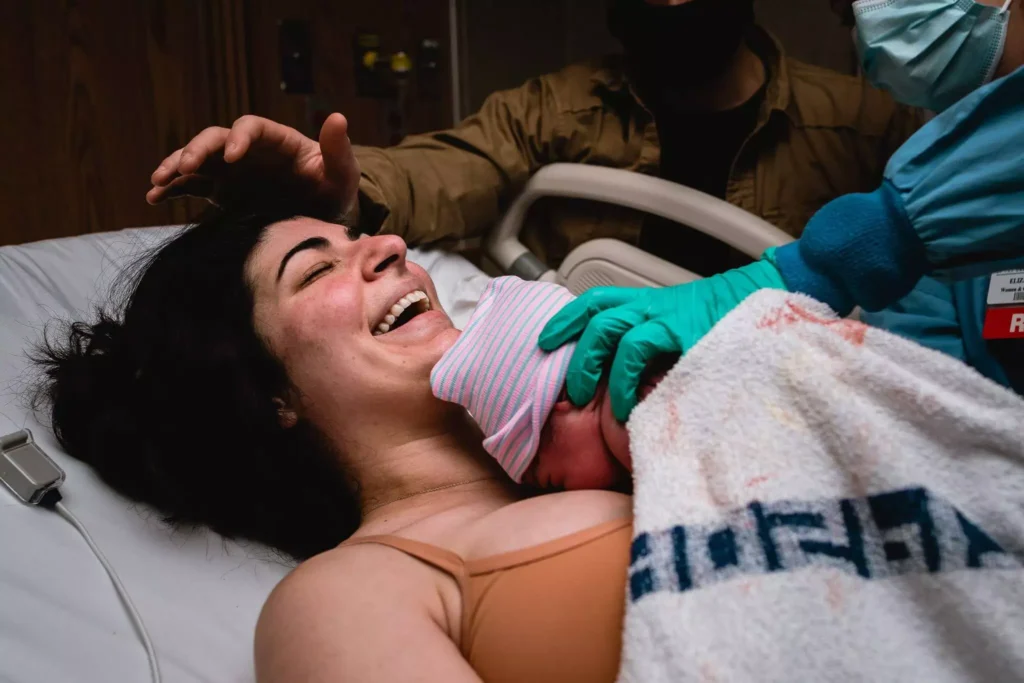

Learn the science of pregnancy and birth to take the mystery of labor away! Understand why you are feeling what you feel, and learn strategies to confidently move through pregnancy and birth!
- 9h+ of Video
- Support Group
- Close Captioning

- 5 Workouts/Week
- Gym Workouts
- Self-Paced

Instructor
GINA
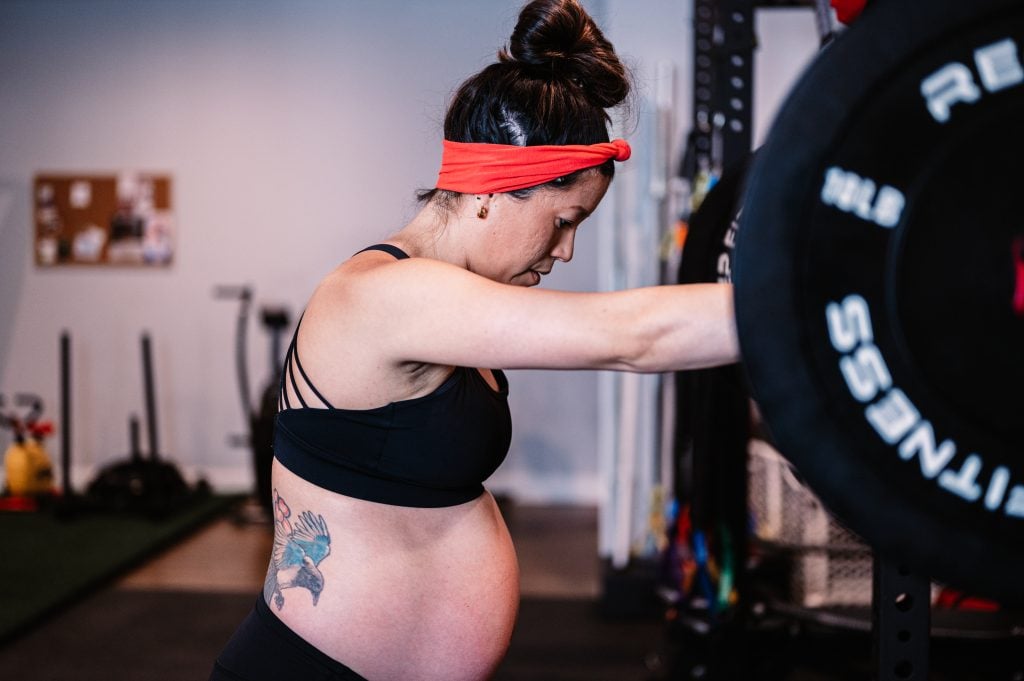
Workout on-demand with our prenatal fitness workout videos! Each workout is 30-40 minutes to follow along as you exercise at the same time!
- Birth Prep
- All Trimesters
- Mobility Work

Instructor
GINA
Find comfort and relief from pelvic girdle pain throughout your pregnancy and postpartum period! This program incorporates myofascial sling focused exercises to stabilize across the pelvic girdle joints.
- 3 Weeks
- On Demand Workout Videos to Follow