



Welcome to the MamasteFit Podcast! In this episode, Roxanne welcomes Deb Flashenberg, a prenatal yoga instructor, doula, and childbirth educator. They discuss the impact of prenatal yoga on birth preparation, emphasizing its benefits for building both physical and mental flexibility. Deb shares her journey into prenatal yoga, the transformation of her teaching approach, and the importance of understanding the biomechanics of the body. The episode also highlights the critical role of community and mental preparation during pregnancy and postpartum. For those preferring prenatal yoga or seeking a non-weightlifting exercise routine, Deb recommends finding instructors with a deep knowledge of anatomy and prenatal-specific training. The conversation underscores that prenatal yoga not only prepares the body but also strengthens the mind for an empowering birth and postpartum journey.
Read Episode Transcript
Roxanne: Welcome to The MamasteFit Podcast. On this episode, we have Deb Flashenberg, who is a prenatal yoga instructor, doula and childbirth educator, here to discuss is prenatal yoga hindering or helping your birth prep in birth?
Roxanne: Welcome to The MamasteFit Podcast. On this episode, we’re going to talk all about yoga practice during birth prep and for birth with Deb Flashenberg, who is a prenatal yoga instructor. Thank you so much for being here, Deb.
Deb: Hi! Thank you so much for having me. I’m really excited to speak about yoga and birth prep and how it can help your birth flow.
Roxanne: Perfect! And for those listeners who aren’t familiar with you, can you introduce yourself?
Deb: Absolutely. So I’m Deb Flashenberg. I’m the founder and director of Prenatal Yoga Center here in New York City. But besides having the hat of running PYC, I’m also a former labor support doula, I did that for about 10 years. I’m a certified lamaze childbirth educator, a Spinning Babies educator, I did the Body Ready Birth method because I’m a bit of a birth junkie, and Sarah Duval’s, prenatal and postnatal exercise correctional specialist- I think that’s the name! And a mom.
Roxanne: Perfect. So what kind of got you into yoga and prenatal yoga specifically?
Deb: So it starts off that I was a singer/dancer for many years and I had a choreographer introduce me to yoga as a warmup one day for our practice, for our rehearsal. And I really took to it. I think it was just something fun to be in my body that way. And in dance sometimes it’s not necessarily about how it feels, it’s more about how it looks. And I really love that yoga was actually less performative. And so I jumped into that.
But then my dirty yoga secret is I started with Bikram yoga and I soon realized that was not the path for me, because you’re not actually supposed to look at your students and ask your students how they feel, it’s very rigid. And I felt like if I’m there, I really want to work with my students, not just be a recording. And so I talked to my mom who actually did marketing, and she’s like, “Prenatal yoga, that is the way to go. People are always going to try to take care of themselves when they’re pregnant.” Now, at this time, I think I was like 27, 26, and I was a performer, so not anywhere thinking about having babies, but I jumped into it, I thought, sure, and I really, I liked it.
But a big turning point that really helped me dive really deeply into prenatal was when one of my students was doing her fellowship at one of the hospitals, teaching hospitals in New York, and she asked me if I wanted to attend some births because at that point I hadn’t seen birth. I’d seen it on TV and movies, and maybe some older friends had babies, but no one in my immediate world. And so when I went up to see what I’m going to put kinda in quotes, like “typical hospital birth,” I was kind of appalled. There was one birth in particular that just really left a sour taste in my mouth and when I left that day I thought, “I need to readjust how I’m approaching prenatal yoga.” At that point- and this was over 20 years ago- I was just teaching yoga modifications. But what I realized prenatal yoga had the opportunity to do was not just prepare the mind and the body, but to pull back the curtain of what’s happening in a typical hospital and share that with the students and educate them that they have choices and they don’t just have to feel like they’re on a conveyor belt. So that’s what got me into prenatal yoga. And from that point, I remember walking outta the hospital, walking down Broadway, and I’m like, “I have to become a doula!” And this was back in 2002, 2003, it wasn’t as popular it is now. And that, honestly, that day at that hospital really changed everything. It changed my life, it changed how I approach prenatal yoga, it changed, it really ignited a passion for supporting and educating people and not just about yoga modifications. So that really created my whole methodology.
Roxanne: That’s amazing!
So how long were you supporting births for, you said 10 years?
Deb: A little over 10, yeah. So I did about 10 to 12 a year because that was kinda like my side hustle. The main thing was Prenatal Yoga Center.
Roxanne: Okay, awesome. So how do you think like being a birth doula helped shaped, not just, obviously you’re super into childbirth education and empowering women during their birth prep and births, but how did that kind of affect your prenatal yoga practice and like how you taught the actual physical practice? Not just like the education as well.
Deb: It really helped me to look at what was happening in birth flow, where were things slower, where were things faster, and I love approaching the birth. I feel like one birth teaches me about another, about another.
Roxanne: Mmhmm!
Deb: And I started to be like, “Okay, this person had a really crazy fast birth. This person had a really slow birth. What was going on?” And I still remember one birth I did, and, okay, her child’s like 15, so I can say her name, her name is Donna! And she was a weightlifter and marathon runner. And at first I was thinking like, “Okay, she’s got the stamina, she has the endurance, she has the pain thresholds,” but then on further thought, watching the birth, I was like, “Oh, but she is tight. She is tight, tight, tight. Pelvic floor is tight, psoas is tight. And I was piecing together some of this knowledge back then- I hadn’t really jumped into Spinning Babies, ’cause this was actually before Spinning Babies, this is before Body Ready Birth, and I started to piece together what’s going on, and it was learning about the bodies in birth that had restrictions.
So for Donna, for example, she was laboring, she was handling the contractions incredibly well considering we were like 30 hours in, and she still was just around like that, turning into active labor, she was like on that cusp. And her doctor at one point’s like, “I really think she needs an epidural.” So I talked to my client and I’m like, “Okay, the doctor’s suggesting an epidural. How do you feel about that?” And she’s like, “I really don’t want to, let’s try to go further.” And we had, I had her in all sorts of like lunges and positions and things to soften and open the different parts of her pelvis. And then it was like hour 34 at this point, and she was barely able to move between contractions, she was wiped, and she hadn’t really progressed. And the doctor said, like, “Even if she gets to fully dilated, how is she going to have the energy to push?” Donna could literally barely lift her head, she was so exhausted. And then she decided to take the epidural, and that’s what was really interesting to see, that helped her… everything! So her pelvic floor, everything, relaxed, and we were still taking different movements in the bed. And that one was really interesting ’cause that one really taught me about, not just… We need places to support and relax.
Roxanne: Yes.
Deb: And it was just such a good example of, there was so much tension from the contraction, over contraction, over contraction, that was actually tightening her up, and the epidural turned out to be a tool that could help her muscles relax, not just her mind, but her muscles relax.
So going from birth to birth really helped me look at how people move in labor, started to see habits and patterns of, I almost was like, I could tell, obviously I didn’t do vaginal exams, but I could start to tell when people were in certain phases from how their body instinctually moved and the sounds they made. And it just helped me be a better yoga teacher because I can then shift that into teaching that in class, and then also help look at poses and positions and I could say, “Alright, this can help relax your pelvic floor. This can help open your mid pelvis. Let’s play with the sacrum. This can help mutate or counter mutate, and so if we practice it on the mat, it’s going to be more accessible to them in birth, it won’t be the first time their bodies took those shapes.
Roxanne: Yes! And this is very similar to like our, entire prenatal fitness and birth prep program, is that it is movements that you will intuitively want to find to create the most space within your pelvis. Not just like strength-wise, but mobility as well.
Deb: Yes.
Roxanne: To be able to allow your baby to easily move through your pelvis because you’ve already prepared those areas. And I love this because, obviously like we’re really into lifting weights and strength training, functional training, but not everybody wants to lift weights. So, like, how could they change their prenatal yoga- which is their yoga that they’re doing during their pregnancy- how can they change that to impact their birth positively?
Deb: One, I think they have to work with a teacher that understands the biomechanics of the body- and not to toot my horn, but not every prenatal training covers that. I happen to be an anatomy junkie and a birth junkie. I, from the beginning, maybe it’s ’cause my background as a dancer, but I’m fascinated with how the body moves, and then how that moves in pregnancy and birth. So I think they need to work with a teacher that understands the different positions, even just the legs. And the problem with, one of the hindrances of yoga, is that so much of it is externally rotated, so many of the poses are. And we know, and we already know, that the pregnant body tends to lean towards that external rotation.
Roxanne: Yeah. Cause it feels good!
Deb: It feels good, and that’s what a lot of the poses are, and that’s necessary, we know to open the inlet we do want that external rotation. But if that’s all that’s put into the practice, that can actually be a detriment because we need to look at how to do internal rotation, which most bodies don’t go to as naturally, and most yoga poses don’t go to as naturally.
So to help take your practice from just prenatal yoga, or yoga during pregnancy, to really preparing, I think you need to look at making sure there’s balance. So yes, do external rotations, they’re great, but how are you doing them? Because if we overly externally rotate, we can be tightening the piriformis and some of the deep rotators. So can we find poses? I actually make a lot of poses up, because the yoga canon doesn’t actually have a lot of internally rotated.
Roxanne: Yeah.
Deb: Can we find poses to introduce the balance of the pelvis? Because if we’re always walking around duck feet, when it’s time to internally rotate, the body’s not going to have that. Plus, I think if we’re always externally rotated, it can cause a lot of SI issues, which we don’t want sacroiliac, which we really don’t want our folks to have. And then I also think the yoga practice can help what you alluded to about the strengthening. How can we add some functional strengthening into a prenatal practice?
So I think it’s really the mindset of what are we trying to do? Am I trying to just modify a yoga practice to fit a pregnant belly, or am I looking at the yoga practice to create balance to make sure that the ribs and pelvis are well stacked, that the diaphragm’s working well, that the pelvic floor has fluctuation? So I think it’s making sure that the intention- what is the intention- and then am I really looking at the practice to create an internal balance so that birth flows better?
Roxanne: Yes. And I think that internal rotation just in general for everyone is hard. There are very few people that I’ve met just in life, in general, that just love internal rotation.
Deb: Yeah.
Roxanne: And I think Hero’s Pose, I think, is like the easiest one they can think of. When like people like fully recline back and they’re just like asleep in Hero’s Pose, I’m like, “You are literally an anomaly. Like, how are you doing that?” And they’re like, “It’s so comfortable!” But then they have trouble with external rotation- ’cause they live in internal rotation, they’re not then finding that balance of external rotation. And it’s very rare to find someone who has both just naturally without having to work on it.
Deb: Yeah.
Roxanne: And so I think that’s also important to know that we do, yes, you can do things intuitively like what your body wants, but like also knowing we need to be intentional sometimes with working on the things that maybe your body can’t intuitively find naturally to train our body to be able to try and find it naturally. ‘Cause I’m not an internal rotation person, and I usually will have like slightly longer, like later laborers, like 8, 9, 10 centimeters, probably because I still to this day hate internal rotation. It’s just not intuitive to me, still to this day. But I know the benefit of it.
And in yoga, when I practiced yoga with my first pregnancy- I love yoga and it’s, ugh, it’s so great for my mental health- but during pregnancy, it was really uncomfortable for my pelvis after a while because all of that internal, the internal rotation wasn’t there. All of that external rotation was there, and then it was just like almost irritating my pubic bone.
Deb: Yes!
Roxanne: So badly. Like I would leave a class and like hours later I’d be like unable to walk and I’m like, I don’t wanna not go to yoga, but what the hell is causing this? Because there wasn’t a ton of inner thigh engagement to help support my pubic bone as well as there wasn’t a ton of internal rotation. There was a lot of thoracic mobility, which I did enjoy, and like side body lengthening, which I didn’t really get a lot in my like fitness routine at the time. But, my like pubic bone was literally feeling like it was being ripped in half from all of that external rotation, so that did not support my birth preparation, or my birth in general.
So how can someone who is trying to do, who does yoga very consistently in their birth preparation, like outside of pregnancy they also go to yoga multiple times a week, like how do you recommend they find someone who can help support them during their pregnancy so that they are not hindering their birth prep?
Deb: I think they again, need to look at where the person trained. And I do wanna go back to one thing that you said is, I 100% hear you on the external rotation and the SPD, pubic symphysis dysfunction, it is so common, and I think, and I tell this to my students, that if they don’t share what their teacher, ’cause we ask the students every class what’s going on with their body, but if they go to a class and they don’t share that, or the teacher doesn’t know how to support it, the yoga can actually worsen things like pubic pain, and SI pain.
Roxanne: Yeah.
Deb: And the teacher needs to know, okay, you can still do external rotation, but we need to modify it. So you’re not coming into a deep posture, your legs are more forward and your knees are lifted, so you’re not pulling on the pubis, you’re not going super deep. And like you said, get those adductors on board, get the glutes on board, get the hamstrings on board. So making sure that the teacher knows that we need strength, stability, and mobility.
So look at where they’re trained, because I think yoga in our country is not how it was, is supposed to have… I think the original idea of yoga, if we look at yoga, it was the eight limbs of yoga from Patanjali and that Asana, the physical practice is only one part of that. But then it came here to the states and it really hyped up, power yoga and all sorts of Bikram yoga and all that, and I think when we look at it, I don’t know how analyzed it is on anatomy and how it can take, if we’re always repeating the same movements, it can have sprain and strains in the body. And especially during pregnancy where we have relaxin and the progesterone, things are softer.
So I think the problem is that yoga in itself- and I love yoga, I’ve been doing it for over 30 years, but I don’t think it has always been approached with the idea of anatomy, biomechanics, physiology in mind. And so I think looking at where the teacher studied and looking at that school and what is their approach. Do they go at it from that understanding of biomechanics and how it’s going to help or hinder? Because where it can hinder is just like you said, pubic pain. You don’t want, I don’t want my students leaving and feeling like their pelvis is broken because if we look at that for birth, how are they then possibly going to birth? Now, you don’t need your knees wide open to birth, but what if a care provider does that? You already have pubic pain and they’re shoving your knees back, and maybe the person doesn’t know to ask for another option or go on their side, or all fours, or even, slightly internally rotate their legs. So we don’t want our students in more pain because we know if the pelvis is having pain, that’s a sign of dysfunction.
Roxanne: Yeah.
Deb: And if we know that there’s pain, what muscles are over tightening to protect that, and that can interrupt birth flow.
So, going back to your question, look at where they’re trained. Like, what is that program? And, to kinda go back to my studio, we really train our students, or, our teachers, so look for a teacher that studied at Prenatal Yoga Center. It is a very solid anatomy-based program, and I can’t say that the same for all the other programs.
Roxanne: And I took like a prenatal yoga training, ’cause I, I did a yoga training and then I did a little weekend course at a prenatal yoga class. And she was a PT, so like knowledgeable about the body, but it’s just there’s so much more that you could learn in that kind of course that like you can’t get in a weekend course. Like great, like, modification options, but it just needed more time to go over all of the anatomy and the musculature and like all of the benefits for birth prep just weren’t really in it. It was just like, oh, these are the things, this is how you modify Warrior Two. And I’m like, “while this is very helpful, I think I needed more from this.” So I do agree that finding a really good prenatal yoga teaching program can be really helpful.
We have Casey, who teaches our prenatal yoga on our platform. And she is a yoga teacher of like forever- love her- but she is a PT by, like, originally. So she was a PT for 10 years or so, I might be making up her background, and then got into yoga. I love all of her yoga courses that I’ve taken with her in all of her yoga classes. She doesn’t currently teach in person, so I just have to rely on all of our videos that we’ve recorded with her because she really understands that anatomy. But also like my favorite part of yoga isn’t just the movement, it is that mental aspect of definitely being able to like tune into your body, just recenter.
So how do you incorporate that, like a mental preparation portion into your prenatal yoga practice? Because obviously like physical preparation, while we love it, super, it’s super important, ’cause it can really affect your birth, but how do you incorporate that like mental aspect as well?
Deb: We actually approach it in a couple ways. So we start every class with circle time, where we go around the room and people introduce themselves, their names, their issues, how far along they are, which is a great community builder.
Roxanne: I love that!
Deb: I also think community is so important during this huge transitional time.
But then after that, in every class we start with a restorative pose. Even though I know the students are like, “Get me going!” everyone pregnant, whether they’re a first time parent or second or third, they can use three to four minutes of just chilling.
Roxanne: Yes!
Deb: So the first thing is to get the nervous system down regulated, especially in a place like New York City where…
Roxanne: Yeah!
Deb: It’s very regulated! Even our online classes, I feel like there’s a ton going on. So we spend the first few minutes just dropping into the body, just connecting to the breath. So we do a meditation, just a body scan. And what I’ve found out that students have told me sometimes, one of the online students told me, actually a couple, they’re like, “I recorded you doing that, and I brought it to my birth.” And so it’s just a body scan, literally, relax the crown of your head- I’m doing it quickly- relax the crown of your head, relax the forehead, relax your eyes. And so we’re bringing attention to where there might be tension, which is a great birth prep because let’s face it, during a contraction we tend to tighten up.
Roxanne: Yeah.
Deb: And then we’re learning to connect to the breath, and then we often do a few different pranayamas. So we’re bringing in the breath connection, but we’re bringing in that mental connection of: how do we get into that diaphragmatic breathing? How do we down regulate the nervous system? How do we bring attention into the body?
One of my favorite themes is, where are you holding tension? And we all hold tensions in different places. Another one could be all about a mantra, I love doing mantras, and finding what mantra resonates with you. I have so many, like one of my favorite ones that my midwife gave me during my first birth is “The breath, is the pathway through the contraction.” And so then I, over and over, on my breath, I was saying that, so the mind and body are connecting. And then sometimes we’ll do- oh, another of my favorites is, “This too shall pass.” And I tell the parents in class that this is good for pregnancy, when you’re uncomfortable, this is good for contraction, this is good when your baby’s crying and you’ve gone through all your tricks, you have to remind yourself, this too shall pass.
And then we do different pranyamas, counting the breath. Sometimes we’ll do three sets of 10 saying, okay, that’s approximately the peak of your contraction. And then mentally, you’re coming down. So we start to work a lot with breath and the mind. And another one is just noticing when you’re in an uncomfortable pose, are you starting to get angry. Like during my second birth, I remember getting very angry, and my doula had to, I call it, change the channel. She’s like, “We’re just moving it on. We’re just changing where you are.” And so for the student to know, I’m getting really anxious or angry, we’re in this pose. It’s a long time. All right, notice the words you’re saying, and go to a mantra, change channel, adjust your thoughts. Because if you keep telling yourself how awful something is, it’s going to get worse, so if you can recognize that and change the voices in your head.
So like you said, the physical is one part, but the mental is huge too.
Roxanne: Yes. And I love all of those techniques, ’cause that’s what I talk about in our birth prep is that the mental prep, while it is so helpful during your birth, it’s also really helpful in the postpartum when you’re also like very stressed now taking care of a human. So while birth prep and not just physical birth prep, but also mental birth prep is helpful for your actual birth, it’s also helping prepare you for the postpartum, physically.
Deb: Which is longer!
Roxanne: To make the recovery easier, as well as mentally able to handle these kids who don’t, they cannot communicate all of their needs to you, and it’s very hard postpartum.
Deb: Yeah.
Roxanne: I almost would skip over postpartum and do birth again, I dislike it so much. So I love that you incorporate all of those techniques because those are super, super helpful. With the, like we call it the relaxation sequence, where you just pick parts of your body to relax in tune with your breath, and then the breath movements. So like I can’t go through, I’m not as skilled with all of the different types of breathing techniques. I normally just educate on the box breathing method because that’s my personal one, and it’s usually pretty easy for people to pick up when they’re 36 weeks pregnant, coming to see us for the first time for a childbirth education class. But I love that you incorporate that in the prenatal.
And, studies show prenatal yoga if you can go in person the one major benefit of it is yes, birth preparation, the mental preparation, but that community, like having that community is so huge. So even if you can’t get that community in prenatal yoga finding a community during pregnancy, whether it’s like just pregnant moms or just like pregnant people, and your fitness class is a bunch of people that are also pregnant, finding those communities of people at the same time as you, or even just centering pregnancy if they have that offering at your like OB clinic can be so helpful for that community aspect. Because like outcomes, science obviously you like anatomy, I like science. so like the numbers of the benefit of it don’t lie that it can really improve not just like your mental health during pregnancy, but also postpartum because you have someone that you can text at 2:00 AM who’s also postpartum to be like, “This is BS. I’m so tired. What is your baby doing?” Because then you can like bond through this, like it’s almost like trauma bonding in a way, but like good trauma
Deb: That was always at the center, and I talk about Prenatal Yoga Center to people, it was always built on what I call the three-prong theory. It’s the asana about the balance of the body, but then it’s the childbirth education, but from the beginning it was community. Because, especially when I started, we didn’t really have- I’m really going to date myself- the internet wasn’t what it was! I started in 2002. We didn’t have, like, think back then, we didn’t have a lot of ways to connect. I don’t even think we had messaging on phones. And I knew that being in a place like New York City where people show up often for a dream or a job or something, you, don’t have too many born and bred New Yorkers, so most of them don’t have their family. And I knew it was a time where they had to make their own family, they needed to find those connections. Because like you said, the trauma bonding, it is a huge transformation. And to have those around you going through it around the same time, I think it just raises connection and hopefully helps with some PMADS. I don’t know if the stats support that, but I think any connection can be really important.
Roxanne: Oh yeah. When we first started, and I say we, Gina first started MamasteFit, and she always calls it, “the prison gym,” at the, our first location. It was just literally like a group of moms who came with like very similar age babies, and like you could see all of their development as babies. They’re all at their own spot. Like they all were doing things differently, but like I think being in a group together with just a bunch of babies together helped them, but also helped all of the moms as well, obviously.
And I just always think of the Bluey episode, The Baby Race, because there is the negative of the community is that like you start to compare yourself to everybody within the community. And so in the episode and what just makes me cry every single time, ’cause it’s so beautiful, it’s like a four minute episode, but it’s like this, the mom, Bluey’s mom, Chili goes to this like mom’s group and all of the babies there are like doing their own thing. And at first, Bluey was the first one to like roll or something. And so she was like winning “the baby race,” they were saying as they were reading this story. But then another baby started doing everything ahead of time, like crawling first, and then she walked first. But the mom, Chili was like, “I need Bluey to walk before her baby does,” like this is the baby race. And then Bluey did not walk first, and so the other babies first took their first steps at the group. And so she was like, “I’m a terrible mom,” and because she went to this support group. So then it’s why, would I want to do that? But then another mom comes and sees that she had been missing from that week and like checks in on her, and she’s just- oh, this, is part that gets me- she just looks at her and she like, shows her a picture of her family. She’s got eight kids and she’s just like, “Oh my God, you must be like such a good mom!” And she goes, “You know yeah, it has its times,” but she’s like, “I wanna let you know, like you are also a good mom. And you were doing an amazing job,” and I’m just like (sobbing) every fricking time because I’m like, it’s sometimes having that community with someone who like you may feel like your baby is like completely behind everybody because maybe the babies that are in your group are all walking, or like now they’re reading before your kid’s reading. But like you are, you need like that community to remind you that, “Hey, you’re doing a good job. And you got this.”
Deb: I love that.
Roxanne: And like that reminder. And then the rest of it, Chili, like relaxes, and she’s like, “Then we just knew that you were on your own timeline, so we just embraced it and it was fine.” And then the end, oh, it kills me, the end of the episode ends with the second daughter, Bingo, being like, “what, like what made, like, when did Bluey actually take her first step?” She’s like “Oh, I dunno. She was like in the kitchen and she just started walking,” and she’s like, “Oh, she must have saw something that she really wanted,” and it shows Bluey like walking to the mom, and I’m just like, it’s in tears. ‘Cause it just it’s such like a full rounded episode, again, that’s five minutes long and it just, it perfectly hits the benefit of community in like motherhood in that one episode. That the benefit of having that community during pregnancy and postpartum can really impact like how you feel, both positive and negatively, but like it could also be so helpful. ‘Cause there’s someone in that group to be like, “Hey, we haven’t seen you. Let’s check in on you. How are you doing?” And even like at our gym, like we, we are not as active in like the gym community here as we would obviously love to be in person, ’cause we’re so busy as people, but we had one gym client who like hadn’t come to the gym in a couple weeks and one of the other gym clients reached out to her and was like, “Hey, I just wanted to check in on you,” and she like updated us about it and I was like, “I love this, that you guys are all like in this little community, even though I didn’t do anything for it, I love that you guys took the initiative to create this community for us!” So I, I love that you offer that in your classes.
Deb: We do in fact, similar to what you were saying about the students taking it upon themselves, about a almost a year ago, one of our students took it upon herself to create a WhatsApp group for, and we have now it’s built over 200 students.
Roxanne: Oh my gosh.
Deb: Broken into pre and postnatal. They go on walks, they go for mocktails. It’s probably even more at this point, but we remind the other students like, “Oh, if you wanna join the WhatsApp group,” and it’s just so great to see them support each other. They started at PYC, but they really took it on their own. It’s really beautiful. I can’t believe it’s gotten so big.
Roxanne: I love that! That’s 200 people on WhatsApp?! WhatsApp can be very overwhelming with a 200 person chat.
Deb: I couldn’t even imagine.
Roxanne: So the side chats I’m sure can be really helpful. That would be very overwhelming for me. But I love that like someone took the initiative like you again, like you didn’t start it, but you created the original community location and then they took it upon themselves to continue creating that community even more. And I’m sure like you’ve had people who are like prenatal now, like postpartum, like five years who are doing your classes are still in that group, probably still.
Deb: It’s amazing. I actually, so we send out a weekly newsletter and I just had to- and we also send out like a little birthday reminder. It’s just through our MINDBODY app- and we just over the weekend had someone write in, she’s like, “Okay, so my baby’s seven, but I still read your newsletters.” I’m like, i’m thinking, “That is so nice!”
And then I had a student who, her child is 10 and she’s like, “Can I pop in? I have a Wednesday free. Can I still take postnatal?” I’m like, “Once postnatal, always postnatal. Come on in!”
Roxanne: Yes, you are postpartum forever! Yes! I love that.
So you seem like you created, like at PYC, you’ve created this community that’s really helpful. You’re doing like the birth prep movements to help support people have an easier and more empowering birth, while also adding in all of that childbirth education aspect into it.
So do you do the childbirth education like just at PYC, like separately, or do you incorporate it a little bit into the prenatal yoga as well?
Deb: We incorporate, every single class has an educational theme, whether it be, just straight up childbirth ed or a physical thing, let’s talk about the psoas, how does that help? But we also offer two different styles of childbirth ed. We have a three hour express, and a six hour deep dive.
And then we also, because I think we need to educate as much as we can, we have a newborn and lactation class, we have an infant safety CPR, we have massage technique for pregnancy and labor, and then we have a specific body ready birth workshop. I just think the more support and education, the better. It doesn’t mean that we’re promising them any outcome, but I think when people feel more confident about their prep, they’re more confident going into their birth.
Roxanne: So just to round up everything that we’ve discussed, ’cause we discussed a lot of things- if your choice of exercise during your pregnancy is yoga, finding someone who is educated well on not just prenatal yoga in general, but like the anatomy and how we can use our prenatal yoga practice to prepare the body with not just strength, but also mobility as well as the mental portion of birth prep, that is huge. And you said you offer like online classes?
Deb: We do.
Roxanne: For people who potentially don’t live there?
Deb: Yes.
Roxanne: So like they could honestly just come to you for that aspect if they don’t live in North Caro- or, New York City, not North Carolina. We obviously have like online classes too, but they’re very like not community based, so they won’t get all of that, as much of the breath work and as much as the mental prep that you probably involve in your classes, and they’re probably a little bit longer than the ones that we have online. So that is really huge if that is the exercise you’re wanting. If you don’t wanna lift weights like we do, yoga is definitely amazing and science-backed, where it can help with labor and like postpartum mental prep as well.
You also incorporate community, which is huge, and your community has grown and supports bol, not just during their pregnancies, but also postpartums and like through the entire motherhood journey, which is huge, a huge benefit of doing like group exercise, essentially, during pregnancy. And then that mental aspect while you incorporate it into prenatal yoga, we also talked about like the importance of just the mental prep for birth, for not just birth, but also again postpartum. So all of the things that we’re doing during pregnancy are so huge, for our birth preparation and our births in general, but also ’cause all of these things support us in the postpartum.
Deb: Yes, you, you nailed it.
Roxanne: Did I miss anything?
Deb: No, I think you got it. That was an excellent summary.
Roxanne: Awesome. I was like, let me try to remember everything that we’ve discussed. Obviously super, a big supporter of yoga during pregnancy and like just life in general for mental health. So like highly recommend it to anybody who’s looking for an exercise routine that doesn’t wanna lift weights like us.
But is there any last like words of advice that we haven’t really already touched on, or we’ve already touched on and you wanna just emphasize it more for our listeners? Like one last nugget of wisdom.
Deb: This is something that came to me from a student who, after class, she settled up and she said, “I’m not flexible,” and she actually really is not! And I said, “That’s okay,” and she’s like, “Am I going to have a problem in my birth?” And I said, “No. Where you need your flexibility is your mind, not just your body.” So it’s the mental flexibility of not feeling attached to a certain way of birthing, but going with the flow, having preferences instead of fierce plans. So being mentally flexible is more important than being physically flexible for birth.
Roxanne: And it’s so funny the number of people that I was like, “Oh, you wanna come to yoga with me?” They’re like, “No, I’m not very flexible,” and I’m like, “That’s literally the point of yoga, that’s why you go to yoga is for improving mobility.”
Deb: Yeah.
Roxanne: And strength. And they’re like, “No.” I’m like, okay, still, we’re still not going to go. But I was not mobile when I started yoga. I had the strength, but not the mobility portion of it. I could not touch my toes, and now I could touch my toes.
Deb: Yay! Now you can tie your shoes!
Roxanne: So… Yeah, now I can tie my shoes without having to squat down. I don’t actually tie my shoes. I just wear hands-free shoes at all times.
Deb: Signs of a mom.
Roxanne: Oh yes. You gotta have all of your hands full and put your shoes on without having to reach down, because once you put those kids down, they’re gone.
Deb: Yep.
Roxanne: But thank you so much Deb, for coming out to the podcast to discuss all about prenatal yoga, but also all of the other aspects that we threw in there that’s still prenatal yoga, but needed its own like little nugget portion.
Deb: Thank you so much.
Roxanne: Where can our listeners learn more from you?
Deb: They can find me at prenatalyogacenter.com and that’s our website, has everything. Instagram, YouTube, TikTok, @PrenatalYogaCenter. And then my podcast with Gina is going to, we recorded it, I think it’s coming out in a few weeks. And my podcast is called Yoga Birth Babies.
Roxanne: Awesome. Thank you so much again for coming onto to our podcast and it was so nice talking to you all about all of these things. It’s nice to just talk to another adult sometimes that’s not Gina. So thank you so much for coming on the podcast!
Deb: Thank you for this opportunity.
Roxanne: I hope you enjoyed listening to this episode as much as I enjoyed recording it. Prenatal yoga has been shown by science to be a really great option for birth prep exercise, especially if yoga is your already preferred exercise route. Deb does recommend having some sort of prenatal yoga instructor who is knowledgeable on the anatomy as well as birth preparation movements such as external rotation, but also internal rotation with a strengthening and mobility aspect. Incorporating also the mental preparation as well as the community aspect of prenatal yoga makes it help not just prepare you for birth, but also prepare you for the postpartum period. And if you’re not local to New York City, but you’re wanting to explore some prenatal yoga online, they have online classes at prenatalyogacenter.com that you can check out, or you can also check out our prerecorded videos with Casey Backus, who’s a physical therapist, but also yoga instructor.
And if you’re looking for more of a prenatal strength-based exercise program, you can check out our prenatal fitness programs where you have both a mini version, a full version in both a list-based and an on-demand option. All of these programs are designed with birth prep in mind to help prepare your body for birth and postpartum.
And if you’re looking for more childbirth education prep, where we can break down the science and remove the mystery so you can have a strong and empowering birth, check out our online childbirth education course where we break down all of these mysteries surrounding birth and labor so that you can enter into labor and birth more empowered and confident. You can check out all of our offerings at mamastefit.com, and as a thank you for listening to this entire podcast, use STORY10 to get 10% off any of our offerings as well as any of our bundles.
And this podcast is sponsored by Needed. Needed is a nutrition company focused on the perinatal timeframe that both Gina and I utilize as well as our mom, our husbands, I even sometimes give them to our kids for certain products, and we cannot recommend them enough. And if you wanna check them out, head to thisisneeded.com and use code MAMASTEPOD to get 20% off your first order.
Additional Resources
Prenatal Support Courses
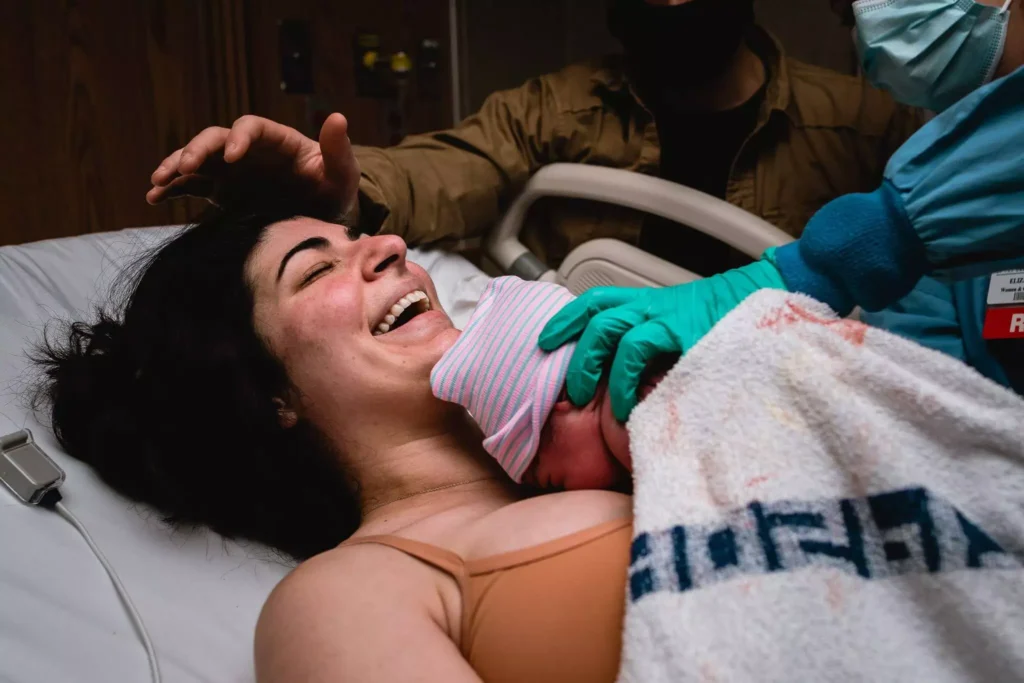

Learn the science of pregnancy and birth to take the mystery of labor away! Understand why you are feeling what you feel, and learn strategies to confidently move through pregnancy and birth!
- 9h+ of Video
- Support Group
- Close Captioning
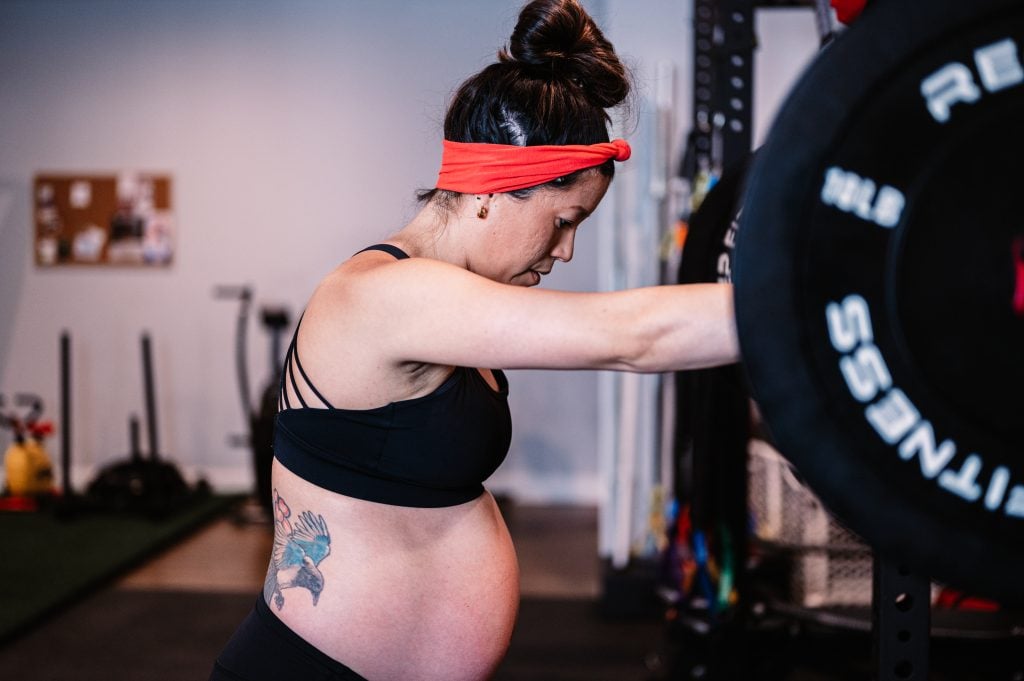

- 5 Workouts/Week
- Gym Workouts
- Self-Paced

Instructor
GINA
Workout on-demand with our prenatal fitness workout videos! Each workout is 30-40 minutes to follow along as you exercise at the same time!
- Birth Prep
- All Trimesters
- Mobility Work

Instructor
GINA
Find comfort and relief from pelvic girdle pain throughout your pregnancy and postpartum period! This program incorporates myofascial sling focused exercises to stabilize across the pelvic girdle joints.
- 3 Weeks
- On Demand Workout Videos to Follow