Welcome to Week 38 of your pregnancy journey! As you approach the final stretch, you may be experiencing a mix of excitement, anticipation, and a few discomforts. Here, we’ll cover what to expect for both you and your baby during this week, along with some personal insights from my own experience as I navigate my fourth pregnancy.
What's Happening with Your Baby
At 38 weeks, your baby is approximately the size of a bowling pin or a mini watermelon. Here’s a glimpse into your baby’s development:
Movement and Positioning: Your baby is nearly full term! That means you might be a little more uncomfortable as baby starts to run out of room in your womb. At this point baby should be settling into the fetal position with their head down as they prepare for the big day! Baby may begin to engage into the pelvis and drop down lower than in previous weeks.
Senses and Brain Development: By week 38, baby is almost fully developed! Their lungs and their brains still have a little bit more to develop, so that’s why it’s still beneficial for baby to stay in there just a bit longer. The vocal cords are also fully developed now, so they will be ready to scream, cry and coo.
Head and Abdomen Development: Fun fact! Baby’s head is about the size of its abdomen now and will continue to grow the longer they gestate. If you are nervous about your baby having a big head, don’t worry, they are meant to shape shift and fit through that birth canal!
Changes You Might Experience
As your baby grows, your body continues to adjust. Here are some common experiences during Week 38:
Anxiety and Stress: At this point you are probably already familiar with the uncomfortable feeling of your uterus stretching and those Braxton Hicks contractions. What a lot of people don’t talk about is the anxiety and stress you might be feeling as your due date draws closer. Stressing about when baby will come, how it will happen, what labor will be like, tasks that need to be completed before baby’s arrival, etc… this is normal!
Prodromal Labor: You may be experiencing contractions beyond Braxton Hicks known as early labor contractions or prodromal labor. These wave-like contractions will build up, peak at the top and let off and then suddenly stop. These contractions may be painful, but at this point they do not increase in intensity or get closer together.
Sleep Challenges: You may feel contractions more at nighttime due to the melatonin released by your body, which makes you more sensitive to oxytocin. If you’re waking up due to painful contractions, but they are not progressing, don’t worry, this is normal and your body’s way of preparing for labor! Techniques like drinking calming teas and listening to meditation can aid in achieving better rest.
Weather: Did you know, the weather can actually impact labor? Storms, drops in barometric pressure, and even full moons can impact contractions or the onset of labor.
Preparing for Baby
As you inch closer to your due date, it’s a great time to start preparing for your baby’s arrival:
- Know When to Go to the Hospital: You may be experiencing Braxton Hicks contractions or prodromal labor, but if your contractions increase in intensity/duration and start to come every 2 to 3 minutes, it is probably time to call your birth team if you are having a home birth or head to the hospital. Not sure what to do if your water breaks? Watch this video!
- Biophysical Profile and Non-stress Test: These are tools your provider may recommend at anytime if there are risk factors (i.e. gestational diabetes or preeclampsia) or if your pregnancy progresses past 41 weeks. A biophysical profile is an ultrasound used to look at your amniotic fluid level and baby’s movements/activity to ensure that baby is doing well. A non-stress test is used to monitor baby’s heart rate and your contractions to determine if baby is well oxygenated and thriving.
- Find Peace and Release Your Expectations: As you wait these final days for baby to arrive, you may be feeling anxious or stressed about not being able to plan while in this waiting period. Try your best to find peace by releasing your expectations of your upcoming birth and labor experience. Focus on accomplishing one task each day in or out of the home, as well as giving yourself time to meditate or enjoy a self-care activity.
Instructors
ROXANNE
This course breaks down what to expect postpartum from the moment your baby is born to the first few weeks postpartum! Learn what options you have available to you in your care!
- 2h+ of Video
- On Mobile
- Webinar
My Personal Experience in Week 38
Navigating the 38th week of pregnancy while already being a mother to three has been a unique journey filled with its own set of challenges and joys. Here are some more personal insights:
Managing Sleep: Sleep has been a significant challenge for me this pregnancy. I’ve been struggling with insomnia, which I suspect is partly due to low iron levels. To combat this, I’ve been taking iron supplements for about four weeks now, and thankfully, my anxiety has reduced, making it a bit easier to fall asleep. Drinking sleepy time tea and listening to meditation tracks at night has become a part of my bedtime routine, which has helped calm my mind and body.
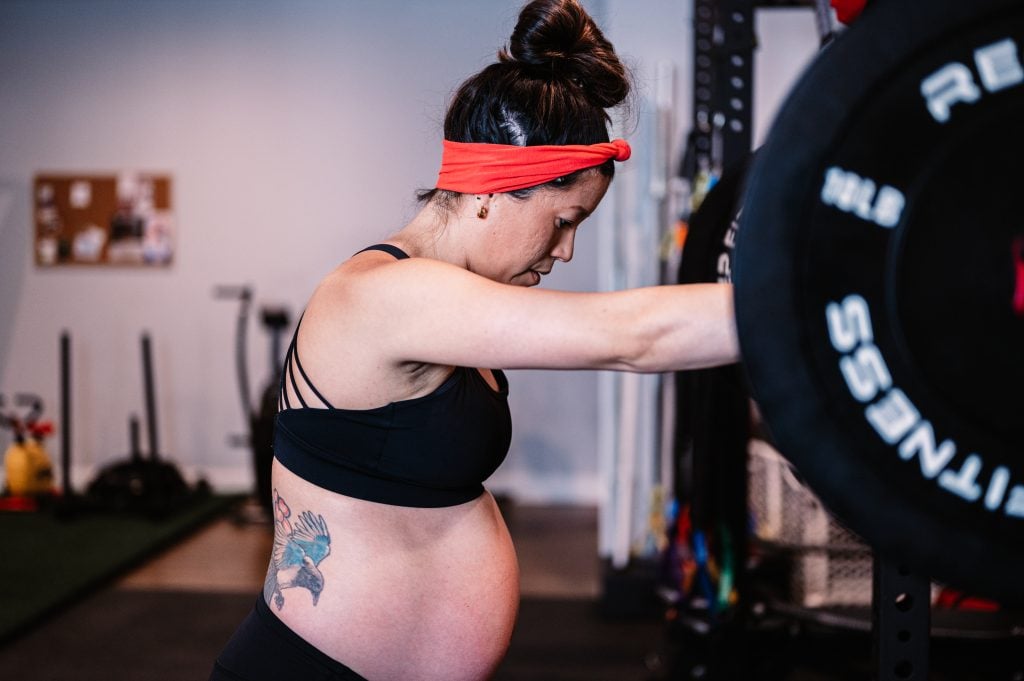
Daily movement: I’ve mostly been occupying myself with making sure that I’m moving each day, because that’s what keeps me the most comfortable. If I take too many days off from my workouts, then I start to have a little bit more pelvic pain. So, continuing to be really consistent with my workouts, even in these final weeks is really important. I am very fatigued most days, so I focus on bodyweight movements, walking, and mobility when I can.
Preparing for Birth: At this point it is just a waiting game. Will baby girl arrive early, on time, or past my due date? I’m doing my best to manage any stress around this topic and accepting that baby girl will come when she is ready. I am incorporating pelvic floor exercises, mobility routines and birth prep exercises as often as I can!
Home Birth Readiness: I continue to organize the house, set up the baby’s space, and mentally prepare for the upcoming birth. It’s an exciting time as we get everything ready to welcome our new family member.
Conclusion
Every pregnancy is unique, and Week 38 can bring its own set of experiences and challenges. It’s essential to listen to your body, take care of your mental and physical health, and prepare for the exciting changes ahead.
If you’re looking for support in your postpartum, consider exploring our online postpartum fitness programs. You can grab our FREE early postpartum recovery course HERE!
Prenatal Support Courses
Learn the science of pregnancy and birth to take the mystery of labor away! Understand why you are feeling what you feel, and learn strategies to confidently move through pregnancy and birth!
- 9h+ of Video
- Support Group
- Close Captioning
- 5 Workouts/Week
- Gym Workouts
- Self-Paced
Instructor
GINA
Workout on-demand with our prenatal fitness workout videos! Each workout is 30-40 minutes to follow along as you exercise at the same time!
- Birth Prep
- All Trimesters
- Mobility Work
Instructor
GINA
Find comfort and relief from pelvic girdle pain throughout your pregnancy and postpartum period! This program incorporates myofascial sling focused exercises to stabilize across the pelvic girdle joints.
- 3 Weeks
- On Demand Workout Videos to Follow