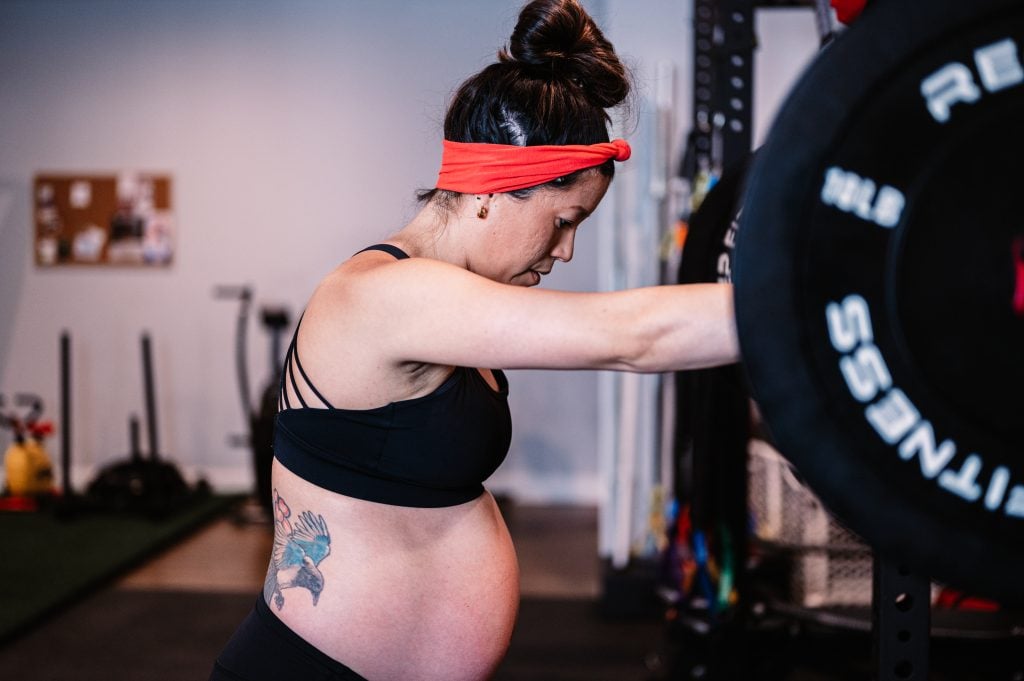
If your baby is in the breech position, it means their buttocks, rather than their head, are positioned to enter the pelvis first. While this is a variation of normal, it does influence the delivery options available to you.
Subscribe to our YouTube Channel for weekly workout and educational videos! We publish one new workout every week and 2-3 new educational videos every week to support your pregnancy, birth, and beyond!
What is Breech Position?
A baby is considered breech when their buttocks, instead of their head, are the presenting part entering the pelvis. There are a few different types of breech positions:
Frank Breech: The baby’s buttocks are down, and their legs are extended with feet near the head.
Complete Breech: Both the baby’s knees are bent, and the feet and buttocks are near the pelvis.
Incomplete Breech: One of the baby’s legs is extended upwards, with the other knee bent.
Footling Breech: One or both of the baby’s feet are positioned to enter the pelvis first.
When Should You Start Considering Breech Options?
At your 20-week anatomy scan, it’s common for babies to be in various positions, including breech. However, around 28 weeks, your baby’s vestibular system—responsible for balance and spatial orientation—develops, and they typically start settling into a head-down position. If your baby remains breech at this stage, it’s time to explore your options.
If your baby is breech at 28 weeks, it’s wise to begin discussing your options with your provider. Waiting until later in the pregnancy, such as 36 weeks, could limit your choices, especially if you’re considering switching providers for a breech vaginal delivery.
What Are Your Options for a Breech Baby?
If your baby is still breech at term, you generally have three main options:
Scheduled C-Section: In the United States, this is the most common recommendation for breech babies. It’s typically scheduled for 39-40 weeks.
External Cephalic Version (ECV): This is a manual procedure where a healthcare provider attempts to turn the baby into a head-down position by applying pressure to your abdomen. This option has its own set of risks and benefits, and it’s essential to discuss these with your provider.
Breech Vaginal Delivery: Although less common, breech vaginal delivery is a viable option if you have a skilled provider. Not all healthcare professionals are trained in this method, so you may need to seek out a provider with the necessary experience. Resources like Birthing Instincts and Breech Without Borders offer directories to help you find a provider who supports breech vaginal delivery.
Encouraging Your Baby to Turn
If you’re hoping for a head-down position, there are various exercises and movements that may encourage your baby to turn. You can find more information and demonstrations in our dedicated video on this topic.
Exercises to Help Flip a Breech Baby
Forward-Leaning Inversion:
Purpose: The forward-leaning inversion helps to release tension in the lower uterine ligaments, creating more space at the bottom of the uterus, which can encourage your baby to flip.
How to Do It:
Find an elevated surface like a couch or workout bench.
Kneel with your shins on the surface and hands on the edge, lowering your forearms to the floor.
Tuck your chin and relax your legs. Hold the position for three deep breaths.
Return to the starting position slowly. Repeat this exercise 7 to 14 times a day.
Note: If you feel dizzy or lightheaded, come out of the inversion carefully.
The forward leaning inversion is included with the MamasteFit Birth Prep Circuit. This circuit is designed to release common areas of prenatal tension to make it easier for you to open your pelvis for birth! You can grab the free PDF guide by signing up for our newsletter below.
Breech Tilt:
Purpose: The breech tilt is a less intense inversion that can be held for a longer period, helping to release uterine ligament tension.
How to Do It:
Set up an ironing board or another flat, sturdy surface at an incline against your couch.
Lie down with your feet up on the elevated surface, and your head lower than your hips.
Hold this position for 20 minutes.
Note: Have someone nearby to assist you, especially if you feel unstable or lightheaded.
Core Strengthening:
Purpose: Strengthening the abdominal wall supports the uterus and encourages better positioning of the baby.
Exercises to Try:
1. Tabletop Breathing: Start in a tabletop position and slightly round your back. Inhale into your back, and as you exhale, pull your belly towards your spine.
2. Bird Dog: From the same tabletop position, extend one arm and the opposite leg, then return to the starting position. Repeat on the other side.
Belly Sifting:
Purpose: This technique helps to release tension in the broad ligament, which runs horizontally across the uterus.
How to Do It:
Use a rebozo, bed sheet, or scarf, and place it evenly across your belly.
In a tabletop position, have your partner gently lift and sift your belly from side to side for about five minutes.
Tip: This gentle movement can be done a few times a day to help create more space for your baby.
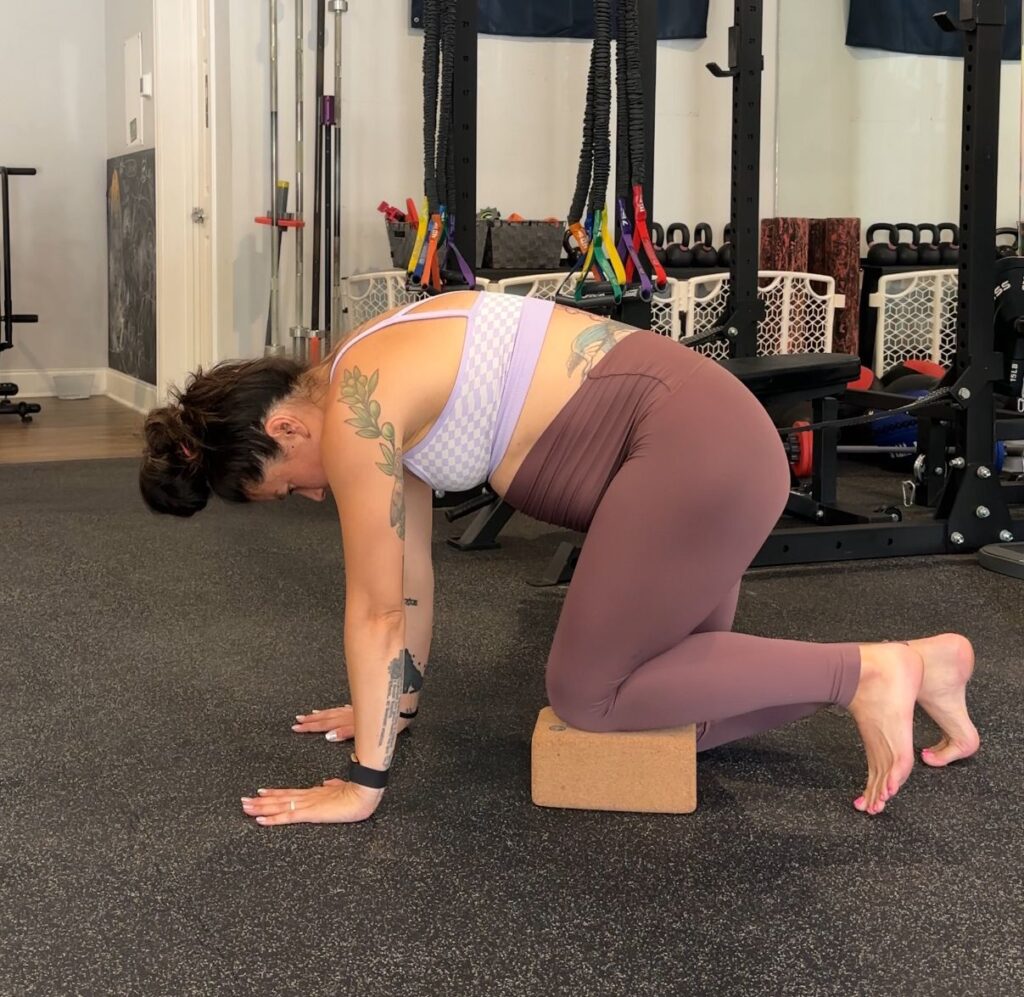
Purpose: Releasing tension in the pelvic floor can help create more space in the pelvis for the baby to move head down.
How to Do It:
In a tabletop position, place a yoga block under one knee, shifting your weight towards the elevated side.
Perform pelvic tilts by dropping your belly towards the floor on an inhale and pulling your belly towards your spine on an exhale.
This movement stretches the back half of the pelvic floor, promoting relaxation and balance.
When to Avoid These Exercises
If you notice that your baby has flipped head down after practicing these exercises, avoid doing inversions for at least a week. Additionally, wearing a belly band can help support the baby in the head-down position.
Additional Support
If you’re looking for more personalized support, consider seeing a Webster-certified chiropractor or a pelvic floor physical therapist. These professionals can help address any structural issues that might be contributing to your baby’s breech position.
While these exercises are designed to create more space and release tension in the uterus and pelvis, it’s important to remember that they aren’t guaranteed to flip your baby. However, by creating an optimal environment within your body, you’re giving your baby the best chance to move head down naturally.
For ongoing support throughout your pregnancy, check out our online prenatal fitness programs, which include daily workouts, pelvic floor release exercises, and birth preparation workouts. Additionally, our childbirth education course can help you feel more prepared and confident as you approach your labor.
If you found this blog helpful, don’t forget to check out our full range of resources and consider joining our community for more guidance on your prenatal journey.
Learn the science of pregnancy and birth to take the mystery of labor away! Understand why you are feeling what you feel, and learn strategies to confidently move through pregnancy and birth!
Find comfort and relief from pelvic girdle pain throughout your pregnancy and postpartum period! This program incorporates myofascial sling focused exercises to stabilize across the pelvic girdle joints.