TRAINING FOR TWO

Move Confidently in Pregnancy!

NEW COURSE! ‎ ‎ ‎ ‎ ‎‎ ‎ ‎ ‎ ‎ ‎ ‎ ‎ ◆ ‎ ‎ ‎ ‎ ‎‎ ‎ ‎ ‎ ‎ ‎ ‎ ‎ Pelvic Biomechanics ‎ ‎ ‎ ‎ ‎‎ ‎ ‎ ‎ ‎ ‎ ‎ ‎ ◆ ‎ ‎ ‎ ‎ ‎‎ ‎ ‎ ‎ ‎ ‎ ‎ ‎ for Pregnancy and Birth. ‎ ‎ ‎ ‎ ‎‎ ‎ ‎ ‎ ‎ ‎ ‎ ‎ ◆ ‎ ‎ ‎ ‎ ‎‎ ‎ ‎ ‎ ‎ ‎ ‎ ‎ NEW COURSE! ‎ ‎ ‎ ‎ ‎‎ ‎ ‎ ‎ ‎ ‎ ‎ ‎ ◆ ‎ ‎ ‎ ‎ ‎‎ ‎ ‎ ‎ ‎ ‎ ‎ ‎ Pelvic Biomechanics ‎ ‎ ‎ ‎ ‎‎ ‎ ‎ ‎ ‎ ‎ ‎ ‎ ◆ ‎ ‎ ‎ ‎ ‎‎ ‎ ‎ ‎ ‎ ‎ ‎ ‎ for Pregnancy and Birth. ‎ ‎ ‎ ‎ ‎‎ ‎ ‎ ‎ ‎ ‎ ‎ ‎ ◆ ‎ ‎ ‎ ‎ ‎‎ ‎ ‎ ‎ ‎ ‎ ‎ ‎ NEW COURSE! ‎ ‎ ‎ ‎ ‎‎ ‎ ‎ ‎ ‎ ‎ ‎ ‎ ◆ ‎ ‎ ‎ ‎ ‎‎ ‎ ‎ ‎ ‎ ‎ ‎ ‎ Pelvic Biomechanics ‎ ‎ ‎ ‎ ‎‎ ‎ ‎ ‎ ‎ ‎ ‎ ‎ ◆ ‎ ‎ ‎ ‎ ‎‎ ‎ ‎ ‎ ‎ ‎ ‎ ‎ for Pregnancy and Birth. ‎ ‎ ‎ ‎ ‎‎ ‎ ‎ ‎ ‎ ‎ ‎ ‎ ‎◆ ‎ ‎ ‎ ‎ ‎‎ ‎ ‎ ‎ ‎ ‎ ‎ ‎
Written by

Gina Conley, MS

15-Minute Core Strengthening Workout for Pregnancy and Postpartum

Join Gina from MamasteFit for a 15-minute core workout designed to strengthen your core during pregnancy and postpartum. This session starts with diaphragmatic breathing exercises on the floor, moves to floor-based core exercises, and progresses to functional standing core movements. The workout incorporates light to medium weights and optional resistance bands. Learn how to engage your core safely and effectively through guided exercises that help manage pressure and improve overall core function.

Subscribe to our YouTube Channel for more weekly workouts and educational videos!  We publish one new workout video and 2-3 educational videos a week on our channel.

Core Training for Pregnancy and Postpartum

Core training during pregnancy and postpartum is different from traditional fitness routines, especially in the early stages. Here’s why it’s so important to focus on safe and effective core exercises during these times:

  1. During Pregnancy:

    • A strong core supports your growing belly and helps manage the increased load on your spine.
    • Proper core training can alleviate discomfort by helping stabilize the pelvis and improve posture.
    • Core exercises during pregnancy, such as side planks and bird dogs, help to prepare your body for labor by strengthening the muscles used in childbirth.
  2. Postpartum:

    • After birth, rebuilding your core helps restore functionality and strength, especially after the physical changes of pregnancy and childbirth.
    • Many new moms experience diastasis recti (separation of the abdominal muscles). Core exercises that avoid abdominal coning (when the belly bulges outward) are essential for recovery.
    • Strengthening the pelvic floor and transverse abdominis also aids in regaining pelvic stability, supporting posture, and improving overall comfort.

Key Principles for Safe Core Training During Pregnancy and Postpartum

In this workout, we emphasize several key principles for training your core safely:

  • Avoiding Abdominal Coning: Coning occurs when the center of the abdomen pushes out during core exercises like sit-ups and crunches. This can put unnecessary pressure on the pelvic floor and abdominal muscles, especially during pregnancy and early postpartum stages. By focusing on anti-movement exercises, like the farmer’s carry and bird dog, you resist rotational and lateral flexion, which helps keep your core and pelvic floor safe.

  • Functional Core Movements: The workout includes standing exercises like the farmer’s carry, which focuses on resisting side-to-side motion while marching in place. This helps you engage the core while performing movements that mimic real-life tasks, building strength for functional activities.

  • Rotational and Hip Extension Movements: Incorporating exercises that engage the obliques and hip extensors is crucial for a well-rounded core workout. These movements not only strengthen the core but also improve mobility and balance.

Kaitlin
Prenatal Fitness and Childbirth Ed Client
Went into spontaneous labor at 38 wks with baby #1 last night (born this morning) and was able to push through a very fast and intense labor (8 hrs active, 4 hrs of contractions with basically NO BREAK in between that got me from 1cm dilated to fully 😵‍💫) unmedicated! Pushed for an hr! I thank you both, your prenatal fitness program, and prepping pelvic floor fit birth for how much I rocked this delivery. THANK YOU!!!
Ronna
Prenatal Fitness and Childbirth Ed Client
I just wanted to leave a review for you, I took your prenatal bundle with the birth course, fitness app, and pelvic floor prep. I can't say enough good things about it, my only regret was not enrolling sooner! After having some nagging SI and pelvic pain, at 22 weeks I enrolled in your program and started the workouts on the app. After a few weeks,my pain was minimal except for the days I missed a workout or getting in movement. The birth course was very informative and I felt confident and excited about giving birth. While I did need to be induced at 39 weeks, I felt confident and understood my options. I had a great and speedy delivery with just a minor tear. I attribute this to the strategic movements I learned in the course throughout my labor and breathing during pushing, along with wonderful hospital staff. We were blessed with a healthy baby girl Ellie Jo. I look forward to using the fitness program again in the future and other courses you have! Thank you for all the time you put into creating such thorough content!
Lauren
Prenatal Fitness and Childbirth Ed Client
For what it's worth, I'm a PT myself (not a pelvic floor specialist), but am going to a PFPT. I also took a CEU course for my license and my own learning on pelvic floor health in pregnancy. With that background, I am utterly impressed with the content of your course so far. I was wondering if it'd be repetitive at all from the CEUs I recently took, but it hasn't been. It's so informative, thorough, and covers way more topics than I ever expected. Thank you!!

Equipment Needed

This workout uses basic equipment to enhance the core exercises:

  • Medium to heavy weights: These are used in standing exercises and some floor movements to challenge core stability.
  • Resistance bands: While optional, a long resistance band placed around the knees adds a challenge to the exercises by increasing the activation of the hip adductors and supporting pelvic stability.


If you don’t have access to weights or resistance bands, don’t worry! You can still benefit from this workout by focusing on controlled movements and engaging your core muscles throughout each exercise.

What to Expect from This Core Workout

1. Starting with Breathing:

The workout begins with a diaphragmatic breathing exercise to help you activate and engage your core. This is essential for learning how to manage intra-abdominal pressure—vital for keeping your pelvic floor and core stable during movement. Gina walks you through the process of breathing deeply into your ribcage, expanding into the back, and pulling the belly in on the exhale. This breathing pattern helps to recruit muscles that might not be fully engaged otherwise.
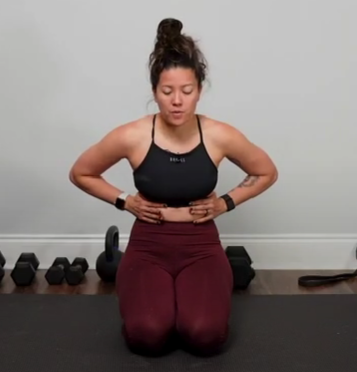
2. Floor-Based Core Exercises:

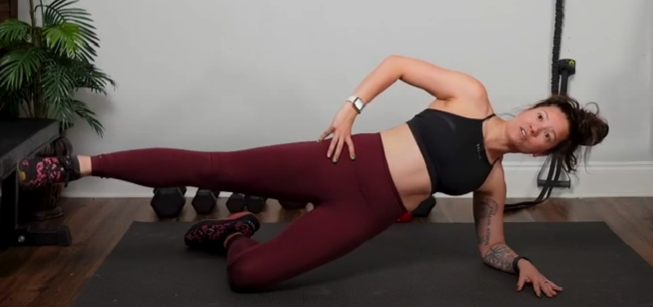
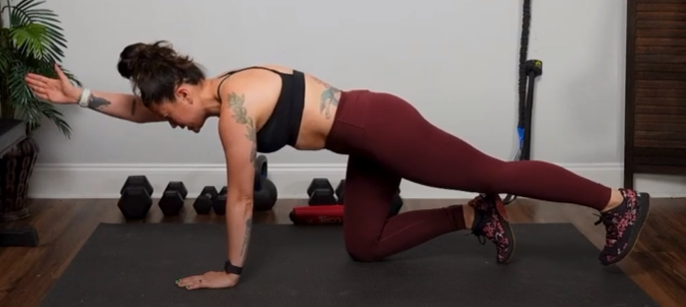
Next, we move into floor-based exercises where the emphasis is on learning how to coordinate breath with movement. Gina explains how to incorporate that breathing technique into core exercises like side-lying hip lifts and bird dogs. These positions allow you to focus on activating the core muscles while minimizing pressure on your back. The floor work also emphasizes controlled movements, such as pushing your hips forward in side-lying extensions and extending one arm and leg at a time in bird dogs, all while engaging the core and maintaining spinal alignment.
3. Standing Core Movements:

After building a foundation of core engagement on the floor, it’s time to progress to standing core exercises. This phase is all about functional movements, mimicking the way you use your core in daily activities. Gina guides you through exercises like the standing march with weights and rotational moves using a resistance band and weight. These movements challenge your stability and coordination, ensuring that your core stays strong and functional throughout the day.

If you want more daily workouts to support a strong pregnancy as you prepare for birth, join our online prenatal fitness programs!  

MamasteFit is unique in that we are one of the ONLY prenatal/postnatal training facilities in the United States.  We develop our workout programs from our experience of working with in-person pre/postnatal fitness clients and work closely with physical therapists to refine our programming.  In addition, we are birth workers, so we combine our experience as perinatal fitness trainers and birth professionals to ensure that our programs actually support your birth preparation and recovery!

Our prenatal fitness programs are offered in several formats:

  • 40-Week Prenatal Strength Program in the Teambuildr App:
    • This program is a self-paced workout with shorter demo videos.  This is ideal if you like to workout in a gym setting and prefer a traditional workout delivery format.
    • This program syncs to your current week of pregnancy, so you can start anytime, with one-time payment or month-to-month payment options.
    • This program has a full and mini version, depending on how much time you have to dedicate to workouts!
  • Prenatal On-Demand Fitness Program:
    • If you prefer to follow a video as you workout at the same time, this workout program will be the best option! 
    • This program syncs to your current trimester, so you can grab the trimesters you need!
  • Birth Prep Workout Program:
    • If you already have a workout routine or you only want birth prep-focused workouts, check out this program!
    • This program includes full-length workout videos to follow as you workout at the same time.
  • Prenatal Yoga Classes:
    • If you want prenatal yoga, join our prenatal yoga program!  This also syncs to your current trimester.

Conclusion

This 15-minute core workout is an excellent introduction to safe and effective core training during pregnancy and postpartum. By focusing on breath, controlled floor-based movements, and functional standing exercises, you’ll help rebuild and maintain a strong core that supports your body through the changes of pregnancy and the demands of motherhood.

Prenatal Support Courses