
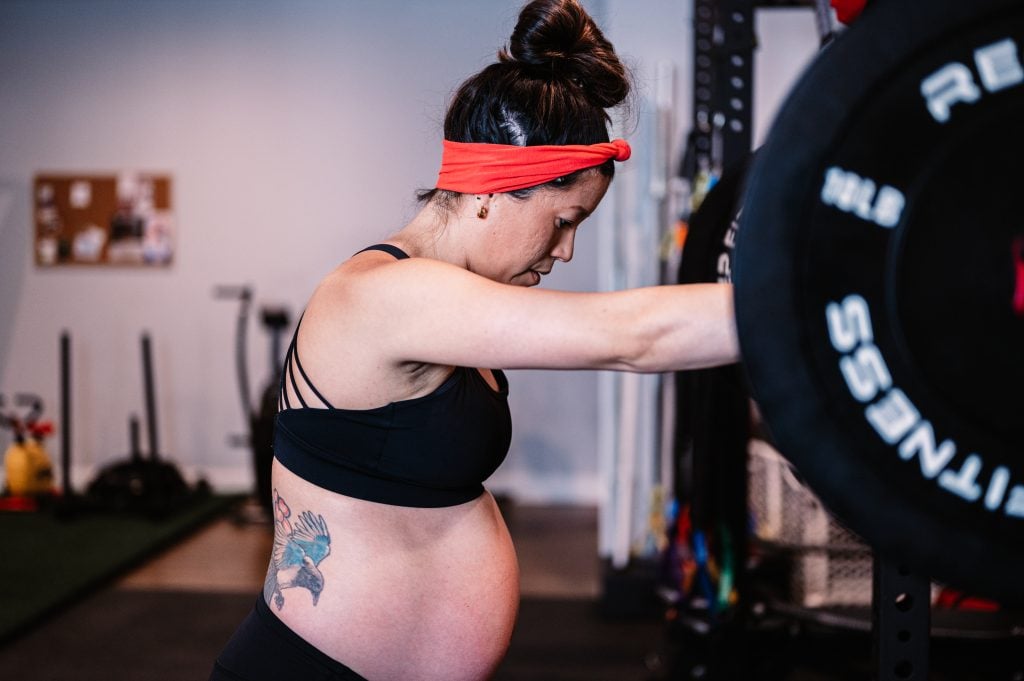
In this prenatal glute workout, we’re focusing on strengthening the glute muscles, which play a crucial role in maintaining hip stability, reducing pain, and preparing for birth. This workout will incorporate both internal and external hip rotations, ensuring a full range of motion to keep you strong and pain-free throughout your pregnancy.
This workout is a sample from our prenatal on-demand workout program. This workout program includes full-length workout videos that you follow along with as you workout at the same time! This program includes strength workouts, birth prep workouts, and even pelvic floor and mobility routines!
Table of Contents
Why Glute Strength Matters in Your Prenatal Workout
Pelvic Stability: The gluteal muscles are essential for stabilizing the pelvis. As your pregnancy progresses and your belly grows, the added weight can alter your center of gravity, increasing the strain on your lower back and hips. Strong glutes help maintain proper alignment and reduce the risk of pelvic girdle pain and lower back pain.
Improved Posture: Strong glutes support an upright posture, which is crucial during pregnancy to counteract the forward tilt of the pelvis caused by the growing belly. Good posture helps alleviate back pain and prevents excessive strain on the spine and surrounding muscles.
Enhanced Mobility: Glute strength contributes to better hip mobility, which is vital for everyday movements and preparing for childbirth. During labor, good hip mobility can help you move into different positions that facilitate the baby’s descent and reduce discomfort.
Prevention of Injuries: Pregnancy hormones, such as relaxin, loosen the ligaments in your body to prepare for childbirth. While this is beneficial for labor, it can also increase the risk of joint injuries. Strong glutes help stabilize the joints and reduce the likelihood of strains and sprains.
Easier Labor and Delivery: Strong gluteal muscles can make it easier to assume various labor positions, such as squatting, lunging, and kneeling, which can aid in opening the pelvis and facilitating the baby’s descent. Additionally, a strong lower body can endure the physical demands of labor more effectively.
The Role of Hip Shifting in Pregnancy
Pelvic Floor Release: Hip shifting exercises help release tension in the pelvic floor muscles. A relaxed pelvic floor can improve comfort during pregnancy and aid in a smoother labor and delivery by allowing the baby to descend more easily.
Creating Space in the Pelvis: Hip shifting creates more space in the lower part of the pelvis. This is particularly beneficial in the later stages of pregnancy, as it can help the baby move into an optimal position for birth.
Improved Blood Flow: Moving the hips through various ranges of motion promotes better blood circulation in the pelvic region. Improved blood flow can reduce swelling, alleviate discomfort, and support overall pelvic health.
Reducing Pelvic Pain: Many pregnant women experience pelvic pain due to the added weight and changes in posture. Hip shifting exercises can help distribute the load more evenly and reduce the pressure on specific areas of the pelvis, providing relief from pain.
Supporting Pelvic Alignment: Hip shifting helps maintain proper pelvic alignment, which is crucial for preventing and managing conditions such as pelvic girdle pain and symphysis pubis dysfunction (SPD). These conditions can cause significant discomfort, and maintaining alignment through targeted exercises can alleviate symptoms.
Combining Hip Shifting and Glute Strengthening
Integrating hip shifting and glute strengthening exercises into your prenatal fitness routine offers a holistic approach to supporting your body during pregnancy. Here’s how to combine these elements effectively:
Warm-Up with Hip Shifts: Begin your workout with gentle hip shifting exercises to release tension and prepare your pelvis for more intense movements. Exercises like standing hip shifts or seated pelvic tilts are great options.
Incorporate Glute Exercises: Follow your warm-up with glute-strengthening exercises such as lunges, squats, and fire hydrants. Focus on maintaining proper form to ensure you’re effectively targeting the glute muscles.
Alternate Between Exercises: Alternate between hip shifting and glute exercises to keep your workout balanced. For example, perform a set of lateral band walks followed by standing hip shifts to integrate both elements seamlessly.
Cool Down with Hip Shifts: Conclude your workout with additional hip shifting exercises to relax the pelvic muscles and promote flexibility. This can help prevent stiffness and maintain mobility.
18-Minute Prenatal Glute Workout
This 18-minute lower body workout includes lunges, lateral band walks, pelvic floor release exercises, and step-up marches. You’ll need a medium to heavy weight, a mini band, and an elevated surface. Let’s dive into each exercise!
1. Lunges with Internal Hip Rotation
Instructions:
- Hold a weight on one side.
- Step back into a lunge, using your free arm to rotate your upper body.
- Aim for belly-to-thigh contact to find internal hip rotation.
- Keep your knee aligned with your ankle.
- Perform for 30 seconds on each side.
Benefits:
This exercise strengthens the glutes and adds a core challenge by holding the weight on one side. The internal hip rotation helps improve hip stability, crucial for maintaining balance and reducing pain during pregnancy.
2. Lateral Band Walks
Instructions:
- Place a mini band above your thighs.
- Step side to side, maintaining tension in the band.
- Perform for 30 seconds in each direction.
Benefits:
Lateral band walks target the hip abductors, strengthening the muscles that help keep your pelvis stable. This exercise also helps prevent and alleviate hip pain by engaging muscles that are often weak during pregnancy.
3. Standing Hip Shift with Pelvic Floor Release
Instructions:
- Shift your weight onto one leg, rotating your belly towards your thigh.
- For more activation, step the opposite leg back and drive the knee out.
- Perform for 30 seconds on each side.
Benefits:
This exercise releases tension in the pelvic floor and helps improve pelvic positioning. It creates more space in the lower part of the pelvis, which can aid in the birthing process.
4. Fire Hydrants
Instructions:
- With the mini band still around your thighs, lift your knee out to the side.
- Perform for 30 seconds on each side.
- Use a wall for support if needed.
Benefits:
Fire hydrants strengthen the glutes and hip abductors, contributing to overall pelvic stability. This exercise also helps maintain a proper alignment of the hips and pelvis.
5. Step-Up Marches
Instructions:
- Place one foot on an elevated surface.
- Hold a resistance band with both hands in front of you.
- Row back with the arm on the same side as the lifted foot while lifting the foot.
- Perform for 30 seconds on each side.
Benefits:
Step-up marches strengthen the hip flexors and enhance upper body-to-lower body rotation. This exercise improves coordination and balance, essential for supporting your growing belly and preparing for labor.
Prepare for Your Birth with MamasteFit Prenatal Fitness Programs
If you want more daily workouts to support a strong pregnancy as you prepare for birth, join our online prenatal fitness programs!
MamasteFit is unique in that we are one of the ONLY prenatal/postnatal training facilities in the United States. We develop our workout programs from our experience of working with in-person pre/postnatal fitness clients and work closely with physical therapists to refine our programming. In addition, we are birth workers, so we combine our experience as perinatal fitness trainers and birth professionals to ensure that our programs actually support your birth preparation and recovery!
Our prenatal fitness programs are offered in several formats:
- 40-Week Prenatal Strength Program in the Teambuildr App:
- This program is a self-paced workout with shorter demo videos. This is ideal if you like to workout in a gym setting and prefer a traditional workout delivery format.
- This program syncs to your current week of pregnancy, so you can start anytime, with one-time payment or month-to-month payment options.
- This program has a full and mini version, depending on how much time you have to dedicate to workouts!
- Prenatal On-Demand Fitness Program:
- If you prefer to follow a video as you workout at the same time, this workout program will be the best option!
- This program syncs to your current trimester, so you can grab the trimesters you need!
- Birth Prep Workout Program:
- If you already have a workout routine or you only want birth prep-focused workouts, check out this program!
- This program includes full-length workout videos to follow as you workout at the same time.
- Prenatal Yoga Classes:
- If you want prenatal yoga, join our prenatal yoga program! This also syncs to your current trimester.


Learn the science of pregnancy and birth to take the mystery of labor away! Understand why you are feeling what you feel, and learn strategies to confidently move through pregnancy and birth!
- 9h+ of Video
- Support Group
- Close Captioning

- 5 Workouts/Week
- Gym Workouts
- Self-Paced

Instructor
GINA
Workout on-demand with our prenatal fitness workout videos! Each workout is 30-40 minutes to follow along as you exercise at the same time!
- Birth Prep
- All Trimesters
- Mobility Work

Instructor
GINA
Find comfort and relief from pelvic girdle pain throughout your pregnancy and postpartum period! This program incorporates myofascial sling focused exercises to stabilize across the pelvic girdle joints.
- 3 Weeks
- On Demand Workout Videos to Follow