
Table of Contents
Join us for a dynamic workout suitable for both pregnancy and postpartum from the MamasteFit Postpartum On-Demand Program (specifically workout number 20). This postpartum strength training session focuses on explosive power with low impact movements, including calf raises, dumbbell cleans, standing archer presses, kettlebell swings, and bear pass-throughs. Learn effective techniques for each exercise, ensuring safe and beneficial workouts whether you’re expecting or recovering. Equip yourself with weights and resistance bands, and follow along with our step-by-step guidance.
Subscribe to our YouTube Channel for more weekly workouts and educational videos! We publish one new workout video and 2-3 educational videos a week on our channel.
Workout Overview: 5 Explosive Moves for Postpartum Strength Training
1. Calf Raises: Explosive Power for the Legs
We begin with calf raises, a great exercise to activate your lower legs and build explosive strength. Start by coming up onto your toes and performing a quick “pop” motion—imagine you’re preparing to jump but without leaving the floor. The goal is to push up and then come back down swiftly, engaging the calves and ankles. If balance is an issue, you can lean your hands against a wall for added support. The explosive nature of this move mirrors the up-and-down motion involved in running and jumping, which is key for strengthening the lower body.
 Membership · ongoingBeyond Postpartum Strength TrainingAn ongoing subscription with a new training cycle every 6 to 10 weeks — strength endurance, max strength, then power, with deload weeks and running add-ons.Learn more
 App program · 64 daysPostpartum Return to RunningSixty-four training days, four sessions a week, with plyometrics and running programming beginning at week seven — a structured way back to your first run.Learn more
 Video course · 3+ hoursC-Section Scar MobilizationOver three hours of video on scar mobilization technique and movement for recovery, plus a live webinar every other month you can attend or watch back.Learn more
2. Dumbbell Cleans: A Vertical Pop for Full-Body Activation
Next, grab your dumbbells for dumbbell cleans. This exercise mimics the popping motion of the calf raise but incorporates your arms and shoulders. With a slight bend at the hips, exhale as you push your body upward, bringing the weights up to your shoulders. The movement should feel like you’re jumping straight up, not forward. This dynamic move helps improve shoulder mobility and strengthens your entire core, all while being mindful of your belly during pregnancy.
3. Standing Archer Press: Engaging the Core and Upper Body
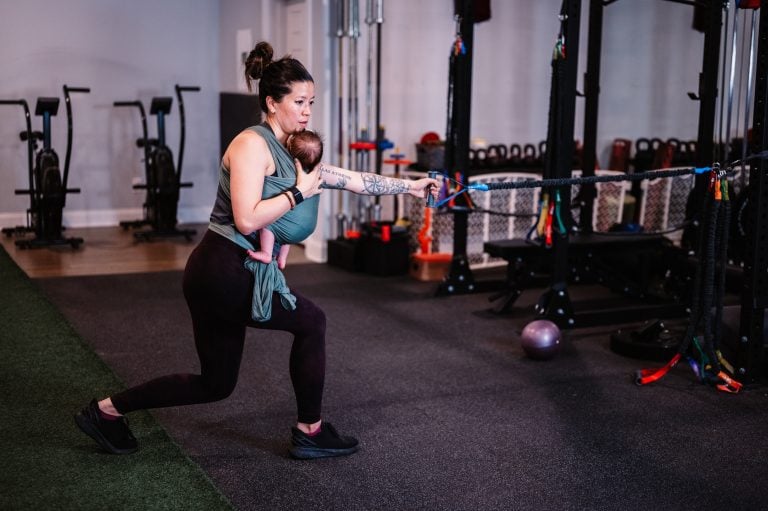
For the standing archer press, we use a resistance band to engage the shoulders, core, and pelvic floor. Begin by attaching the band at eye level or above. Press with one hand while stepping forward with the opposite foot. As you step forward and press, focus on rotating your upper body across your body, creating a twisting motion. This movement not only strengthens the upper body but also enhances pelvic floor function and stability by engaging the glutes and hips. Whether you’re using an attachment or not, the key is to move with control and fluidity.
4. Kettlebell Swings: Hinge and Explode for Glutes and Core
The kettlebell swing is a perfect move to build explosive strength in the hips, glutes, and lower back. To perform this, hinge forward at the waist with your weight, keeping your back neutral, and then pop your hips forward to bring the kettlebell or dumbbell up to shoulder height. This motion should come entirely from your hips, not your arms. The swing helps activate the posterior chain, which is crucial for core and glute strength, making it ideal for both postpartum recovery and pregnancy fitness.
5. Bear Pass Through: Core Stability and Upper Body Strength
We finish each round with the bear pass through, a dynamic exercise that challenges your core and upper body strength. Start in a tabletop position with your knees either hovering or on the floor. Reach under your body to grab the weight, pass it to the opposite side, and switch hands. The key here is to maintain stability in your core and not allow your hips to sway too much. This exercise is fantastic for improving balance, coordination, and core control—perfect for rebuilding the strength you need to return to daily activities with ease.
If you want more daily workouts to support a strong pregnancy as you prepare for birth, join our online prenatal fitness programs!
MamasteFit is unique in that we are one of the ONLY prenatal/postnatal training facilities in the United States. We develop our workout programs from our experience of working with in-person pre/postnatal fitness clients and work closely with physical therapists to refine our programming. In addition, we are birth workers, so we combine our experience as perinatal fitness trainers and birth professionals to ensure that our programs actually support your birth preparation and recovery!
Our prenatal fitness programs are offered in several formats:
- 40-Week Prenatal Strength Program in the Teambuildr App:
- This program is a self-paced workout with shorter demo videos. This is ideal if you like to workout in a gym setting and prefer a traditional workout delivery format.
- This program syncs to your current week of pregnancy, so you can start anytime, with one-time payment or month-to-month payment options.
- This program has a full and mini version, depending on how much time you have to dedicate to workouts!
- Prenatal On-Demand Fitness Program:
- If you prefer to follow a video as you workout at the same time, this workout program will be the best option!
- This program syncs to your current trimester, so you can grab the trimesters you need!
- Birth Prep Workout Program:
- If you already have a workout routine or you only want birth prep-focused workouts, check out this program!
- This program includes full-length workout videos to follow as you workout at the same time.
- Prenatal Yoga Classes:
- If you want prenatal yoga, join our prenatal yoga program! This also syncs to your current trimester.
Final Thoughts
This workout combines explosive, power-building exercises with low-impact movements, making it a great fit for both pregnancy and postpartum fitness. Each movement focuses on strength, stability, and mobility, all essential components for rebuilding your body after pregnancy. If you’re ready to take your postpartum recovery to the next level, consider integrating these exercises into your routine for a complete, full-body workout.
As we finish three rounds of this workout, remember that consistency is key to rebuilding strength and stamina in your postpartum journey. By focusing on controlled movements and gradual progression, you’ll notice improvements in both your functional strength and overall well-being.
 App program · 16 weeksAfter C-Section Recovery WorkoutSixteen weeks of cesarean-specific rebuilding with scar mobilization included — developed with physical therapist and two-time c-section mom Casey.Learn more
 App programTrain for a Marathon After BabyProgressive run workouts and strength training from 5K to the marathon finish — long runs, tempo work, easy miles, and a weekly pelvic stability session.Learn moreApp program · 16 weeksPostpartum Return to FitnessSixteen weeks of rebuilding, four strength sessions a week, with a vaginal or cesarean recovery track and follow-along videos for the first six weeks.Learn more