Right Hip Impingement, Bladder Urgency & SI Joint Pain
Fitness, Pelvic Floor, Pelvic Floor Rehab
If you’ve been struggling with right hip impingement, bladder urgency, or nagging right SI joint pain, you may be surprised to learn that these symptoms can all be connected.
Often, these issues are related to overactivity in the right anterior pelvic floor. When this portion of the pelvic floor becomes tense and overworked, it can affect how your hips move, how your pelvis rotates, and how comfortable you feel in everyday activities like walking, squatting, lunging, or even standing.
The good news is that with the right combination of mobility work and strength training, you can help reduce tension, improve balance throughout the pelvis, and decrease symptoms.
In this workout, we focus on releasing the right anterior pelvic floor while strengthening the muscles that support more balanced pelvic positioning.
Subscribe to our YouTube Channelfor more weekly workouts and educational videos! We publish one new workout video and 2-3 educational videos a week on our channel.
Understanding Right Hip Impingement and Pelvic Asymmetry
The pelvic floor is a sling of muscles attached to the bottom of the pelvis. These muscles help support the bladder, uterus, and rectum while also assisting with stability, breathing, posture, and movement.
One of the most important things to understand is that the pelvic floor is not perfectly symmetrical. The tension throughout the pelvic floor changes depending on:
Which leg you are standing on
Whether one hip is more open or closed
How your pelvis rotates
Where you tend to shift your body weight
Many people naturally spend more time shifted into the right side of their body. This is not necessarily a bad thing. Our organs are denser on the right side, the diaphragm is larger on the right side, and many of us feel more stable when we place more weight into the right leg.
However, problems can arise when we spend too much time on the right side without learning how to comfortably shift into the left side.
When the body constantly favors the right leg, the right anterior pelvic floor can become thicker, denser, and more overactive. This can pull the right hip into a more internally rotated or “closed” position.
That pattern can contribute to symptoms like:
Feeling like you constantly have to pee
Feeling like you need to urinate again right after going
Pinching in the front of the right hip during squats or lunges
Pain around the right SI joint
Difficulty shifting weight evenly between both legs
The goal of this workout is to bring the pelvis into the opposite position by encouraging more right hip opening and more left-sided support.
Mobility Flow to Release the Right Anterior Pelvic Floor
1. All Fours Lateral Hip Shift
Start in a tabletop position with your knees slightly wider than hip distance.
From here:
Shift your right hip toward your left knee
Think about bringing those two points closer together
Keep the angle between your right thigh and pelvis greater than 90 degrees
If desired, bring your right toes toward your left foot to create more external rotation in the right hip
Press gently through the right inner knee to deepen the stretch
You should feel this primarily in the right groin and front of the hip.
To increase the stretch further:
Slightly arch your back
Drop down onto your forearms
Add a gentle twist toward the left side
This movement helps open the right hip and decrease the tension that may be contributing to bladder urgency or hip pinching.
2. Right Adductor Rock Back
From tabletop, straighten your right leg out to the side.
With your hands on the floor in front of you:
Rock your hips backward and forward
Feel the stretch through the inner thigh and groin
If desired, lower down onto your forearms to add a slight twist
This variation targets more of the inner thigh and adductors while continuing to offload the right anterior pelvic floor.
One important note: this workout intentionally focuses on the right side. Because the goal is to address uneven tension, you do not necessarily need to mirror every mobility drill on the left.
Once you create mobility, the next step is strengthening. Mobility gives your body access to new positions, but strength helps your body actually stay there.
3. Right Glute Knee Lift with Yoga Block
Place your right knee on a yoga block and your left knee on the floor.
From this position:
Imagine there is a foam roller between your thighs
Lift your left knee straight up
Slowly lower it back down
Focus on using the right glute to create the movement
The goal is to strengthen the right glute and right posterior pelvic floor. These muscles are often lengthened and underactive when the right anterior pelvic floor is overworking.
By strengthening the back side of the right hip, you can help reduce how much the front side has to compensate.
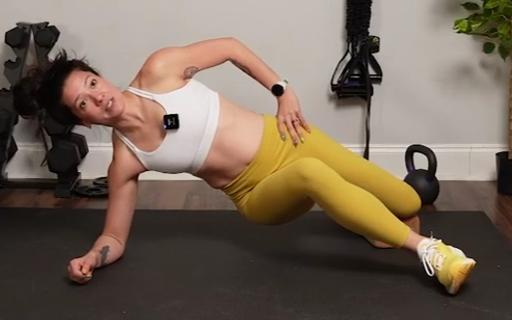
4. Left Adductor Side Plank
Next, place the yoga block underneath your left knee.
Why work the left side if the right side is the problem?
Because the pelvis works in diagonals. Often, when the right anterior pelvic floor is overactive, the left anterior pelvic floor and left inner thigh are underactive.
Improving left-sided strength can help you feel more comfortable standing, balancing, and moving through the left leg so that you do not always default to the right side.
Standing Mobility and Dynamic Hip Shifts
5. Standing Lateral Hip Shift
Stand with your feet wider than hip distance.
From here:
Shift your right hip toward your left knee
Keep both big toes grounded
Avoid letting the left knee fall outward
Slightly extend through the spine
Reach your right hand toward your left foot if you want a deeper stretch
This standing position combines the same right groin and inner thigh stretch you felt during the floor exercises.
6. Alternating Hip Shifts
Once you feel comfortable with the static position, begin shifting side to side.
Shift right hip toward left knee
Then shift left hip toward right knee
Add a weight if you want more challenge
Rotate gently through the upper body as you move
These dynamic hip shifts teach the pelvis how to move fluidly between open and closed positions.
Standing Strength Work
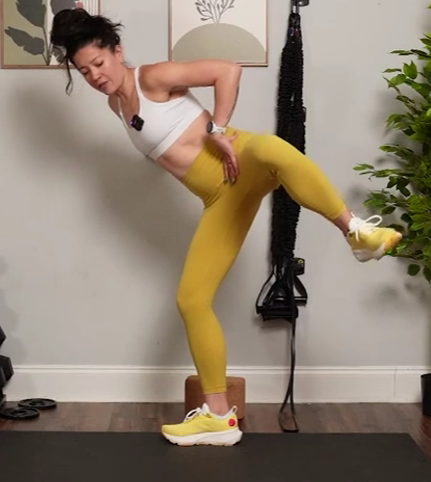
7. Standing Knee Lift with Hip Rotation
Stand with your weight in your right foot and your hand lightly on the wall.
From here:
Drive the left knee down
Lift the left knee up
Open the hip outward
Bring the knee back in
Repeat in a smooth sequence
This exercise trains the right glute to control pelvic movement while also teaching the left hip how to move between internal and external rotation.
Repeat the same sequence on the other side.
Lower Body Strength Exercises
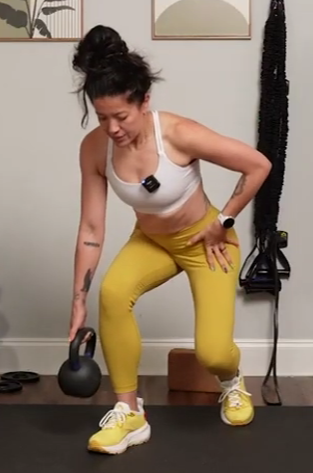
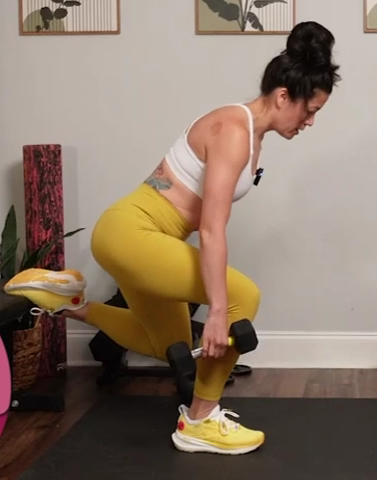
8. Split Squat with Ipsilateral Hold
Hold your weight in your right hand.
With your right foot forward and left foot slightly back:
Lower into a split squat
Stand back up
Keep the weight in the same hand as the front leg
Holding the weight on the same side as the working leg encourages a more open hip position on the right side. This can help reduce pinching in the front of the hip.
When you switch to the left leg, keep the weight in the right hand. This creates an opposite-side hold that encourages more internal rotation on the left side.
This subtle change in loading can help restore balance between the two hips.
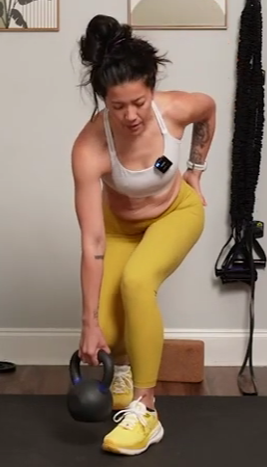
9. Bulgarian Split Squat
If you want more challenge, progress to a Bulgarian split squat.
With your right foot forward and the weight still in your right hand:
Lower slowly
Keep pressure through the right big toe
Think about creating space in the front of the right hip
Exhale as you stand back up
When you switch sides, keep the weight in the right hand to maintain the different pelvic demands on each side.
These more upright squat patterns are excellent for strengthening the glutes and quads, both of which can help support a healthier pelvic floor.
Why This Approach Matters
Many people are told to either squeeze their pelvic floor harder or stretch the entire pelvic floor equally.
But the pelvic floor is much more nuanced than that.
Different portions of the pelvic floor may need different things. One area may be overactive and tight, while another area may be lengthened and weak.
In the case of right hip impingement, bladder urgency, and right SI joint pain, it is common to see:
Overactivity in the right anterior pelvic floor
Underactivity in the right posterior pelvic floor
Underactivity in the left anterior pelvic floor
Difficulty shifting weight comfortably into the left side
By releasing the overactive tissues and strengthening the underactive ones, you can help your pelvis move more efficiently and reduce symptoms.
Final Thoughts
If you constantly feel like you have to pee, notice pinching in the front of your right hip, or struggle with right SI joint pain, your pelvic floor may be playing a bigger role than you realize.
This workout is designed to help you:
Reduce overactivity in the right anterior pelvic floor
Improve hip mobility
Strengthen the muscles that support pelvic balance
Feel more comfortable shifting weight between both sides of your body
Remember, the goal is not to make your body perfectly symmetrical. Instead, the goal is to give your body more options so you are not always stuck in the same position.
When your pelvis can move more freely and your muscles can better support those movements, symptoms often improve.
If you want more workouts that support pelvic floor balance, prenatal fitness, postpartum recovery, and long-term strength, consider exploring the MamasteFit fitness programs for additional guidance and structured support.
Learn the science of pregnancy and birth to take the mystery of labor away! Understand why you are feeling what you feel, and learn strategies to confidently move through pregnancy and birth!
Find comfort and relief from pelvic girdle pain throughout your pregnancy and postpartum period! This program incorporates myofascial sling focused exercises to stabilize across the pelvic girdle joints.