



The pelvic floor plays a crucial role in our comfort and function throughout pregnancy and childbirth. However, common exercises prescribed for birth preparation may not be sufficient. Understanding the nuances of pelvic floor position and its role in birth can help you appreciate why these exercises are essential for your preparation.
During childbirth, the pelvic floor needs to release and open to allow the baby to pass through more easily. Common exercises for “prepping” the pelvic floor for birth include Kegels (which we do not recommend) and wide-leg positions such as deep squats and the butterfly pose. In this blog, we will break down six exercises that go beyond deep squats to help release tension in your pelvic floor as you prepare for birth.
Pelvic Floor Birth Prep: More Than Deep Squats and Definitely Not Kegels
The pelvic floor attaches to the pelvis, and different pelvic positions can alter its tension. Ideally, as we walk and move, the pelvic position changes, adjusting the tension in the pelvic floor. Additionally, during breathing, the pelvic floor should move up and down in sync with the breath cycle. However, during pregnancy, we often get “stuck” in certain positions, which can increase pelvic floor tension in specific areas. This tension might affect the baby’s position for birth and the pelvis’s ability to open.
No single movement stretches the entire pelvic floor. Wide leg positions (external hip rotation with abduction) typically stretch more of the anterior pelvic floor, while closed knee positions (internal hip rotation with adduction) target the posterior pelvic floor.
The pelvic position also significantly impacts the pelvic floor. An arched back (spinal extension, anterior pelvic tilt) tends to stretch the anterior pelvic floor more, whereas a rounded back or tucked butt position (spinal flexion, posterior pelvic tilt) stretches the posterior pelvic floor more effectively.
The exercises in this blog target these common positioning tendencies to release tension in these areas, making it easier for your baby to enter and navigate the pelvis for birth.
Pelvic Floor Birth Prep Exercises
These exercises offload the right hip, so that pelvic floor half can release and let go, while stretching the left posterior pelvic floor that is shortened.
In each of these positions, you will inhale DOWN and OUT into the pelvic floor–you should feel the sitz bones spread apart as you inhale. Then for the exhale, you may want to contract to LIFT UP in the pelvic floor (for me, I find this allows me to release more) or you may want to exhale to let go and relax.
Watch this YouTube video for more of a breakdown on how to breathe, and then utilize this breathing pattern into each of the exercises listed below!
1) Side Lying Hip Shift with Manual Release
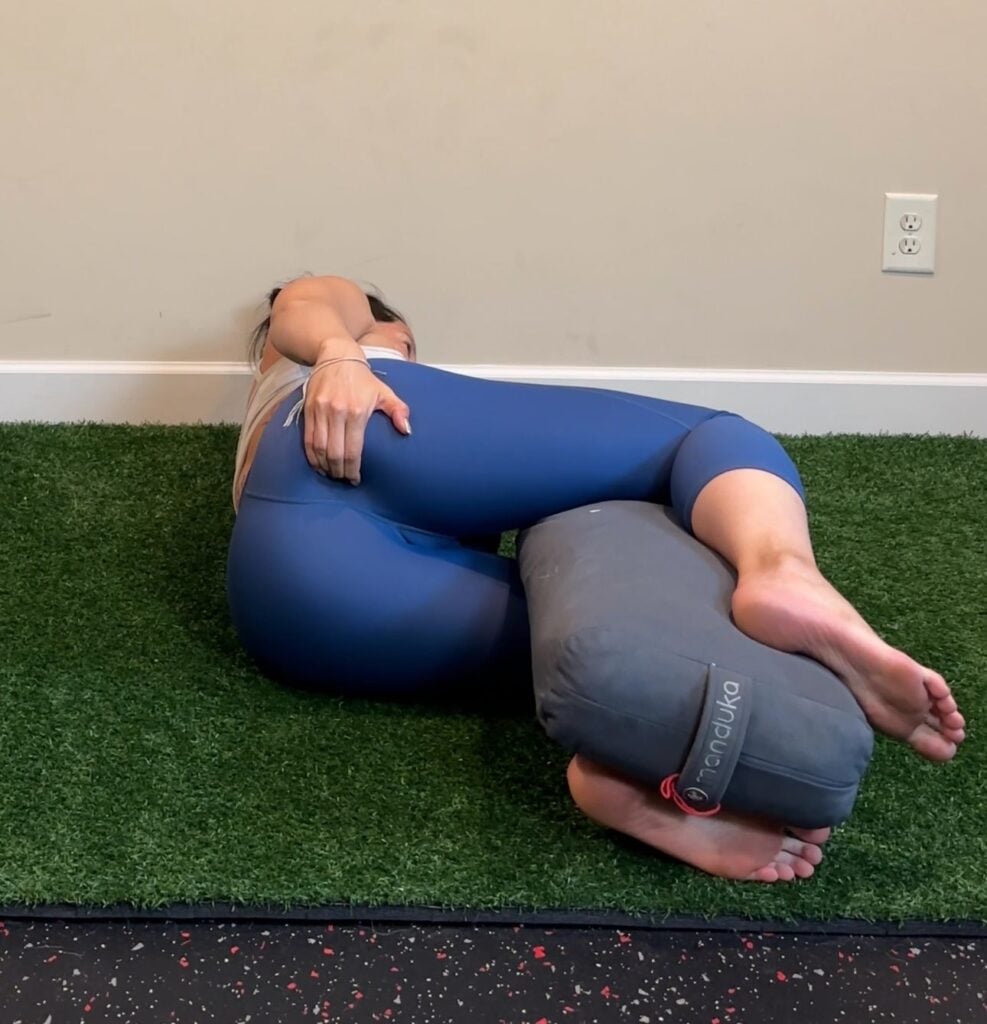
In the side-lying position, we are going to bring the hips into an asymmetrical position–opposite of what is common. Drive the RIGHT knee forward and left hip BACK.
Then you can reach around to grab under the sitz bone to pull upward as you inhale down and out. Feel the sitz bones spread apart as you do this movement.
In addition to an external release, you could insert a pelvic wand internally and massage the pelvic floor with the wand. We recommend working with a pelvic floor physical therapist if you want more guidance on how to use a pelvic wand for internal pelvic floor release.
2) 90/90 Side Body Opener
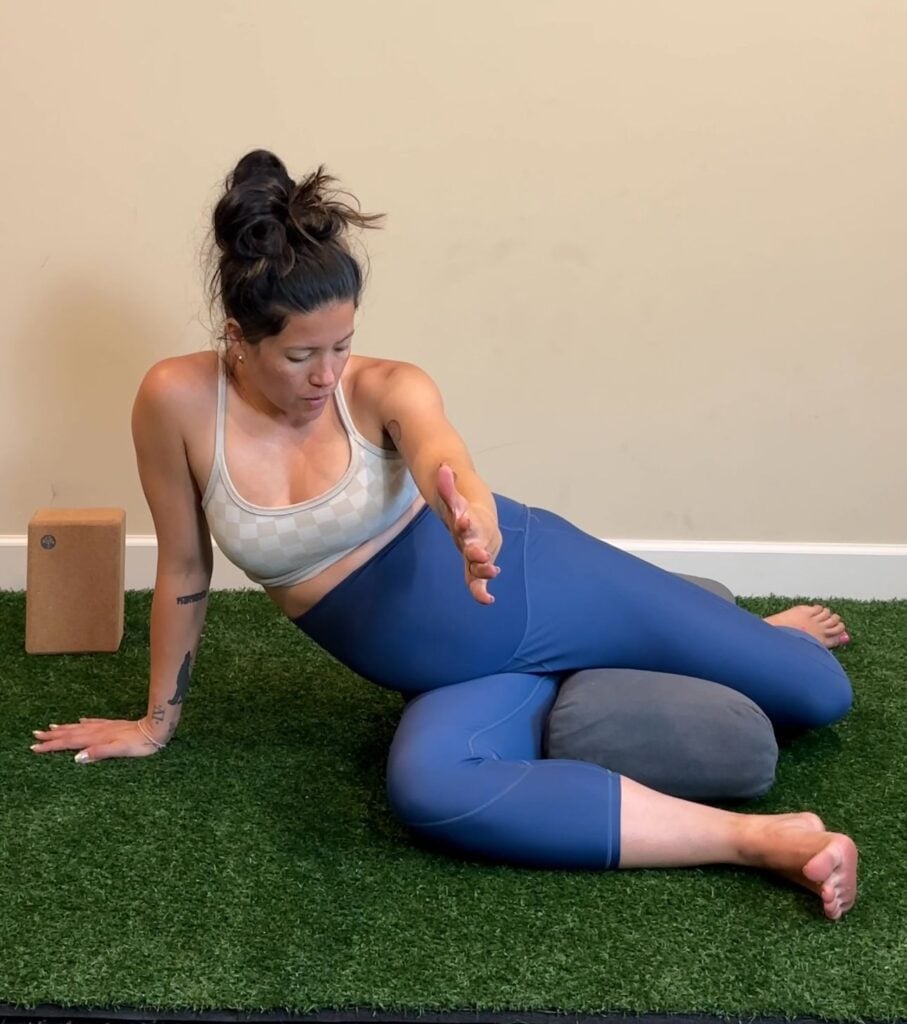
In the 90/90 side body opener, we are offloading the right hip to release the tension and stretching the right side body. Due to our common postural tendencies with the right hip oriented more backward in internal pelvic rotation (closed hip position) and the left hip oriented more forward in external pelvic rotation (open hip position), the right side body also tends to become compressed. This side body opener helps to release the tension in the side body/rib cage to improve breath to the pelvic floor!
In this position, press both knees into the ground as you sink into the side body. Inhale to feel the pelvis widen at the bottom, and exhale to lift up in the urethra or front half of your pelvic floor.
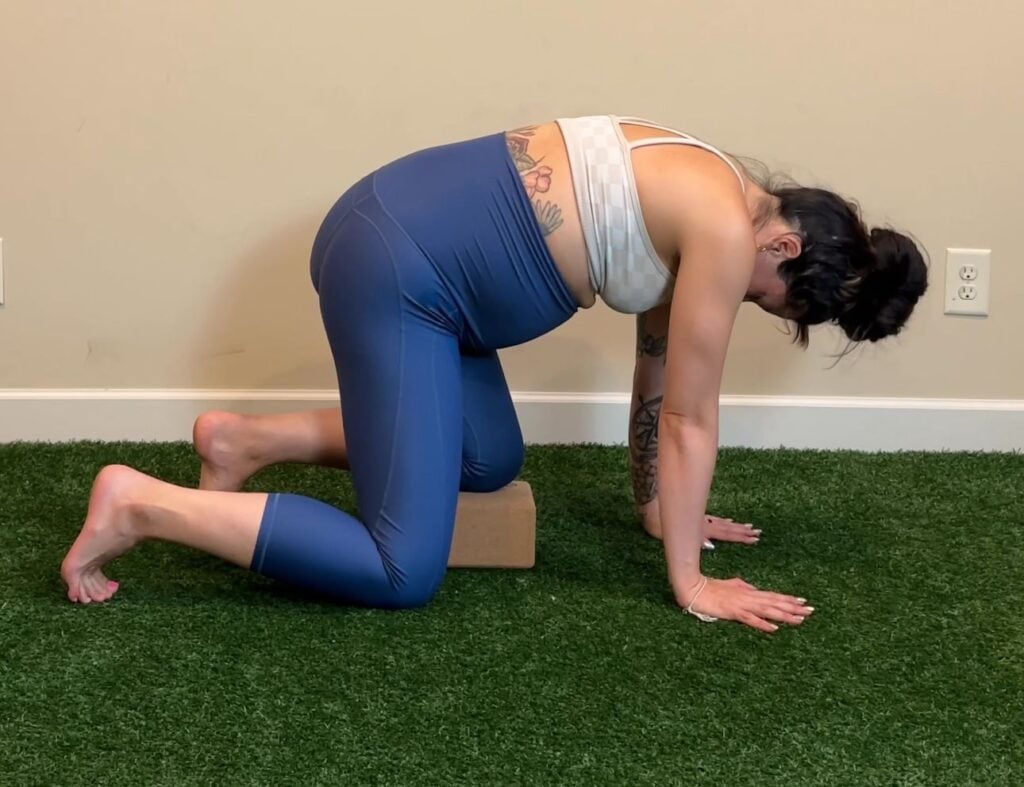
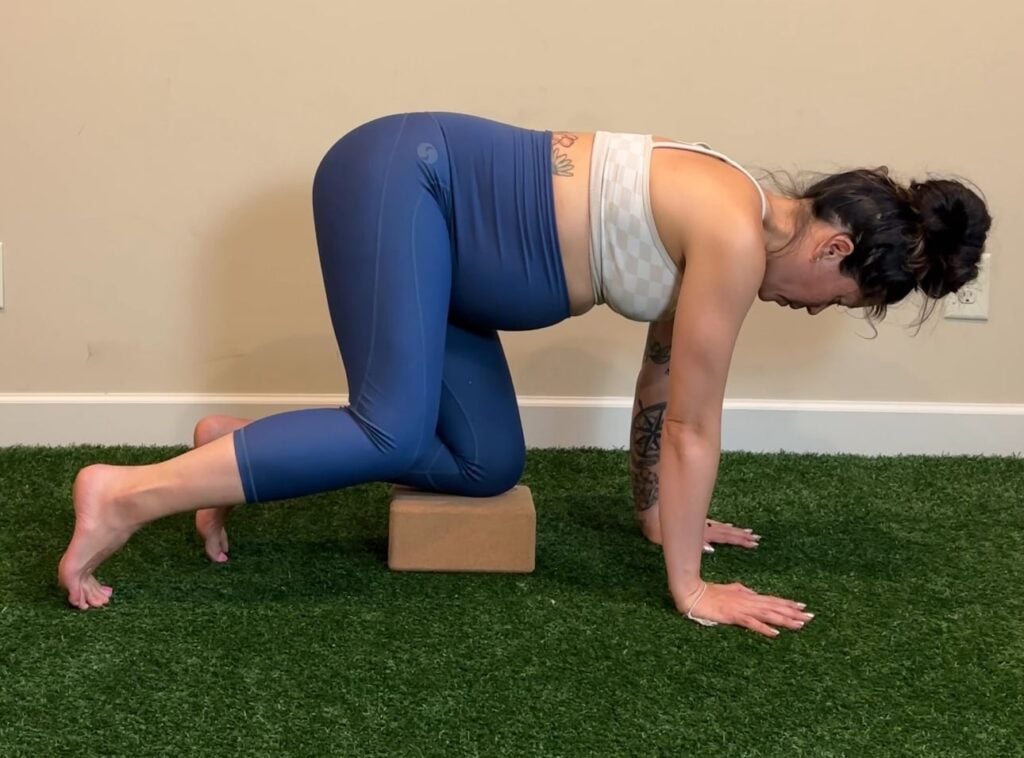
3) All Fours Hip Shift: Pelvic Tilts and Lifts
If you want more daily workouts to support a strong pregnancy as you prepare for birth, join our online prenatal fitness programs!
MamasteFit is unique in that we are one of the ONLY prenatal/postnatal training facilities in the United States. We develop our workout programs from our experience of working with in-person pre/postnatal fitness clients and work closely with physical therapists to refine our programming. In addition, we are birth workers, so we combine our experience as perinatal fitness trainers and birth professionals to ensure that our programs actually support your birth preparation and recovery!
Our prenatal fitness programs are offered in several formats:
- 40-Week Prenatal Strength Program in the Teambuildr App:
- This program is a self-paced workout with shorter demo videos. This is ideal if you like to workout in a gym setting and prefer a traditional workout delivery format.
- This program syncs to your current week of pregnancy, so you can start anytime, with one-time payment or month-to-month payment options.
- This program has a full and mini version, depending on how much time you have to dedicate to workouts!
- Prenatal On-Demand Fitness Program:
- If you prefer to follow a video as you workout at the same time, this workout program will be the best option!
- This program syncs to your current trimester, so you can grab the trimesters you need!
- Birth Prep Workout Program:
- If you already have a workout routine or you only want birth prep-focused workouts, check out this program!
- This program includes full-length workout videos to follow as you workout at the same time.
- Prenatal Yoga Classes:
- If you want prenatal yoga, join our prenatal yoga program! This also syncs to your current trimester.
4) Half Lunge Hip Shift with Adductor Release
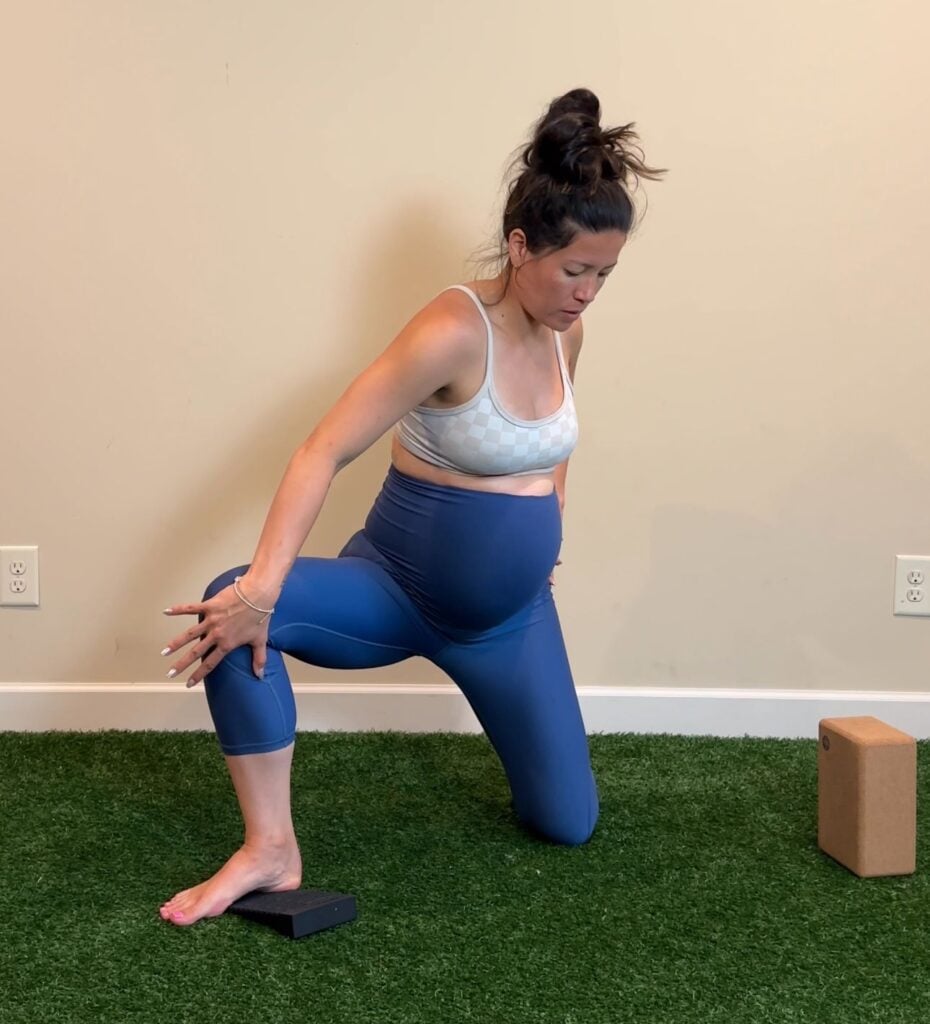
Next, we are moving more upright in a half lunge position. This position will be a static hold as you focus on shifting into the left leg and stretching the right upper groin.
The right adductor, especially upper groin, tends to be tighter than the left side. This can restrict movement of the right pelvis and impact your ability to create space in the pelvis for birth and release tension in the pelvic floor. Additionally, this tension could contribute towards a feeling of heaviness in the anterior pelvic floor.
Place a wedge under your right arch (you can also use a rolled-up towel). Then shift your weight towards the left knee as you rotate your belly towards that thigh. As you rotate, press into the right knee to keep it aligned to the right ankle to feel more of a groin stretch.
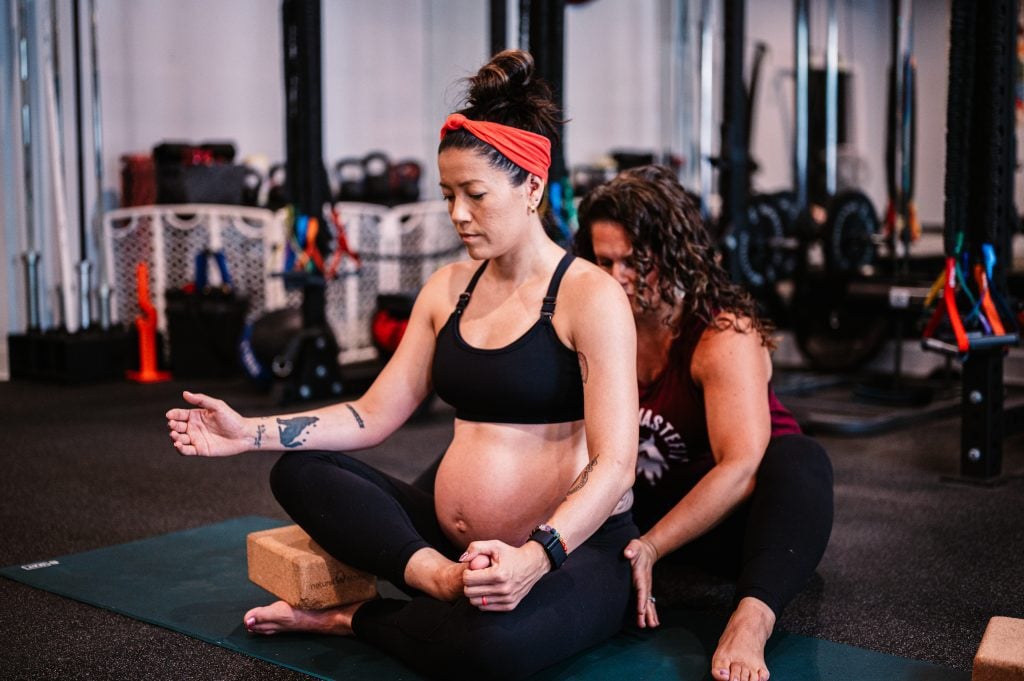

This course explore your pelvic floor anatomy, function, and how to prepare your pelvic floor for birth! This course includes educational videos, mobility exercises, relaxation drills, and how to relax your pelvic floor during labor tips.
- 2h+ of Video
- Mobility Flows
- Lifetime Access
5) Lateral Hip Shift with Adductor Release
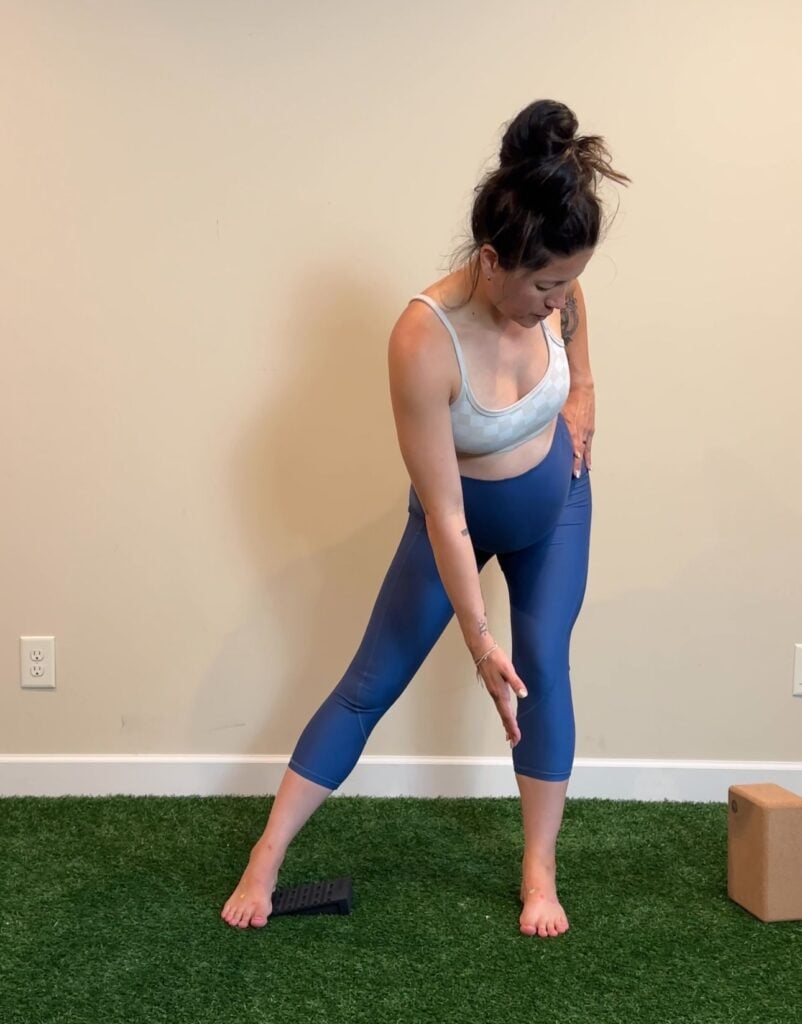
Finally, we can stand up and add some movement to release tension in the pelvic floor. In the lateral hip shifts, you can use body weight or a light to medium weight.
In this movement, you will shift from leg to leg while alternating the rotation in your upper body. This will bring you into the posterior pelvic floor to stretch it and improve pelvic to hip movement to enhance pelvic mobility for birth.
Conclusion
Understanding the role of the pelvic floor and incorporating specific exercises into your birth preparation routine can significantly enhance your comfort and functionality during pregnancy and childbirth. By addressing common areas of tension and asymmetry, these targeted exercises help create more space in the pelvis, facilitating an easier passage for your baby. Moving beyond traditional exercises like Kegels and deep squats, the techniques discussed in this blog provide a comprehensive approach to releasing pelvic floor tension. By integrating these practices into your routine, you can better prepare your body for the demands of childbirth, promoting a smoother and more efficient birthing process.
Prenatal Support Courses


Learn the science of pregnancy and birth to take the mystery of labor away! Understand why you are feeling what you feel, and learn strategies to confidently move through pregnancy and birth!
- 9h+ of Video
- Support Group
- Close Captioning
- 5 Workouts/Week
- Gym Workouts
- Self-Paced

Instructor
GINA
Workout on-demand with our prenatal fitness workout videos! Each workout is 30-40 minutes to follow along as you exercise at the same time!
- Birth Prep
- All Trimesters
- Mobility Work

Instructor
GINA
Find comfort and relief from pelvic girdle pain throughout your pregnancy and postpartum period! This program incorporates myofascial sling focused exercises to stabilize across the pelvic girdle joints.
- 3 Weeks
- On Demand Workout Videos to Follow