



If you’re nearing the end of your pregnancy and looking for ways to encourage labor, you may have come across the Miles Circuit for labor. This series of movements is designed to create more space in your pelvis, helping your baby engage and potentially kick-start labor. But what exactly is the Miles Circuit, and how does it work? Let’s dive into the details.
Subscribe to our YouTube Channel for more weekly workouts and educational videos! We publish one new workout video and 2-3 educational videos a week on our channel.
What Is the Miles Circuit for Labor?
The Miles Circuit is a sequence of three specific movements aimed at creating space within different parts of your pelvis. This extra space can help your baby enter the pelvis more easily, rotate into the optimal position, and move further down, potentially easing your labor process. It’s particularly beneficial if you’ve been experiencing prodromal labor (where contractions start and stop) or if your labor has stalled early on.
How Does the Miles Circuit Help with Labor?
The key to the Miles Circuit is its focus on pelvic mechanics. By creating space in targeted areas of the pelvis, these movements can help align your baby better, making it easier for them to engage and progress through the birth canal. However, it’s important to note that if you’re not already showing signs of labor, the Miles Circuit is unlikely to induce labor on its own. Instead, it’s most effective when you’re already experiencing some contractions or signs that labor is on its way.
The Three Movements of the Miles Circuit
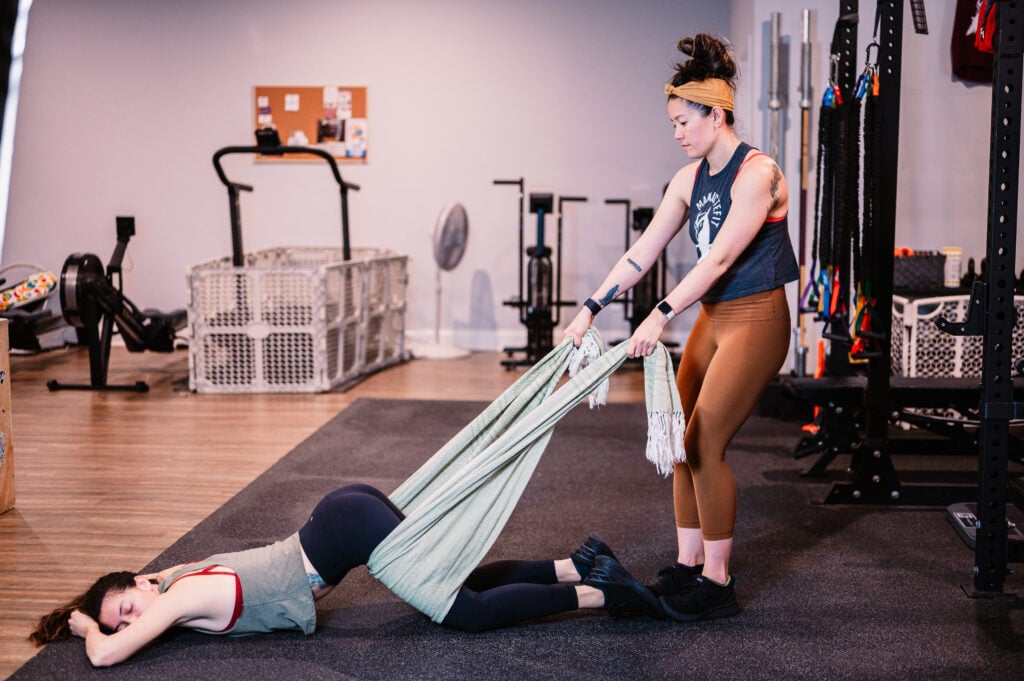
Open Knee-Chest Position:
The first movement is the open knee-chest position, a gentle inversion that you hold for about 20 to 30 minutes. This position helps your baby adjust their alignment with the top of the pelvis, potentially making it easier for them to engage. By slightly tilting your pelvis and applying traction to the sacrum, this movement creates space in the top of the pelvis, making it easier for your baby to settle in.

Side-Lying Position:
After the open knee-chest position, you move into a side-lying position, again holding it for 20 to 30 minutes. This position is designed to create asymmetrical space in the upper mid-pelvis, encouraging your baby to rotate into the pelvis. Most babies rotate from the left side, so starting with your left leg elevated on pillows or a bolster can be particularly effective.
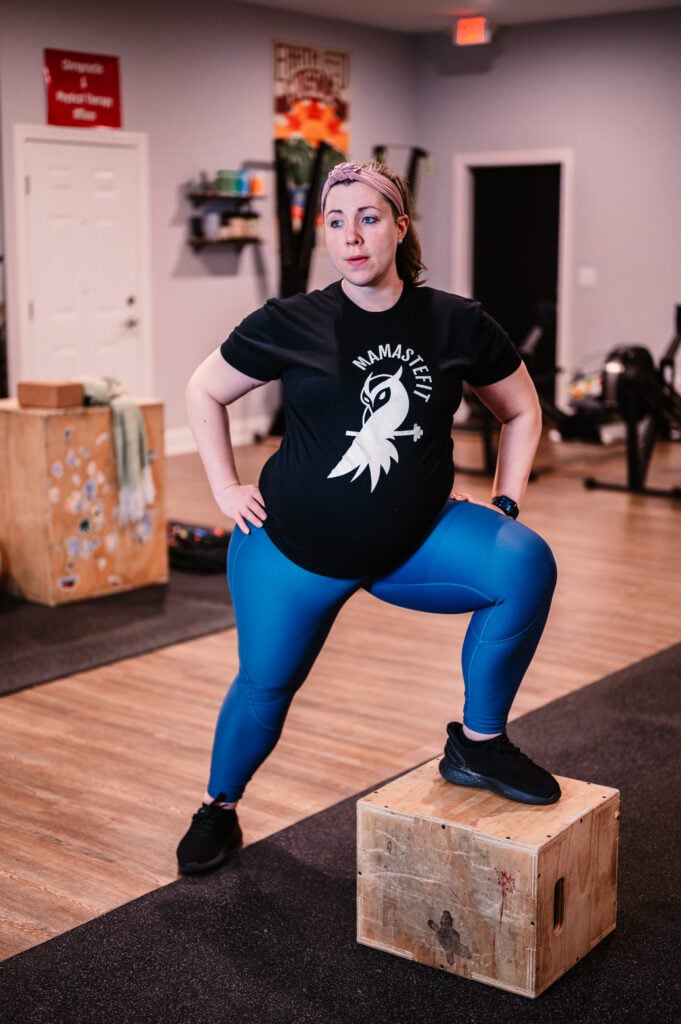
Elevated Lunge Position:
The final movement is an elevated lunge, which can be done using any raised surface like a box, stairs, or a couch. This position opens the hip and creates space in the upper mid-pelvis, helping your baby continue their descent into the pelvis. By gently rocking into the lunge, you encourage your baby to rotate further, potentially helping labor progress.
When Should You Use the Miles Circuit?
The Miles Circuit is most beneficial if you’re experiencing signs of early labor, such as contractions that start and stop, or if your baby is in a less-than-optimal position for birth. However, if your baby is already deeply engaged in the pelvis, the circuit may not be as effective. It’s also worth noting that while these movements can be incredibly helpful, they are not a guaranteed solution for every labor challenge.
If you want more daily workouts to support a strong pregnancy as you prepare for birth, join our online prenatal fitness programs!
MamasteFit is unique in that we are one of the ONLY prenatal/postnatal training facilities in the United States. We develop our workout programs from our experience of working with in-person pre/postnatal fitness clients and work closely with physical therapists to refine our programming. In addition, we are birth workers, so we combine our experience as perinatal fitness trainers and birth professionals to ensure that our programs actually support your birth preparation and recovery!
Our prenatal fitness programs are offered in several formats:
40-Week Prenatal Strength Program in the Teambuildr App:
- This program is a self-paced workout with shorter demo videos. This is ideal if you like to workout in a gym setting and prefer a traditional workout delivery format.
- This program syncs to your current week of pregnancy, so you can start anytime, with one-time payment or month-to-month payment options.
- This program has a full and mini version, depending on how much time you have to dedicate to workouts!
Prenatal On-Demand Fitness Program:
- If you prefer to follow a video as you workout at the same time, this workout program will be the best option!
- This program syncs to your current trimester, so you can grab the trimesters you need!
- If you already have a workout routine or you only want birth prep-focused workouts, check out this program!
- This program includes full-length workout videos to follow as you workout at the same time.
- If you want prenatal yoga, join our prenatal yoga program! This also syncs to your current trimester.
Learn More About Supporting Your Labor
If you’re interested in learning more about labor positions and how to support your labor process, consider exploring our online childbirth education course. This course offers a wealth of information on pelvic mechanics, labor positions, and how to address various labor issues. By understanding the different types of space created by different movements, you can better support your body and your baby during labor.
Conclusion
The Miles Circuit is a powerful tool for those looking to optimize their labor process, particularly if you’re experiencing challenges with your baby’s position or early labor. By creating space in the pelvis through specific movements, you can help your baby engage and progress, potentially making your labor easier and more efficient.
For more information on prenatal fitness and labor preparation, be sure to check out our online courses and resources. And if you found this blog helpful, consider subscribing to our YouTube channel for more tips and insights on pregnancy, birth, and beyond.
Prenatal Support Courses


Learn the science of pregnancy and birth to take the mystery of labor away! Understand why you are feeling what you feel, and learn strategies to confidently move through pregnancy and birth!
- 9h+ of Video
- Support Group
- Close Captioning

- 5 Workouts/Week
- Gym Workouts
- Self-Paced

Instructor
GINA
Workout on-demand with our prenatal fitness workout videos! Each workout is 30-40 minutes to follow along as you exercise at the same time!
- Birth Prep
- All Trimesters
- Mobility Work

Instructor
GINA
Find comfort and relief from pelvic girdle pain throughout your pregnancy and postpartum period! This program incorporates myofascial sling focused exercises to stabilize across the pelvic girdle joints.
- 3 Weeks
- On Demand Workout Videos to Follow