Empower Your Push: Two Techniques for Easier Labor
Birth, Pushing
When it comes to pushing during labor, every little bit of extra space in the pelvis can make a big difference. As your baby navigates through the birth canal, they need to rotate under the pubic arch to be born. Strong uterine contractions can help move them along, but there’s an easier, gentler option, too—manually creating more space with a few simple techniques that your birth partner can do to support you.
In this post, we’ll explore two effective pushing support techniques: the Single Knee Press and Cook’s Counter Pressure. Both can help open the bottom of the pelvis, giving your baby more room to descend and helping you push more effectively.
Subscribe to our YouTube Channelfor more weekly workouts and educational videos! We publish one new workout video and 2-3 educational videos a week on our channel.
Why Create More Space During Pushing?
As your baby moves down, they reach the lower part of the pelvis and must complete a final rotation to slip beneath the pubic bone. This stage can feel intense, and sometimes progress slows if there isn’t quite enough room for that rotation.
By shifting the pelvis or applying gentle counter pressure, you can create more space—helping your baby find the right position and making your pushes more effective. These techniques are especially helpful when contractions alone aren’t quite enough to move things along.
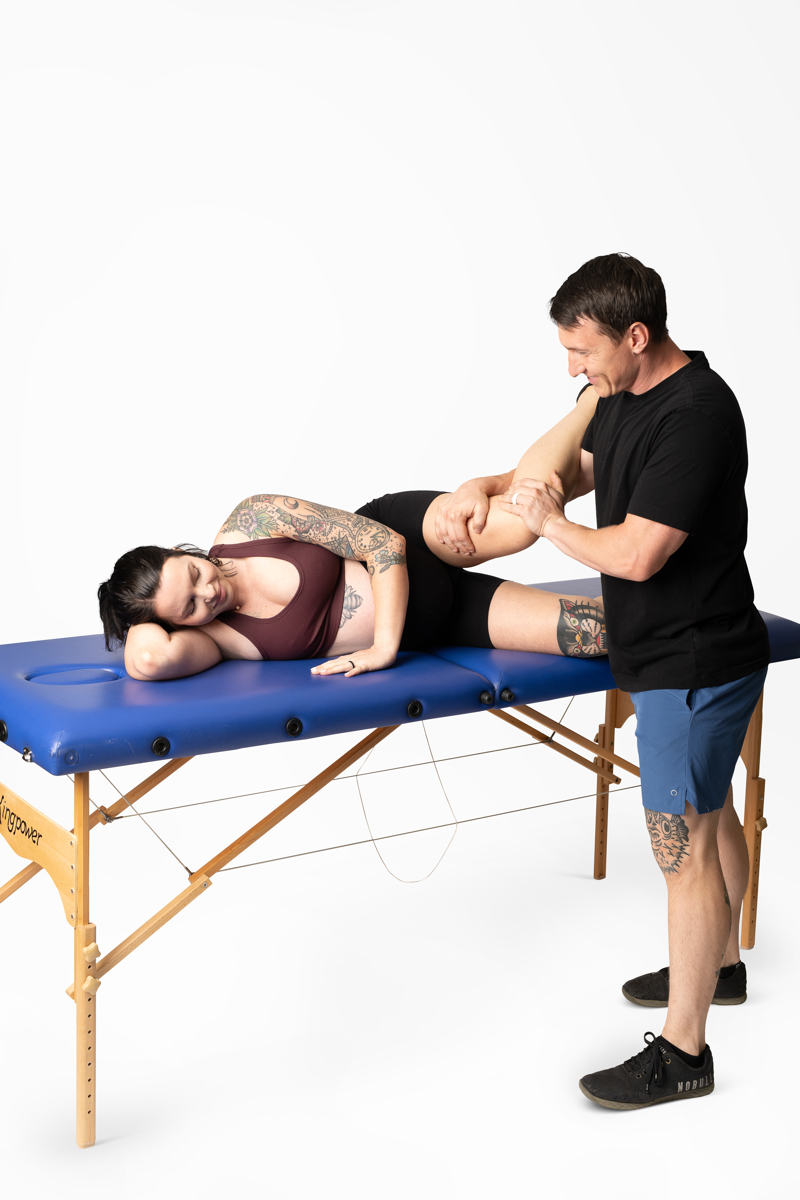
The Single Knee Press is a powerful way to open the lower pelvis and help the baby rotate. Here’s how it works:
Positioning the Leg: Your partner will take one of your knees and align it with their elbow crease. Your leg should rest comfortably there so they can support it with minimal effort.
Finding the Right Angle: The thigh should be at about a 90-degree angle to your torso—not pulled too close to your chest, but not extended out too far either.
Aligning the Hip and Knee: The knee and hip should be level—not pressed inward or splayed outward.
Applying Pressure: Your partner will press straight back on your knee, shifting your top hip slightly back. This creates a “hip shift,” which moves the pubic bone down and opens up more space for your baby.
You’ll likely feel a stretch deep in the sacral or glute area—right where the pocket of your jeans would sit.
Extra Tips:
Hold the press during each push.
Add a gentle wiggle afterward to release tension.
For more opening, your partner can lift your ankle slightly, adding internal rotation.
Practicing this move during pregnancy is a great idea—it releases pelvic floor tension and helps you become familiar with the sensation before labor.
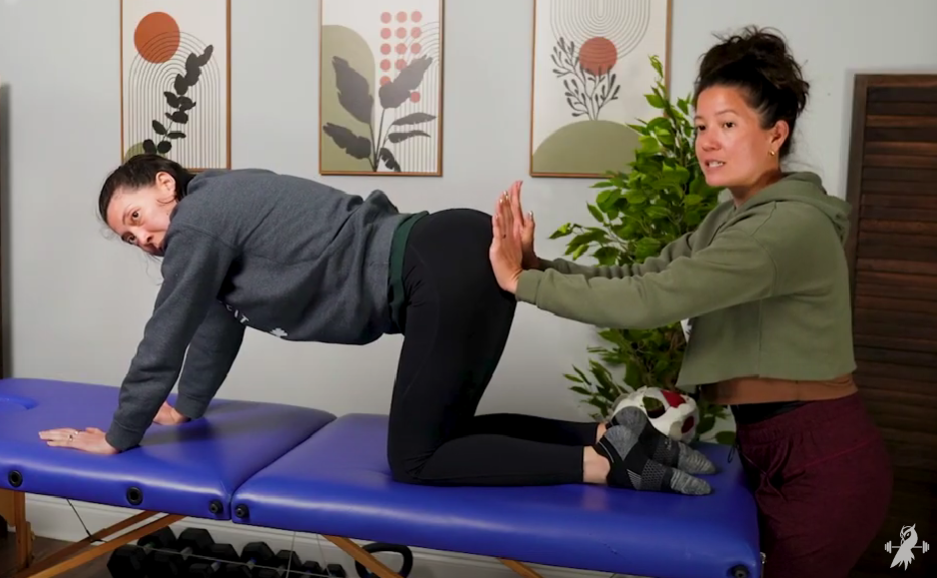
The second technique, Cook’s Counter Pressure, involves hands-on support to the base of the pelvis.
Here’s what your partner will do:
Locate the Sitz Bones: These are the two bony points at the bottom of the pelvis (the ones you feel when you sit on a hard chair).
Cup the Bones: Your partner places their hands around the sitz bones, gently cupping them. If you’re working with someone other than your partner, a blanket or sheet can be used for modesty.
Provide Steady Pressure: As you push, they press into those bones. You’ll feel the pressure directed toward your perineal area—which can help guide your effort into your pelvis rather than through your legs.
This technique not only creates space in the pelvic outlet but also helps focus your pushing energy where it’s needed most.
The first time you experience a hip shift or counter pressure shouldn’t be during active labor. Practicing these movements during pregnancy:
Helps you and your partner feel more comfortable with them.
Makes it easier to use them instinctively when the time comes.
Provides a gentle pelvic floor release you can benefit from long before labor starts.
If you want guided practice with these movements (and more techniques to prepare your pelvis, release your pelvic floor, and support baby’s position),join our Birth Prep Workout Series—now 50% off. Our next series starts Monday, September 1st—Labor Day, and we’ll guide you through four weekly workouts plus live Q&A calls to answer your questions and help you feel confident for birth.
Both the Single Knee Press and Cook’s Counter Pressure are simple but powerful techniques to use during pushing. They can: ✅ Open the pelvis for more room. ✅ Help baby rotate under the pubic bone. ✅ Guide your pushes more effectively.
Consider practicing these moves now and adding them to your birth toolkit—they might just make all the difference in those final moments of labor.
If you want to learn more about pushing techniques, labor positions, and how to prepare your body for birth, check out our online childbirth education course and prenatal fitness programs. You can even bundle the two for 15% off—and don’t forget to use code YOUTUBE10 for an additional 10% savings.
Your birth journey is unique, but with the right tools and knowledge, you can feel empowered every step of the way.
Learn the science of pregnancy and birth to take the mystery of labor away! Understand why you are feeling what you feel, and learn strategies to confidently move through pregnancy and birth!
Find comfort and relief from pelvic girdle pain throughout your pregnancy and postpartum period! This program incorporates myofascial sling focused exercises to stabilize across the pelvic girdle joints.