



There are a few “magic moves” of labor that seem to solve every problem! When someone’s labor is stalling or there seems to be an issue, if you throw them in one of these positions–boom, baby is suddenly ready to be born.
But, how do they work, and will they work every single time?? Let’s discuss them in this blog!
There are two common areas where you may see a positional labor stall, or a labor stall that is due to baby’s position or the space in the pelvis.
The first is baby is having a hard time ENTERING into the pelvis, and this could be due to their position in relation to the top of the pelvis or decreased space in the pelvic inlet.
The second is baby is having a hard time FINISHING their rotation under the pubic bone, and this could be due to that space being the tightest and there is decreased pelvic mobility.
With both of these types of labor stalls, there are different “magic moves” that will likely resolve them! Let’s break down each of these positions, plus share some alternatives.
But, you don’t need to wait until birth to figure out how to create more space in your pelvis and support your baby’s position! You can begin to prepare during pregnancy. In pregnancy, we tend to favor a certain type of posture that can make it more difficult to open the pelvic in certain ways. Commonly, we favor an extended spine (arch in our back) and external hip rotation (toes out). Both of these movement patterns help to create space in some areas of the pelvis, but they can restrict movement in others.
For example, if you cannot find a rounded back position, it may make it harder for baby to ENTER the pelvis. And if you can’t find internal hip rotation, it can make it harder for baby to FINISH their rotation under the pubic bone.
Grab the FREE MamasteFit Birth Prep Circuit guide for six exercises designed to release common areas of tension to make it easier for you to open your pelvis for birth! This guide includes pictures, written descriptions, and video breakdowns!
If you want more daily workouts to support a strong pregnancy as you prepare for birth, join our online prenatal fitness programs!
MamasteFit is unique in that we are one of the ONLY prenatal/postnatal training facilities in the United States. We develop our workout programs from our experience of working with in-person pre/postnatal fitness clients and work closely with physical therapists to refine our programming. In addition, we are birth workers, so we combine our experience as perinatal fitness trainers and birth professionals to ensure that our programs actually support your birth preparation and recovery!
Our prenatal fitness programs are offered in several formats:
- 40-Week Prenatal Strength Program in the Teambuildr App:
- This program is a self-paced workout with shorter demo videos. This is ideal if you like to workout in a gym setting and prefer a traditional workout delivery format.
- This program syncs to your current week of pregnancy, so you can start anytime, with one-time payment or month-to-month payment options.
- This program has a full and mini version, depending on how much time you have to dedicate to workouts!
- Prenatal On-Demand Fitness Program:
- If you prefer to follow a video as you workout at the same time, this workout program will be the best option!
- This program syncs to your current trimester, so you can grab the trimesters you need!
- Prenatal Yoga Classes:
- If you want prenatal yoga, join our prenatal yoga program! This also syncs to your current trimester.
Resolve an Engagement Issue with Walchers
If your baby is struggling to enter, or engage, into the pelvis, then Walchers can be a great movement to try.
Walchers creates more space in the anterior (front) inlet with external hip rotation (opens the inlet more side to side) and an anterior pelvic tilt (arches the back to create more space in the front of the inlet). This dramatic angle can help create the space that your baby needs to enter behind the pubic bone!
In some instances, the full hip extension may cause more of a posterior pelvic tilt which would decrease the external hip rotation and rather create more space front to back, and more in the posterior inlet. But more commonly, Walchers will bring someone into an anterior pelvic tilt. This can be debated though!
However, Walchers is not comfortable at all, and can be almost painful, so there are other movements we may want to explore first. This could include inversions to help baby adjust their position and upper midpelvis opening positions to help baby rotate to better align to the pelvic inlet. And then you can do flying mermaid with a peanut ball to create a similar type of space in the inlet.
Watch the full YouTube video below for a breakdown and to see some alternatives! Be sure to subscribe to our YouTube channel so you are notified whenever we release new videos to support your pregnancy, birth, and beyond! Your subscription and views help support us so we can continue to provide all this free content!
Resolve a Late Labor Stall with the Side Lying Release
If your baby is struggling to get under the pubic bone, it may cause a late labor stall, or a stall when you are 8cm or pushing for a long time. We can create more space in the lower midpelvis to help baby finish their rotation!
The side-lying release can be a go-to labor move to resolve this late labor stall because it creates so much space in the lower midpelvis.
In the side-lying release, the top leg hangs off the bed and falls into internal hip rotation with adduction. This creates a ton of space in the lower midpelvis by moving that half of the pubic bone forward, allowing baby to rotate with strong contractions.
But, you can also do hip-shifted movements to help create a similar type of opening as well!
Watch the full YouTube video below for a breakdown and to see some alternatives! Be sure to subscribe to our YouTube channel so you are notified whenever we release new videos to support your pregnancy, birth, and beyond! Your subscription and views help support us so we can continue to provide all this free content!
We also break down the magic moves of labor on the MamasteFit Podcast! Listen to Roxanne and Gina discuss what the magic moves are, and how they work so well for many of their birth clients/patients. There are so many tools to help resolve a labor stall available to you that are beyond just using Pitocin (which can be a helpful tool, but not the only tool).
New podcast episodes every Wednesday, and birth stories on Fridays!
Find Labor Progress with Movement in Your Birth
Supporting your labor progress starts during pregnancy! You can incorporate movements in your prenatal routine to help support your baby’s movement (such as by releasing uterine ligament tension, read this blog for more), and ensure that you can open the pelvis (such as with our free birth prep circuit and fitness programs).
And then during labor, we can support our baby’s movement through the pelvis by opening each pelvic level with certain labor positions! If you want to learn more about labor positions and HOW to create space in the pelvis with movement, join our online childbirth education course! We breakdown pelvic mechanics and labor positions to support your birth!


Learn the science of pregnancy and birth to take the mystery of labor away! Understand why you are feeling what you feel, and learn strategies to confidently move through pregnancy and birth!
- 9h+ of Video
- Support Group
- Close Captioning
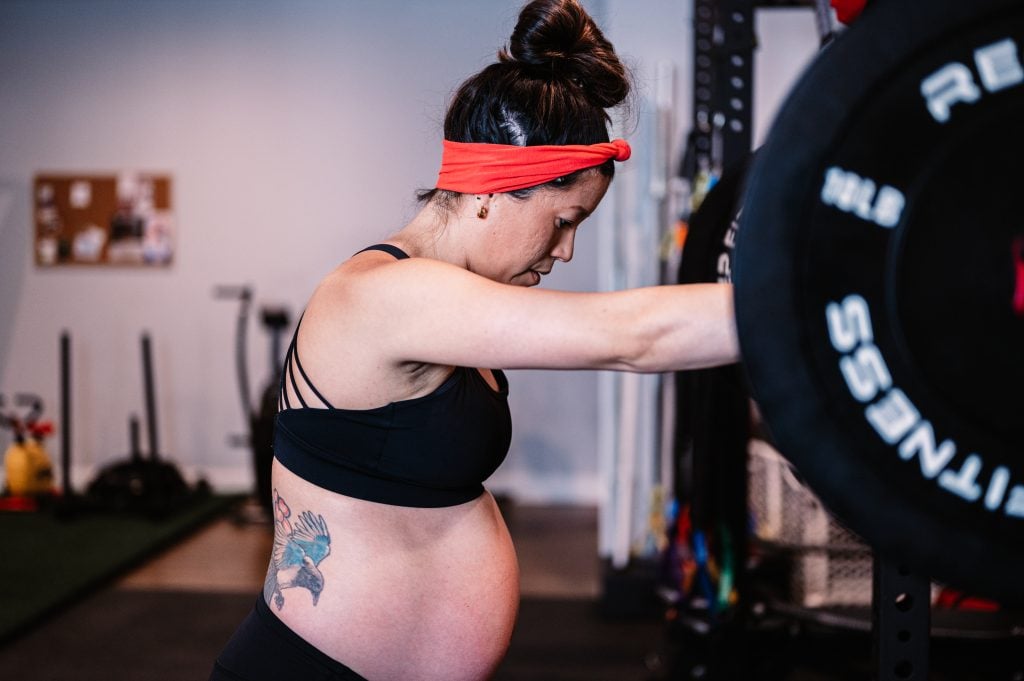

- 5 Workouts/Week
- Gym Workouts
- Self-Paced

Instructor
GINA
Workout on-demand with our prenatal fitness workout videos! Each workout is 30-40 minutes to follow along as you exercise at the same time!
- Birth Prep
- All Trimesters
- Mobility Work

Instructor
GINA
Find comfort and relief from pelvic girdle pain throughout your pregnancy and postpartum period! This program incorporates myofascial sling focused exercises to stabilize across the pelvic girdle joints.
- 3 Weeks
- On Demand Workout Videos to Follow
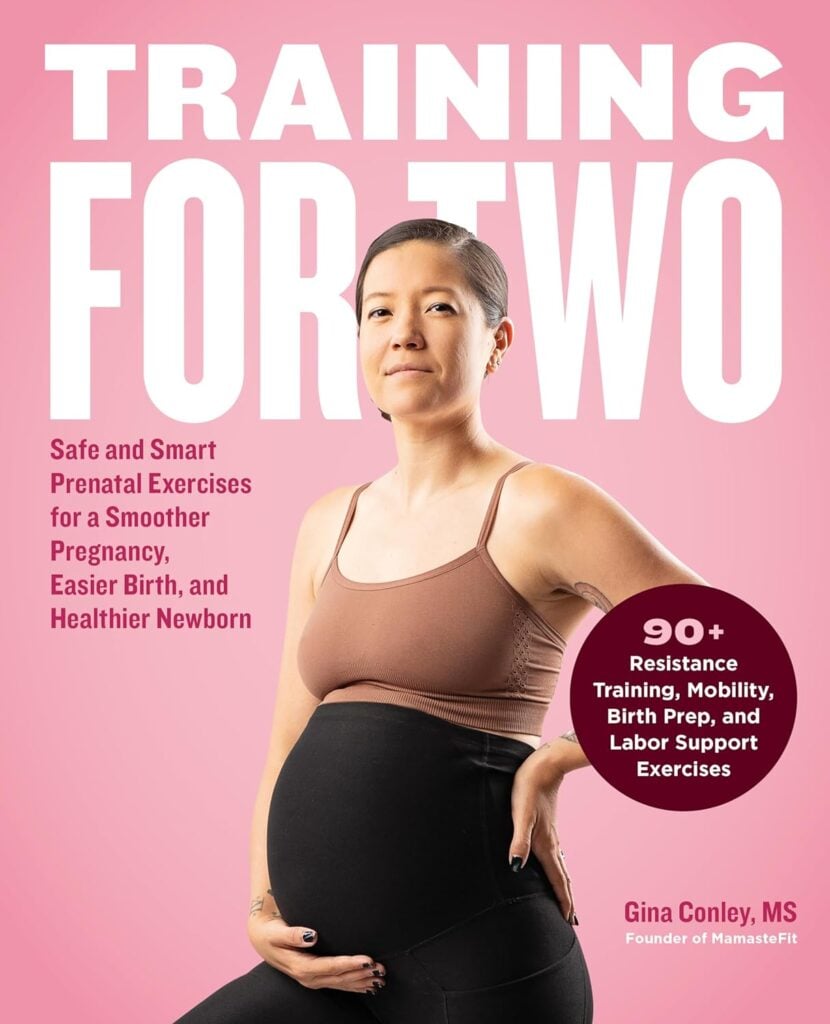
Want to learn more on how to use prenatal fitness to support a strong and pain-free pregnancy, plus exercises to release tension in the pelvic floor and open the pelvis for birth? We also break down how to use prenatal exercise and labor positions to support your baby’s position!
Pre-order our book Training for Two! This book includes 90+ exercises to build your confidence as you navigate fitness throughout your pregnancy and prep for birth, plus a whole chapter on early postpartum recovery!