

There are several speculations on what may cause breech presentation, or when baby is head up. This presentation tends to result in a scheduled cesarean, so many of us may be looking for solutions toward the end of our pregnancies when we discover the baby is breech.
But can you do anything prior to the end of your pregnancy to possibly avoid breech presentation? Possibly. But it is important to note that breech is a variation of normal–some babies need to be born this way. Sadly, there may be limitations on your birth options if your baby is breech, so understanding possible reasons for breech can help you navigate your pregnancy.
There are several possible causes of breech presentation, some of which are outside of your control and some of which are within your control.
Learn the science of pregnancy and birth to take the mystery of labor away! Understand why you are feeling what you feel, and learn strategies to confidently move through pregnancy and birth!
- 9 hours of on-demand video
- Lifetime Access of E-Course
- Watch on Mobile Device
If you are interested to learn everything you need to know about pregnancy, we strongly recommend checking out our childbirth education course and preparing for the journey ahead with confidence and ease!
Join all the expectant families that we helped to have a confident and empowered pregnancy.
What are Some Potential Causes of Breech Presentation?
There are some factors that are outside of our control, such as how long the umbilical cord is and our genetics, but there are some that we may have an influence on such as our abdominal wall support. Breech is a variation of normal, but not every provider treats it as normal and breech may limit your options at birth.
Gina, MS, Birth Doula
1. Umbilical Cord Length & Coils

In evaluation of 110 umbilical cords post cesarean of 55 breech and 55 head down babies, they found that the umbilical cord length was significantly shorter in breech babies (56.93cm) than head down babies (63.95 cm). They also found that the number of coils in the umbilical cord were over double in the head down babies (11.7 coils) compared to the breech babies (5.1 coils).
Another consideration can be if the baby has wrapped themselves up in their cord, thus shortening the length of the cord.
Essentially, a shorter cord may contribute towards a breech presentation; but it could also be the result of a breech presentation. The short cord may be difficult to prevent, there is not a thorough understanding as to what may cause a short or long cord. But there is some correlation to fetal activity and cord length.
The umbilical cord continues to lengthen throughout pregnancy, with some correlation that the more active a baby is, the longer their cord will be at birth. Consider what tends to cause your baby to be more active, and potentially it would be beneficial to continue that activity. Examples could include cardio training, as it seems to prompt more fetal activity, so it may be beneficial to continue cardio training throughout the duration of pregnancy to include the final weeks.
2. Placenta Placement
If the placenta is in the way, it can make it difficult for baby to fit head down in the uterus. There is probably not much we can do to influence where our placentas implant and grow, but as pregnancy progresses, placentas do tend to rise upwards.
3. Uterine Shape
For some of us, the way our uterus is shaped can influence our baby’s position! For example, a Bicornuate Uterus, a heart shaped uterus, may result in a higher likelihood of your baby being in a breech position. While there is not much we can do to change our uterine shape, we may want to be aware of the increased likelihood and seek out a provider that will support your birth preferences. Listen to Raquel’s story where she sought out a provider due to her uterine shape causing her to have recurrent breech babies!
4. Weak Abdominal Wall (and probably too strong of an abdominal wall)
If the abdominal wall is weakened, it can cause the uterus to fall forward, making it difficult for baby to engage head down. The same can probably be applied to a too strong of an abdominal wall that restricts the anterior space of the uterus, not allowing baby the space to navigate head down, but I have not found a study that notes this as a potential cause of breech presentation.
We can easily address the weakness of the abdominal wall with pregnancy safe functional core exercises. We include daily core exercises in our prenatal fitness programs that are safe throughout pregnancy and will help increase the strength of the core. We also incorporate diaphragmatic breathing into all our movements to help with the relaxation and lengthening of the abdominal wall to support balance.
You could also support the belly with a belly band to lift it from a pendulous state. This may support baby’s position if your belly falls forward excessively. This tends to be more common in subsequent pregnancies, or in pregnancies with multiples.
If you want more daily workouts to support a strong pregnancy as you prepare for birth, join our online prenatal fitness programs!
MamasteFit is unique in that we are one of the ONLY prenatal/postnatal training facilities in the United States. We develop our workout programs from our experience of working with in-person pre/postnatal fitness clients and work closely with physical therapists to refine our programming. In addition, we are birth workers, so we combine our experience as perinatal fitness trainers and birth professionals to ensure that our programs actually support your birth preparation and recovery!
Our prenatal fitness programs are offered in several formats:
- 40-Week Prenatal Strength Program in the Teambuildr App:
- This program is a self-paced workout with shorter demo videos. This is ideal if you like to workout in a gym setting and prefer a traditional workout delivery format.
- This program syncs to your current week of pregnancy, so you can start anytime, with one-time payment or month-to-month payment options.
- This program has a full and mini version, depending on how much time you have to dedicate to workouts!
- Prenatal On-Demand Fitness Program:
- If you prefer to follow a video as you workout at the same time, this workout program will be the best option!
- This program syncs to your current trimester, so you can grab the trimesters you need!
- Birth Prep Workout Program:
- If you already have a workout routine or you only want birth prep-focused workouts, check out this program!
- This program includes full-length workout videos to follow as you workout at the same time.
- Prenatal Yoga Classes:
- If you want prenatal yoga, join our prenatal yoga program! This also syncs to your current trimester.
Prepare For Your Birth: Online Courses
5. Genetics
If you were a breech baby, for some reason there seems to be a link with having babies with breech presentation. Take a look at your mother’s births and female relatives and take note of any patterns that may be arising.
It is believed that some babies may have a genetic predisposition to breech positioning, which means they are more likely to be in this position during pregnancy. However, the exact genetic mechanisms behind this phenomenon are not yet fully understood.
Studies have shown that certain genetic factors can influence the development of the musculoskeletal system, which can affect the baby’s positioning in the uterus. For example, variations in genes that regulate muscle tone and flexibility may affect the baby’s ability to move and turn around in the womb, making it more likely for them to end up in a breech position.
When should you be concerned with breech presentation?
If baby is breech at 25-28 weeks, you may want to be more deliberate in trying to flip them head down or exploring your options with your provider if baby is still breech at birth. If your provider limits your options to only a cesarean birth if baby is breech, then you may want to find a new provider while you still have the opportunity.
Gina, MS, Birth Doula
Most women receive some sort of anatomy scan around the 20 week mark, and may find that their baby is breech during this ultrasound. But does that even matter yet?
From weeks 15-24, there was not much difference in what baby’s position would be at labor. When comparing the fetal position throughout pregnancy to fetal position at birth, the study looked at women who had breech presentation and head down position at birth. In both groups, 55.2% of babies were breech at 15-19 weeks. From 20-24 weeks, 50.8% and 42.9% of babies were breech, respectively.
Now, at 25 weeks is where we begin to see a difference in babies that stay breech and babies that begin to flip head down. In weeks 25-29, 70.6% of babies that were breech at term were breech presentation, compared to 28.9% of babies that were head down at term that were still breech presentation at this gestation. If baby is breech at 25 weeks, there may need to be a more deliberate approach to promoting a head down position.
How can you possibly “fix” a breech presentation?
The key to this may be what we discussed before: baby can only go where there is space for baby to fit. We should seek balance in the pelvis and uterus to support fetal positioning.
Please note that none of these recommendations physically flip your baby, but rather create the opportunity for your baby to flip itself. Only an OB can physically flip your baby with an ECV, but these recommendations could help the success of the ECV should you and your provider decide that is the best course of action for you and your family.
I would recommend these throughout pregnancy, regardless of presentation, but even more so of a focused effort if baby is still breech at 25 weeks.
Uterine Ligaments
The uterus has several ligaments that attach it to the surrounding structures. The tension in these ligaments can influence the space available for baby.
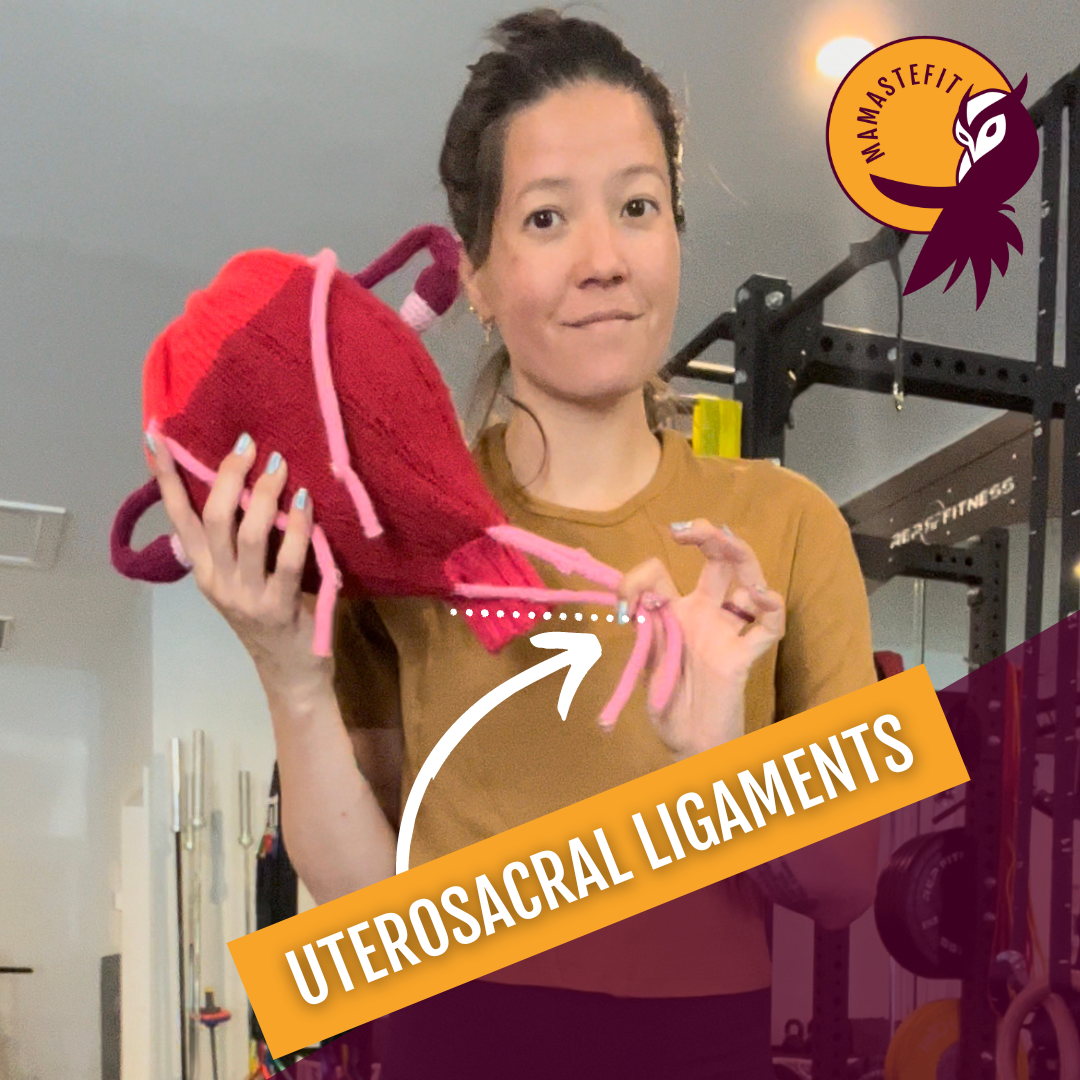
On the bottom of the uterus, we have four uterosacral ligaments that attach from the bottom of the uterus to the sacrum (back of the pelvis). These ligaments can twist or pull, decreasing the space in the bottom of the uterus. If there isn’t enough space in the bottom of the uterus, then baby may not be able to turn head down!
Another set of ligaments we will discuss in this blog are the round ligaments! The round ligaments run vertical from the uterine main body to the labia.
Usually, tension or an imbalance in the round ligaments can create a vertical speed bump for baby’s path. Sudden hip extension may cause a sudden sharp pain in the lower abdomen, more towards one side, and you may have a sensation of lightening crotch, or a sudden sharp pain in the vagina.

1. Spinning Babies Three Sisters of Balance
And then their breech protocol if baby is still breech around the 30-week mark:
The Three Sisters of Balance addresses bringing balance to the uterine ligaments. If the ligaments are imbalanced, it may cause uneven pulling on different portions of the uterus, changing the space available for baby. Each movement releases and balances each uterine ligament, helping to bring that balance to the uterus for baby.
The three sisters include:
- Belly sifting or jiggling
- Release the horizontal uterine ligament
- Supports belly position falling forward
- Forward leaning inversion
- Release lower uterine ligaments and vertical running ligaments
- Side-lying release
- Releases the pelvic floor, particularly the posterior pelvic floor, and opens the lower mid pelvis (which is why it helps with late labor stalls)
Learn the science of pregnancy and birth to take the mystery of labor away! Understand why you are feeling what you feel, and learn strategies to confidently move through pregnancy and birth!
- 5-6 Hours Live Childbirth Education Course
- Complimentary Access to Our Online Childbirth Education Course
- In Person in Aberdeen NC
Spinning Babies recommends performing the Three Sisters of Balance daily, or as daily as possible, starting around 20 weeks.
We teach the Spinning Babies Three Sisters of Balance one-on-one with doula clients and in a group setting in our childbirth education course! Check out upcoming dates for our group childbirth education classes. We teach the Three Sisters ONLY in our in-person course currently.
Release the Uterosacral and Round Ligaments
1: Inversions: Hips Above Head
First, we can bring the hips higher than the head to help stretch out the uterosacral ligaments. There are several variations we can try depending on your comfort and strength!
The forward leaning inversion, with the legs on an elevated surface, will be the most intense and physically challenging. Then we can bring the feet closer to the floor, and decrease the inverted angle by come to dolphin or puppy pose.
Hold each position for 3 full breaths, although the less inverted positions you may be able to hold longer comfortably.


You can start doing inversions daily starting at 20 weeks to specifically address uterine balance, but if baby is breech focus on 7-14 inversions per day. Once baby has flipped head down, avoid inversions for one week.
If you have high blood pressure, inversions may be contraindicated for you.
2: Side Lying Release Alternative: Inverted Hip Shifting
The side-lying release can release the pelvic floor and open the lower midpelvis. This can release tension to allow baby to adjust their position.
But, the side-lying release requires a partner’s support. I find that these hip shifted positions can accomplish something fairly similar!
What we can do is shift around in the hips to change the pelvic position. The uterosacral ligaments attach to the sacrum, and the sacrum’s position can be affected slightly by the overall pelvic position.

When we shift our weight into one leg, it tends to internally rotate at the hip (pelvis on femur moves into a closed hip position, see left leg in image). This shifts the tailbone and sacrum away, more towards the right side. So, this shifting could stretch the uterosacral ligaments as you shift your weight form side to side!
Hold a puppy position so that you can maintain this for a short period of time. Shift your weigh towards one leg, take a big inhale and exhale to relax. Then shift to the other leg. You can also do 3-5 breaths on one side, then shift to the other side.
We incorporate a labor prep flow in our prenatal fitness programs!
2. Webster Certified Chiropractic Care
Another approach to finding balance in the uterine ligaments is through webster certified chiropractic care. The webster technique addresses releases the uterine ligaments so that they are balanced and allow for optimal space for baby to move. Chiropractic care can also address any structural imbalances that are causing muscular tension.
In my own chiropractic care, my provider recommends to visit the chiropractor the same frequency as I have prenatal appointments; monthly at first, then every other week, then weekly until birth. If baby is in a breech presentation, it may be recommended for more frequent visits to address restrictions that may be contributing towards baby’s position.
If you’re local to us in Aberdeen, we recommend Dr. Ring at Sandhills Family Chiropractic for webster certified chiropractic care at sandhillsfamilychiro.com. He offers services out of our gym!
Use this link to find a webster certified chiropractor near you.
3. Prenatal Fitness Programming / Prenatal Yoga
The final method to address balance of the uterus is to consider the musculature that supports the pelvis. Read our blog posts on the muscles of the upper body that support the pelvis and the muscles of the lower body that support the pelvis, if you want more specific information on what musculature supports the pelvis.
We need an approach that is both strength and mobility. There is no need to be all or none. Some of the causes of breech presentation include: too strong of a core and too weak of a core. We want to be balanced in the middle, with both a strong and supple body.
The approach to fitness training throughout pregnancy can support creating a strong and supple body through a combination of mindful strength training and yoga practice.
Join us for on-demand prenatal yoga classes specific to each trimester!
- 20-30 minute long on-demand yoga classes
- Trimester Specific Classes
- Pelvic Opening Yoga Flows: Prepare for Birth!
- Lifetime Access of Program
Feel strong and move comfortably throughout your entire pregnancy. Our program syncs to your current week of pregnancy, so you can start at any time!
- 5 Workouts Per Week
- Labor Prep Workouts
- Teambuildr App Access
Strength training is incredibly beneficial for pregnancy. It can help alleviate common prenatal discomforts due to postural changes, which means prenatal women can be more functional throughout the duration of their pregnancy. We may be too weak in some areas that we need to strengthen in order to support the position of the pelvis.
We offer prenatal fitness programming that supports balance of the prenatal body, to include the pelvis for baby’s positioning. Strength training does not need to mean a barbell; it can simply be a small kettlebell or dumbbell, or even resistance bands. Moving with any sort of external load is strength training.
Our yoga practice (or even mobility practice) should address restrictions that we may have. We may be too tight in some areas, and this is where yoga or a deliberate mobility practice can support. For myself personally, I find that taking an actual yoga class helps force me to be more deliberate with addressing the supple side of pregnancy and working on restrictions compared to just trying to remember to do my mobility work and stretching at the end of my workouts.
There are many possible causes of breech presentation, but ultimately it is usually a space issue. If baby does not have the space, they cannot be head down. This could be due to musculature imbalances, or the uterine ligaments are imbalanced. It could be that the placenta is in the way, or the umbilical cord is too short to allow baby to rotate. It could be a weak versus strong issue. Breech presentation can be a fairly complex issue, but we can try to prevent it with balance throughout the duration of pregnancy.
Here is an example workout that focuses on opening the middle of the pelvis (and the lower midpelvis, which can help baby’s position as noted above). This workout is focuses on ensuring that we can find internal rotation and external, both with strength and mobility. This on-demand workout can help you have a better idea of what’s included in our prenatal fitness programs.
What to consider if baby is breech at 28 weeks or beyond??
First, it is really important to understand how your provider plans to support your birth if baby stays breech. Would they support a vaginal breech delivery or is your only option a c-section delivery? Do you have a preference?
If your current provider does not vaginal breech delivery, and your desire is to have a vaginal birth, it may be worth finding a provider that would support it. Typically, providers in bigger cities may be more skilled or experienced with vaginal breech birth. Not sure who would support it? Ask a local doula! Sometimes they have insider information on what providers may support what type of births.
If your provider does NOT support vaginal breech birth, what are your options if baby is still breech near term? When would they recommend an ECV? In what situations would they NOT recommend an ECV?
If you choose to have a cesarean birth, what options are available to you to make your birth a positive and empowering experience? Are there clear drapes or windows in the drapes for you to see baby being born? Do they support immediate skin to skin or delayed cord clamping in the OR?
If baby is breech, it can be worth exploring your options sooner rather than later! If you wait until you’re closer to term, you may not have the option to switch providers that would support your desired birth path.


Learn the science of pregnancy and birth to take the mystery of labor away! Understand why you are feeling what you feel, and learn strategies to confidently move through pregnancy and birth!
- 9h+ of Video
- Support Group
- Close Captioning

- 5 Workouts/Week
- Gym Workouts
- Self-Paced

Instructor
GINA
Workout on-demand with our prenatal fitness workout videos! Each workout is 30-40 minutes to follow along as you exercise at the same time!
- Birth Prep
- All Trimesters
- Mobility Work

Instructor
GINA
Find comfort and relief from pelvic girdle pain throughout your pregnancy and postpartum period! This program incorporates myofascial sling focused exercises to stabilize across the pelvic girdle joints.
- 3 Weeks
- On Demand Workout Videos to Follow
References:
Gray, C. J., & Shanahan, M. (2019, March 10). Breech Presentation. Retrieved from https://www.ncbi.nlm.nih.gov/books/NBK448063/
Ochshorn, Y., Bibi, G., Landsberg, J., Lessing, J., Yaron, Y., Kupferminc, M., & Many, A. (2006). Umbilical cord length and coiling are different in breech versus vertex presentation at birth. American Journal of Obstetrics and Gynecology, 195(6), S122–S122. https://doi.org/10.1016/j.ajog.2006.10.419
Ryo, E., Kamata, H., Seto, M., Morita, M., Yatsuki, K., & Ryo, E. (2019). Correlation between umbilical cord length and gross fetal movement as counted by a fetal movement acceleration measurement recorder. European Journal of Obstetrics & Gynecology and Reproductive Biology: X, 1, 100003–100003. https://doi.org/10.1016/j.eurox.2019.100003
Tadmor, O., Rabinowitz, R., Alon, L., Mostoslavsky, V., Aboulafia, Y., & Diamant, Y. (1994). Can breech presentation at birth be predicted from ultrasound examinations during the second or third trimesters? International Journal of Gynecology & Obstetrics, 46(1), 11–14. doi: 10.1016/0020-7292(94)90302-6