



Welcome to Week 39 of your pregnancy journey! As you approach the final stretch, you may be experiencing a mix of excitement, anticipation, and a few discomforts. Here, we’ll cover what to expect for both you and your baby during this week, along with some personal insights from my own experience as I navigate my fourth pregnancy.
What's Happening with Your Baby
At 39 weeks, your baby is approximately the size of a Cabbage Patch Doll, jackfruit, or a pumpkin- whichever resonates with you! Here’s a glimpse into your baby’s development:
Growth & Size: Your baby is now fully developed! Their lungs are developed, their brain is pretty much developed, they’re just waiting until they feel ready to come out! Baby will start secreting oxytocin of their own and hormones of their own when it’s “Go Time!” Baby is also about done growing, although if they stay another week or so, they may grow a tiny bit more. Studies show that at week 39, most babies transition to life outside of the womb very seamlessly and really well, compared to babies that are born before 39 weeks. This is why providers may recommend an elective induction around 39 weeks, especially in the case of gestational diabetes, hypertension disorders, or advanced maternal age. Click HERE to read more about the ARRIVE study, which the elective induction is based on.
Fetal Movement: You should still be doing kick counts throughout the day, even though the actual movement you feel might be different than previous weeks. They might not be as pronounced or they may have shifted location a bit, but you should still be feeling movement! If you’re not getting the same amount of movement as before or you think there is decreased movement, reach out to your provider so you can be assessed.
Skin Cells: Your baby is regenerating new skin cells so that they’re able to regulate their temperature a little bit better when they finally come out into the world, where it’s a lot colder and drier.
Changes You Might Experience
As your baby grows, your body continues to adjust. Here are some common experiences during Week 39:
Vaginal Discharge: You may start to notice a little bit more mucus-like discharge and that could be because you’re dilating and effacing. Your provider may recommend or offer a vaginal exam to see how dilated and effaced your cervix is. If you want to opt into that, you are more than welcome to, but just know dilation and effacement is not a crystal ball – it will not tell you when you are going into labor. You could be zero centimeters today and have your baby tomorrow. You could be five centimeters today and stay pregnant until you’re 42 weeks. So, choose whichever route you would like, whether you’d like a cervical exam or not, just know they are a bit uncomfortable and they won’t really tell you much other than how much you are dilated.
Cervical Exam: If you decide to have a cervical exam, your provider may be able to tell you not only how dilated and effaced you are, but the station of your baby in your pelvis as well. Unfortunately, engagement is also not an indicator of when you will go into labor, but it can be a helpful tool.
Membrane Sweep: During a cervical exam, your provider may offer a membrane sweep. What is a membrane sweep? Your provider is going to take their finger and separate the amniotic sac from the cervix. This sweep and separation of the amniotic sac from the cervix is going to release hormones in our body, specifically prostaglandins, as well as some other hormones, to help soften the cervix and thin it out, to ripen it up, as well as maybe start some labor contractions. Whether or not you have a cervical exam or a membrane sweep is up to you and really depends on your medical history and personal preferences.
- Sleep Issues: You may notice more difficulty sleeping due to discomforts, the need to use the restroom and anxiety/stress manifesting at night. You may also find yourself dealing with insomnia at bedtime, which can be very frustrating. Have a book handy, maybe a warm beverage and a relaxing activity nearby to help relax at bedtime.
Preparing for Baby
As you inch closer to your due date, it’s a great time to start preparing for your baby’s arrival:
Prepare Care and Activities for Your Other Children: If you already have children, preparing care and activities for when you go into labor is super important! Have a plan for who will watch your children and where, as well as activities lined up to help entertain them. Sensory bins and play kits are easy solutions! Check out this blog for more tips on postpartum planning.
Last Minute Meal Prep: If you feel like you need to do something to fill your time while you wait for baby, now is a great time to prepare a couple meals for the freezer! Here is a great resource for postpartum meals you can make and freeze. Or if you’re not into cooking right now, sign up for nourishing meals like these organic postpartum meals from Mama Meals!
Postpartum Prep: Don’t forget to prepare for your postpartum body! Having comfortable clothing and nursing bras ready, as well as postpartum bathroom essentials is key! Check out this blog for more tips.


Instructors
ROXANNE
This course breaks down what to expect postpartum from the moment your baby is born to the first few weeks postpartum! Learn what options you have available to you in your care!
- 2h+ of Video
- On Mobile
- Webinar
My Personal Experience in Week 39
Navigating the 39th week of pregnancy while already being a mother to three has been a unique journey filled with its own set of challenges and joys. Here are some more personal insights:
Be Patient: It is easier said than done, but focus on trying to enjoy the end of your pregnancy, understanding that labor will happen when your baby and your body are ready. If you want to try movements to actively prepare, we can do some movements to help encourage baby to rotate to whatever their best position when labor begins, but we don’t have to force baby to engage or force them into any specific position.
Insomnia: I have been dealing with insomnia again, which is frustrating, but I am trying my best to rest when I can and not dwell on when baby will arrive. I’ve picked up coloring to fill my time and playing with the kids until they fall asleep.
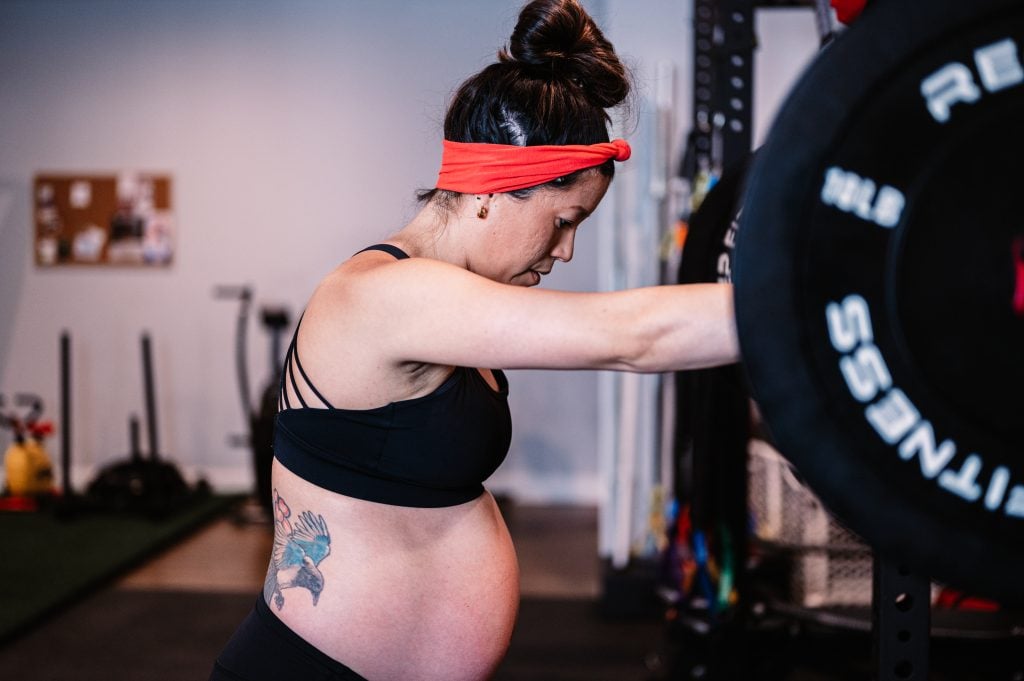
Staying Active: I’m feeling pretty good physically and doing my best to move my body and exercise every day. I’m still doing our prenatal program at this point, the workouts are starting to taper a lot more. I’m definitely not lifting as much weight as I was three weeks ago or earlier in the third trimester. It’s definitely a lot more body weight and mobility movements, a lot more free weights with dumbbells and bands instead of with the barbell, and just making sure that I’m moving well, still doing all my pelvic floor prep and release exercises, trying to keep myself super comfortable. Check out this early labor workout!
Conclusion
Every pregnancy is unique, and Week 39 can bring its own set of experiences and challenges. It’s essential to listen to your body, take care of your mental and physical health, and prepare for the exciting changes ahead.
If you’re looking for more support during your pregnancy, consider exploring our online prenatal fitness programs and childbirth education courses. You can bundle these for additional savings!
Prenatal Support Courses


Learn the science of pregnancy and birth to take the mystery of labor away! Understand why you are feeling what you feel, and learn strategies to confidently move through pregnancy and birth!
- 9h+ of Video
- Support Group
- Close Captioning

- 5 Workouts/Week
- Gym Workouts
- Self-Paced

Instructor
GINA
Workout on-demand with our prenatal fitness workout videos! Each workout is 30-40 minutes to follow along as you exercise at the same time!
- Birth Prep
- All Trimesters
- Mobility Work

Instructor
GINA
Find comfort and relief from pelvic girdle pain throughout your pregnancy and postpartum period! This program incorporates myofascial sling focused exercises to stabilize across the pelvic girdle joints.
- 3 Weeks
- On Demand Workout Videos to Follow