Myofascial Release for Pelvic Floor Tension: 3 Techniques
Pelvic Floor
As a perinatal fitness trainer, birth doula, and mom of four, I’ve learned firsthand how much tension we can unknowingly hold in our pelvic floor. Whether you’re pregnant, postpartum, or simply noticing discomfort, pelvic floor myofascial release can be a powerful way to relieve tightness, improve mobility, and restore balance.
In this blog, I’ll walk you through three effective ways to release tension in your pelvic floor using external and internal techniques. These are strategies I’ve personally used during my pregnancies and postpartum recoveries, and ones I frequently recommend to my clients.
Subscribe to our YouTube Channelfor more weekly workouts and educational videos! We publish one new workout video and 2-3 educational videos a week on our channel.
Why Myofascial Release Matters
Our pelvic floor muscles play a critical role in supporting our organs, stabilizing our core, and helping us move comfortably. While stretching and strengthening are important, sometimes the missing piece is tension release. Myofascial release targets trigger points and tight spots to help the pelvic floor relax and function more effectively.
Common symptoms such as pelvic pain, SI joint discomfort, or pressure may sometimes be caused by excess muscle tension rather than weakness alone. By learning to release this tension, many people experience noticeable relief.
Technique 1: Foam Roller Release
The foam roller offers a gentle way to apply broad, even pressure across the pelvic floor.
How to do it:
Sit directly on the foam roller, with either bent or straight legs. Keeping your legs straight increases pressure, while bending them provides a gentler option.
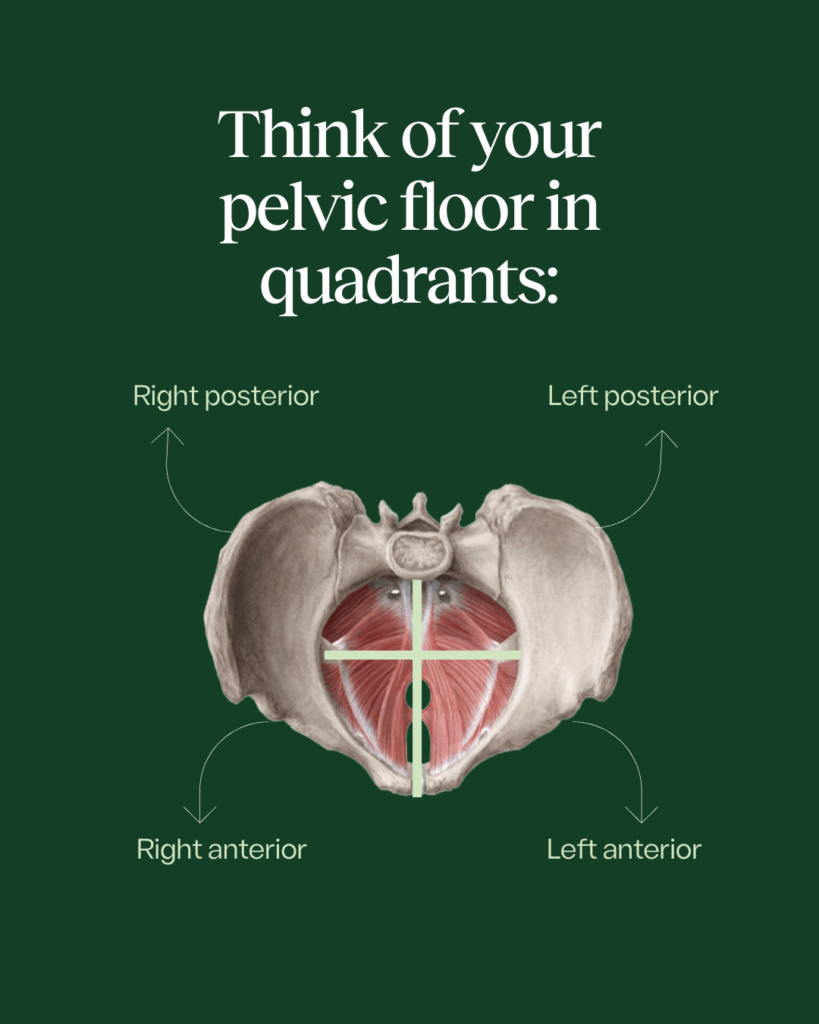
Rock forward and back to target the front and back halves of the pelvic floor.
Try rocking side to side by shifting one knee forward and the other back to address diagonal tension.
When you find a “sticky” or tender spot, pause and breathe:
Inhale – gently press your pelvic floor into the roller.
Exhale – release and let go.
Because the foam roller covers more surface area, it’s a great choice if you want a less intense release.
Kaitlin
Prenatal Fitness and Childbirth Ed Client
Went into spontaneous labor at 38 wks with baby #1 last night (born this morning) and was able to push through a very fast and intense labor (8 hrs active, 4 hrs of contractions with basically NO BREAK in between that got me from 1cm dilated to fully 😵💫) unmedicated! Pushed for an hr! I thank you both, your prenatal fitness program, and prepping pelvic floor fit birth for how much I rocked this delivery. THANK YOU!!!
Ronna
Prenatal Fitness and Childbirth Ed Client
I just wanted to leave a review for you, I took your prenatal bundle with the birth course, fitness app, and pelvic floor prep. I can't say enough good things about it, my only regret was not enrolling sooner! After having some nagging SI and pelvic pain, at 22 weeks I enrolled in your program and started the workouts on the app. After a few weeks,my pain was minimal except for the days I missed a workout or getting in movement. The birth course was very informative and I felt confident and excited about giving birth. While I did need to be induced at 39 weeks, I felt confident and understood my options. I had a great and speedy delivery with just a minor tear. I attribute this to the strategic movements I learned in the course throughout my labor and breathing during pushing, along with wonderful hospital staff. We were blessed with a healthy baby girl Ellie Jo. I look forward to using the fitness program again in the future and other courses you have! Thank you for all the time you put into creating such thorough content!
Lauren
Prenatal Fitness and Childbirth Ed Client
For what it's worth, I'm a PT myself (not a pelvic floor specialist), but am going to a PFPT. I also took a CEU course for my license and my own learning on pelvic floor health in pregnancy. With that background, I am utterly impressed with the content of your course so far. I was wondering if it'd be repetitive at all from the CEUs I recently took, but it hasn't been. It's so informative, thorough, and covers way more topics than I ever expected. Thank you!!
For more targeted pressure, a yoga TuneUp ball or lacrosse ball is your best bet.
How to do it:
Place the ball in the space between your sitz bone and tailbone.
Sit down on it and slowly roll around to find areas of tension.
Experiment with leg positions—both feet down, one leg extended, or knees moving in and out.
When you locate a trigger point, pause and breathe deeply into the pressure before exhaling to release.
This method helps you reach smaller, deeper areas of pelvic tension that the foam roller may not address.
Technique 3: Pelvic Wand (Internal Release)
For internal release, I recommend using a pelvic wand, such as the one from Intimate Rose. This tool was a game-changer for me during my last pregnancy when I struggled with SI joint pain and deep pelvic tension.
How to do it:
Find a comfortable position—lying in bed, sitting in the bath, or standing in the shower all work well.
Apply lubricant and gently insert the wand into your vagina.
Visualize your pelvic floor as a clock:
Noon = the front (near the pubic bone).
Six = the back (near the tailbone).
Avoid pressing directly at 12 or 6. Instead, focus on areas between 1–5 o’clock and 7–11 o’clock.
When you find a trigger point, pause and use your breath:
Inhale – expand gently into the wand.
Exhale – soften and release.
This technique allows you to directly target internal tightness, particularly in the back part of the pelvic floor.
These three methods—foam roller, ball, and pelvic wand—are simple yet effective tools for relieving pelvic floor tension. Each offers a different intensity:
Foam roller: gentler, broader release.
Yoga ball/lacrosse ball: more precise, external pressure.
Pelvic wand: internal release for deeper areas of tension.
By combining them with stretching and strengthening, you’ll support a healthier, more functional pelvic floor.
Final Thoughts on Myofascial Release for Pelvic Floor Tension
Pelvic floor tension can contribute to symptoms like pain, pressure, or difficulty moving comfortably. Adding myofascial release into your routine can be a game-changing step toward relief and improved function.
If you’d like more structured support, check out our prenatal and postpartum fitness programs and use code YOUTUBE10 for 10% off. These programs are designed to help you:
Stay strong and pain-free during pregnancy.
Prepare for birth with pelvic-opening exercises.
Rebuild and reconnect with your pelvic floor postpartum.
Remember: pain is not a requirement of pregnancy, and recovery doesn’t have to feel overwhelming. With the right tools and guidance, you can move more freely and confidently through every stage of motherhood.
Learn the science of pregnancy and birth to take the mystery of labor away! Understand why you are feeling what you feel, and learn strategies to confidently move through pregnancy and birth!
Find comfort and relief from pelvic girdle pain throughout your pregnancy and postpartum period! This program incorporates myofascial sling focused exercises to stabilize across the pelvic girdle joints.